Under the cold, deep waters of Lake Issyk-Kul in Kyrgyzstan lies a city that nobody can quite explain. Submerged roughly 800 years ago, the ruins at Toru-Aygyr sat largely unexamined from their rediscovery in the 19th century until 2024, when a Russian Academy of Sciences-funded project launched the first major systematic exploration of the site.
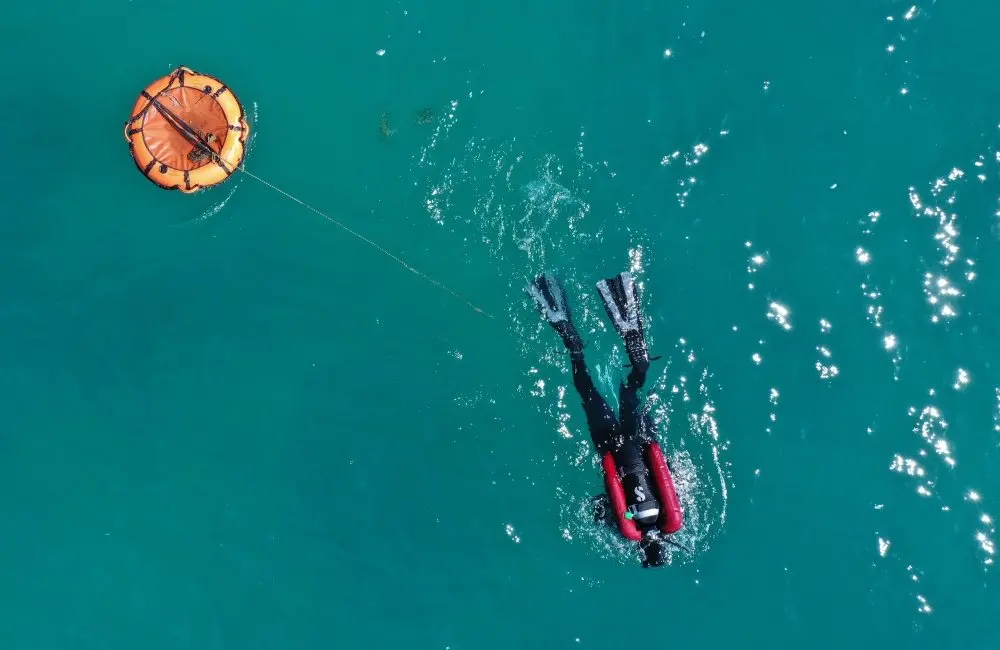
This autumn, a team of around 20 scientists and volunteer divers has been running boat dives at dawn, mapping the settlement's boundaries and hauling up animal bones and pottery shards from the lakebed. The finds are modest-looking but telling: bones reveal the diet and ages of both animals and the people who lived there, while ceramics help date the site and pinpoint where and how its pottery was made. One of the better-preserved artefacts is a child's chamber pot, a "tuvaq" — a vessel still in everyday use across Central Asia and the Caucasus.
What makes the site significant is its location. The city sat on a central stretch of the Silk Road, the trade network linking China to the Mediterranean from the 2nd century BC until the mid-15th century. Researchers believe this section was controlled by the Karakhanids, a Turkic dynasty that dominated much of Central Asia from the 9th to the early 13th centuries. Expedition director Maxim Menshikov calls the ruins a "blind spot" in history, arguing that the Silk Road era is really the story of Eurasia as a whole, not one region.
The city's name and population remain unknown, but it may have covered up to five square kilometres. Traces of two cemeteries point to the early Islamisation of the region, and among the structures identified is a decorated public building — possibly a mosque, bathhouse or religious school. As for why it sank, theories range from a landslide to gradual flooding after an earthquake created a natural "tectonic dam". Geologist Andrei Strelnikov considers a past seismic disaster the most likely culprit. Menshikov likens the site's potential to Pompeii: a developed civilisation cut down suddenly by nature.
For travellers, this is a reason to look at Issyk-Kul as more than a summer lake getaway. The world's second-largest alpine lake already draws visitors for its beaches, mountains and Soviet-era resort towns, and the underwater city adds a genuinely rare archaeological story to the mix. Local museums around the lake showcase Silk Road artefacts, and the wider region — from the Burana Tower minaret to caravanserai ruins — is dotted with traces of the same trading civilisation now being dredged from the lakebed. As excavations continue, Kyrgyzstan's largest lake is quietly becoming one of Central Asia's most intriguing historical destinations.