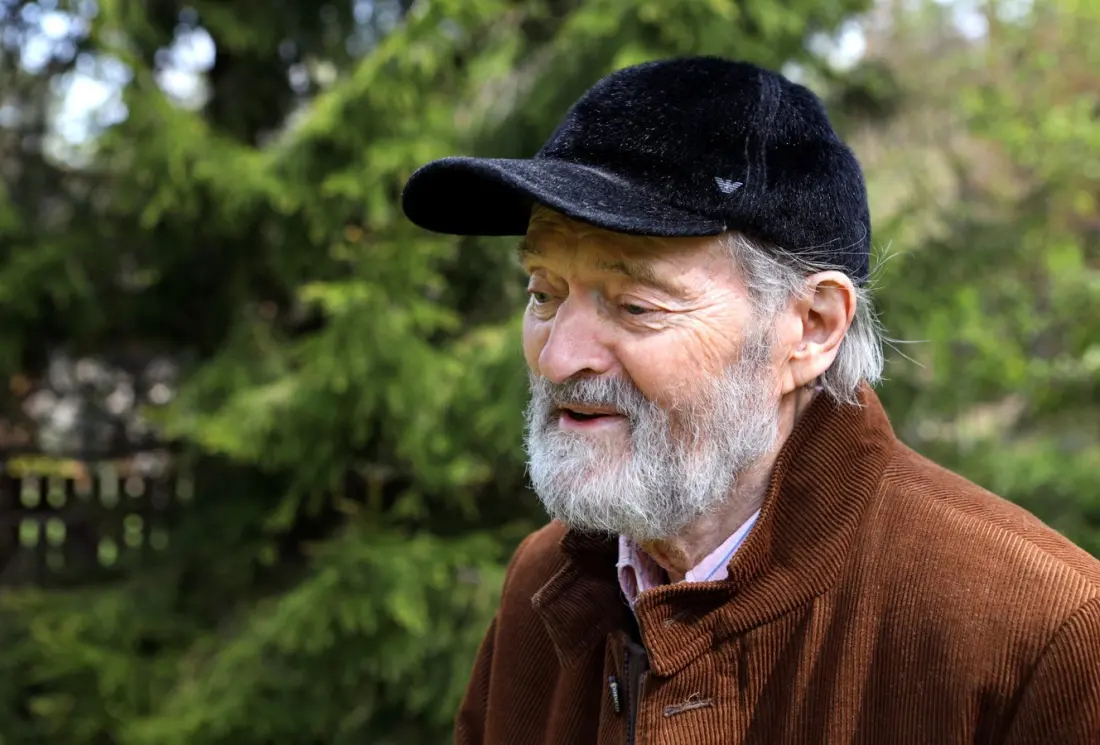
Arvo Pärt, Estonia's most celebrated composer, has become the first Estonian to receive the Goethe Medal — one of Germany's highest honours for international cultural exchange. The ceremony took place in Weimar on 28 August, deliberately chosen as the birthday of Johann Wolfgang von Goethe himself.
Pärt, who turns 91 in September, received the medal alongside Italian translator Anita Raja and Greek theatre director Prodromos Tsinikoris. As the composer was not present, his son Michael Pärt, chairman of the Arvo Pärt Centre board, accepted the decoration from Gesche Joost, president of the Goethe-Institut.
The award recognises a career built on radical simplicity. Pärt's signature tintinnabuli technique — a bell-like style that grows out of silence — produced some of contemporary classical music's most recognisable pieces, including Spiegel im Spiegel and Fratres. Joost praised his ability to touch listeners worldwide with music that seems simple yet runs deep, and noted the award's political weight: at a time of war in Ukraine, honouring an Estonian artist symbolises solidarity between Western and Eastern Europe.
The German connection runs through Pärt's whole life story. He and his family fled Soviet-occupied Estonia in 1980, first settling in Vienna, then moving to Berlin on a German Academic Exchange Service scholarship. Berlin remained his home for three decades. Many of his major works were written there: the Berliner Messe, composed for the first German Catholic Church Days after the fall of the Wall, the choral cycle Sieben Magnificat-Antiphonen, and large sacred pieces like Passio, Te Deum and Miserere. Germany was also where he began his long partnership with producer Manfred Eicher, whose ECM label carried his sound to a global audience — arguably making Pärt Estonia's most effective cultural export.
The Goethe Medal has been awarded since 1955 to foreign figures who advance cultural dialogue, with past recipients including Daniel Barenboim and composer Sofia Gubaidulina. For travellers with an ear for music, the story has a natural stop-off: the Arvo Pärt Centre in Laulasmaa, on Estonia's coast near Tallinn, houses the composer's archive and hosts concerts in a striking building set in pine forest. Weimar itself, the medal's home city, rewards a visit with its Goethe and Schiller heritage — and for those moved by the music, hearing Spiegel im Spiegel in the country that sheltered its creator adds a layer of meaning. As Michael Pärt put it at the ceremony, listening with the heart might be one way of experiencing: first comes the music, then perhaps understanding.