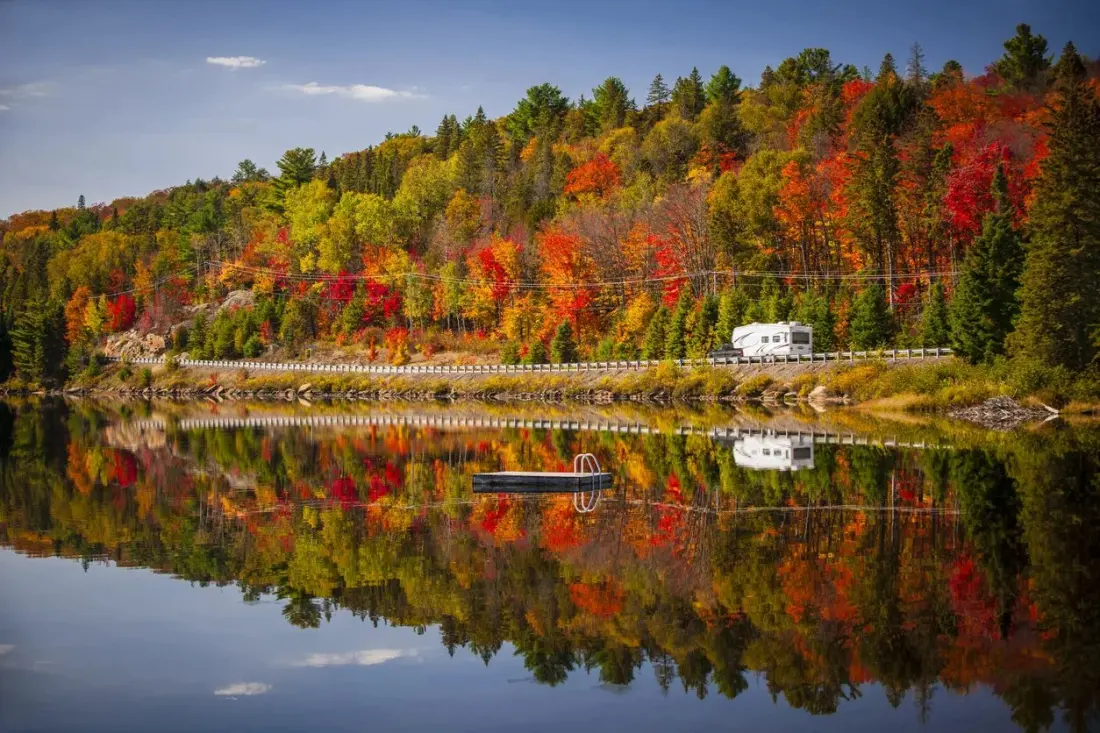
Roughly 250 kilometres north of Toronto, Algonquin Provincial Park turns on one of Ontario's best autumn shows. The colour usually kicks off in early to mid-September, and with 7,635 square kilometres of forest, lakes and bogs to roam, there's far more here than a single drive-through visit can cover. The park's Fall Colour Report is worth checking before you set off so you don't arrive too early or too late.
Most visitors stick to the Highway 60 Corridor, the park's only major year-round highway, though there are other access points off Highways 17 and 11. Driving that corridor in fall means sharing the road with the park's 55 species of mammals — moose included. The advice is simple: slow down, scan the ditches, avoid sudden swerving, and be extra alert after dark. If a moose does appear, stop, put your hazards on and wait it out. And remember that deer and moose often travel in groups, so one sighting usually means more are nearby.
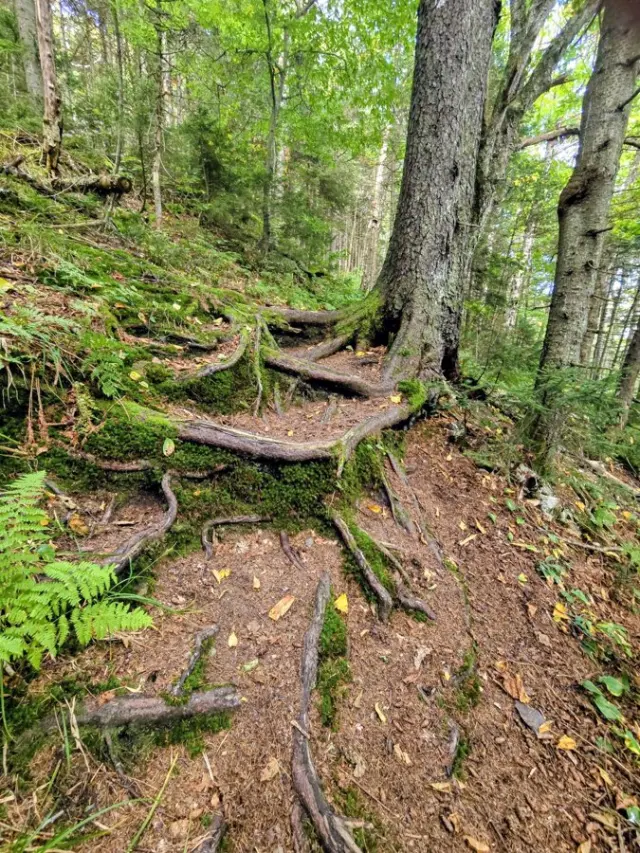
For hiking, a few trails stand out. Track & Tower is a 7.5-kilometre loop with a well-known view over Cache Lake. Mizzy Lake, at 10.8 kilometres, passes nine beaver ponds and offers some of the park's better wildlife odds — moose, great blue herons, white-tailed deer and beavers — if you start early. Short on time? Beaver Pond Trail is a moderate two-kilometre loop past dams and lodges, and Lookout Trail climbs 2.1 kilometres to a ridge with sweeping foliage views. Sticking to marked trails isn't just about not getting lost; it protects the plants, roots and habitat that make the park worth visiting. The Algonquin Discovery Program runs guided hikes with park naturalists if you'd rather learn as you walk.
The etiquette rules matter here. Don't feed anything, even the bold chipmunks — human food makes animals lose their fear of people, and bread is worse than useless for birds. Don't pocket flowers, rocks or branches, and never transport firewood from home, since hitchhiking insects and disease can spread into new forest. Buy local firewood and burn it where you camp.
Algonquin supports roughly 2,000 black bears, though encounters are rare. In campgrounds and picnic areas, keep food locked in your trunk; in the backcountry, hang food at least four metres up and well away from your tent, and never take scented products inside it. If a bear does show up and behaves aggressively, don't run — make yourself big, make noise, and carry bear spray with a checked expiry date.
The payoff for doing all this right? Packing out your garbage, keeping noise down and leaving things as you found them buys you the good stuff: loons calling across a lake, wind through red and gold leaves, and, if you're lucky, a distant wolf howl. For anyone in Toronto or southern Ontario craving a fall road trip that's genuinely wild without requiring an expedition, Algonquin is about as good as it gets.
Story via Explore Magazine.