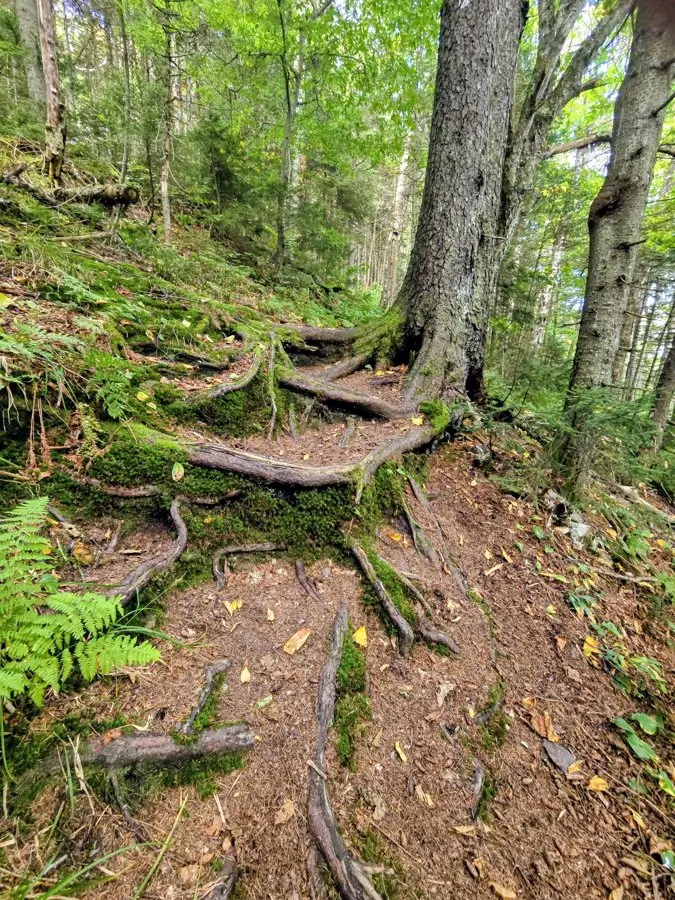
Day 19 of a thru-hike on Vermont's Long Trail delivered a lesson every prospective hiker should hear before lacing up: contour lines lie. Well, not exactly — but they don't tell the whole story. A group of three hikers, including a pair of retired statistics professors, planned a modest 9-mile day between a snowmobile trail campsite and the Sunrise shelter, based on app data showing roughly 1,765 feet of climbing over gentle terrain. The reality: 2,077 feet of ascent, 1,549 feet of descent, an extra 1.5 bonus miles, and a mood that never fully recovered.
The problem wasn't elevation gain. The ground was nearly as level as promised. What the numbers couldn't capture was the texture of the trail itself — a relentless obstacle course of tangled tree roots, hundreds of small rock climbs, branches that snag your feet, and stinging nettles lying in wait in the undergrowth. There's even a plant infamous enough to be named Hobblebush, for its talent at tripping walkers. The trio tried to count their micro-climbs over roots to estimate the day's total, but even with two statisticians among them, they abandoned the exercise somewhere between 100 and 10,000.
Even proper gear didn't save their soles. Well-padded boots and trail shoes with rock plates and Vibram Megagrip still left feet throbbing after hours of picking over uneven ground. Eyes went bleary from staring down constantly to avoid a trip. A lunch stop with instant coffee and hot soup was meant to reset the mood; it didn't really work, though storytelling saved the day — childhood tales of tree climbing and tractor repairs carried the group through the grumpiest stretch.
There was also a classic hiking misstep: the app suggested water at the shelter might be scarce, so the hikers carried an extra bag of unfiltered water for the last two miles — only to find the shelter's water flowing freely when they arrived. Fall daylight hours shrinking meant an early 7 am start, another reminder that late-season Long Trail hikers lose usable time at both ends of the day.
Why does this matter to anyone eyeing the Long Trail? Because it's one of the oldest and roughest long-distance routes in the United States, and it can't be judged by mileage or elevation stats alone. A 'flat' 10-mile day here can feel harder than a hillier one elsewhere, thanks to the root-choked, rock-strewn footbed. Plan shorter days than the numbers suggest, pad your feet well, double-check water sources with recent trail reports rather than assuming scarcity, and start early as autumn shortens the daylight. And when the day turns miserable, having someone to swap stories with really does help you push through. The Long Trail rewards persistence — just expect some days to be pure work, redline to redline.