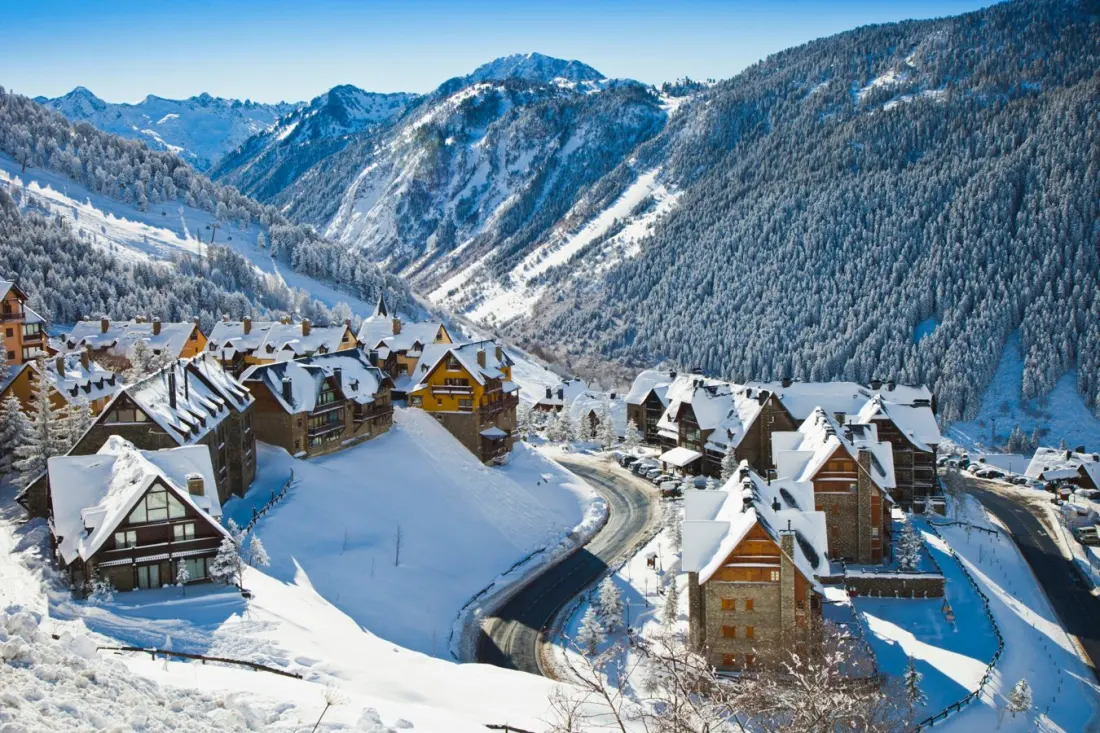
Most skiers ticking off Europe's big names — Chamonix, St. Anton, Zermatt — never bother with the Pyrenees. A recent Ski Magazine feature argues that's a mistake, and it's easy to see why after reading the details. The range stretches roughly 300 miles along the France-Spain border, and it offers a ski trip that feels almost nothing like the Alps: smaller resorts, rusty T-bars, empty lifts, and lift tickets that can run as low as $30 in shoulder season.
The economics alone make the case. While Alps resorts have pushed prices up year after year, the mom-and-pop areas along the border have barely moved. Local spots like Piau Engaly and Cauterets charge around $50 a day, with some treeline resorts dropping to $30 with dynamic pricing. The one exception is ritzy Baqueira-Beret in Val d'Aran, where a pass can hit $90 and you'll share the groomers with Catalan money — still cheap by Swiss standards.
What you give up in polish, you get back in character and quiet. The writer describes shops shuttered midday for siesta, resort websites stuck in another era, and afternoons spent alone with mountain goats instead of an après crowd. Rentals need to be sorted before siesta hours, and lift tickets are sometimes attached with wickets. If that sounds like a complaint, it isn't — it's the whole appeal.
Then there's the food. After weeks of Alps-era fondue and smoked sausage, the Pyrenees sit in Mediterranean territory: Catalonia's pan tumaca and calcots with romesco, Bigorre black pig ham, Basque Ossau-Iraty cheese, and Toulouse cassoles on the French side. Vegetarians, often an afterthought in mountain restaurants, will actually eat well here. San Sebastian — with the world's highest density of Michelin stars — is an hour from the range's western edge.
The range also rewards travellers who like their trips layered. Spring skiers can ride rippable corn snow in couloirs while flowers bloom in the valleys below, and in the right season you can genuinely ski in the morning and surf the Atlantic at Biarritz or San Sebastian the next day. Barcelona, with plenty of direct US flights, puts you in bindings within three to four hours of landing.
For backcountry skiers, the terrain is the real headline. Huesca province holds Spain's last glaciers beneath the 11,155-foot Maladeta Massif and Monte Perdido; Val d'Aran offers tree skiing that can rival the Alps; and Sierra del Cadí near Barcelona hides 50-degree chutes that demand serious avalanche awareness despite their lower altitude. North-facing French aspects hold powder, Spanish aspects serve up sun and corn.
Who is this for? Skiers bored of lift lines and price gouging, touring groups after solitude, and anyone who'd rather finish a ski day with tomato toast and wine than a €12 beer in a polished Alpine village. The Pyrenees won't match the Alps for scale or convenience — but that's precisely the point.