United Airlines has a first-world problem of the premium kind: its new Boeing 787-9s carry a third more business-class seats than the current version, and its airport lounges may not keep up. Roughly 66 of the new Dreamliners are on the way, and the airline has confirmed it is weighing lounge expansion in two markets, with Los Angeles and Chicago emerging as the leading candidates.
The maths is simple. The new-configuration 787-9 carries 64 business-class seats — eight top-tier Polaris Studio suites plus 56 standard Polaris seats — against 48 on existing 787-9s. Suites come with more space, bigger screens and an ottoman big enough for a dining companion. Premium Plus grows too, while economy shrinks from 188 to 123 seats. It is a deliberately premium-heavy aircraft aimed at travellers willing to pay up, and it is already flying: United has deployed the type between San Francisco and Singapore, and San Francisco and London.
Los Angeles is where the squeeze bites hardest. United's Polaris Lounge at LAX is relatively small, and in the evening bank, four 787 departures to Sydney, Melbourne, Hong Kong and Beijing can leave within about an hour. With old cabins, that is up to 192 business passengers passing through; with the new 64-seat layout, as many as 256 — before counting connecting passengers or eligible Star Alliance guests. Peaks like that, not average daily numbers, are what make a lounge feel packed.
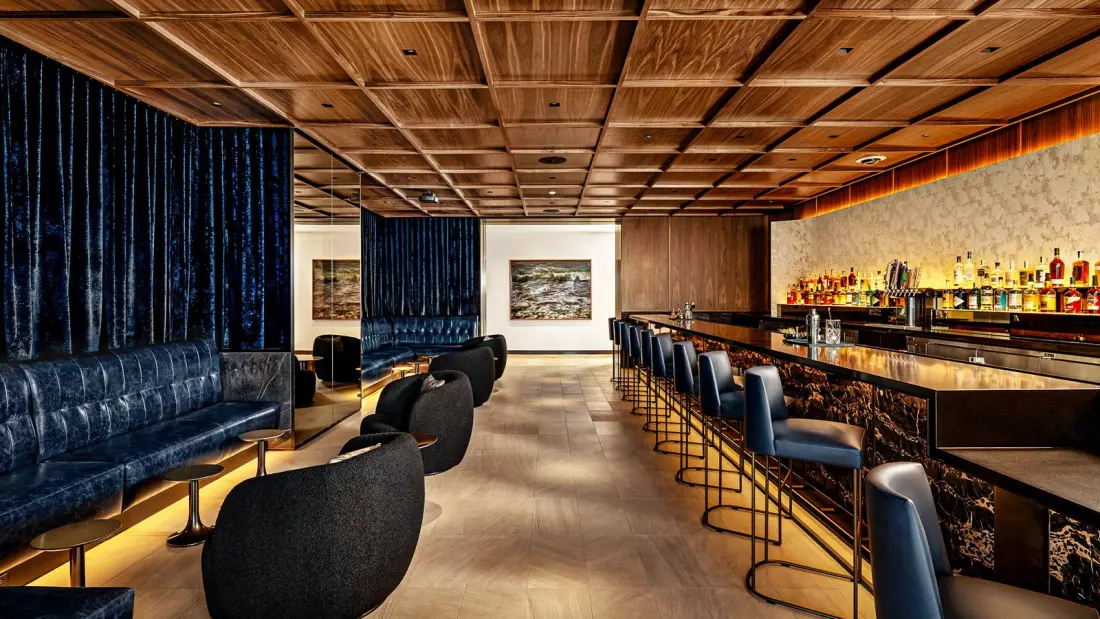
Chicago is a different story. United only recently reopened its expanded O'Hare Polaris Lounge, in April 2025, after growing it by 50% to nearly 25,000 square feet with more than 350 seats, a 50-seat private dining room, a second bar and six extra restrooms. But if more of the new Dreamliners rotate through O'Hare's long-haul network to Europe, Asia and South America, peak demand could still outpace the fresh investment.
The core tension for travellers: planes can be delivered fast, but lounges need terminal space, construction and airport sign-off. United is weighing both bricks-and-mortar expansion and smarter fixes — better dining flow, seating tweaks, peak management — and can also choose which airports get the new 787-9s in the first place.
Why care? If you're flying Polaris out of LAX or O'Hare in the next couple of years, expect possible crowding at peak departure waves even as the cabins themselves improve. On the flip side, more Studio suites and Polaris seats in the market mean more award and upgrade opportunities for anyone chasing a lie-flat seat across the Pacific or the Atlantic. Watch for official word on which two lounges get the money — Los Angeles looks like the most urgent case.