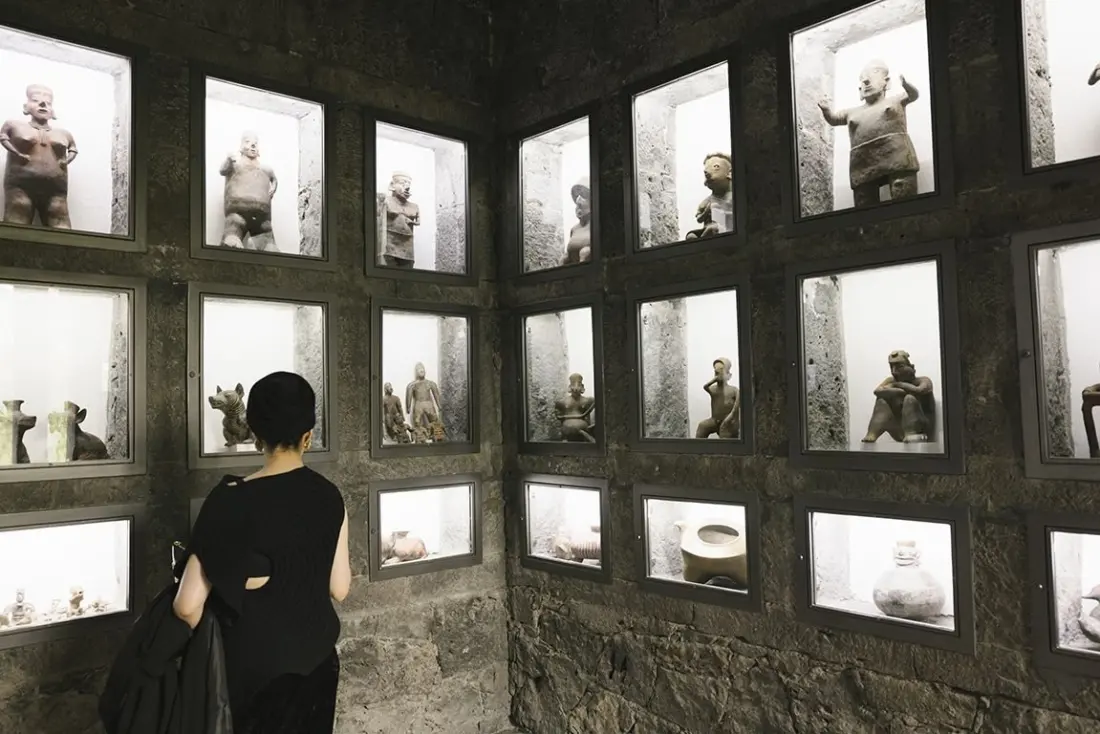
Mexico City counts 171 museums, and nobody would be surprised if that number is already out of date. Between heavyweight institutions like the National Museum of Anthropology — home to the world's largest collection of pre-Columbian artefacts — and oddities such as the Antique Toy Museum and the Tequila and Mezcal Museum, the city has quietly become one of the densest museum destinations on earth. Several compelling new spaces have opened in just the past two years, and even locals can't keep up.
The most intriguing development is literally beneath your feet. The Aztec capital Tenochtitlan, founded around 1325 on an island in a chain of lakes, still lies under the Historic Center, and archaeologists have been slowly turning its excavated remains into a network of underground museums. The 1978 discovery of an eight-ton stone disc of the moon goddess Coyolxauhqui kickstarted the effort; today you can see the base of the Templo Mayor and that disc at its adjoining museum.
Three newer sites bring you even closer. Inside the Hotel Catedral, a stairwell drops to the rounded foundations of a temple to the wind god Ehecatl-Quetzalcoatl and part of a 1400s ball court, due to open as a museum at the end of 2026. The Spanish Cultural Center's basement holds the remains of a calmécac — a school for Aztec nobility — with ceramic plates, a ritual engraved jaw and eerie footprints preserved in stucco floors. And in the basement of the new Museum of Cacao & Chocolate (chocolate tastings upstairs, very much downstairs) archaeologists in 2015 uncovered the Huey Tzompantli: a rack and two hollow towers holding more than 650 skulls of sacrifice victims, matching conquistador accounts. It's still an active dig but expected to open to the public eventually.
Above ground, the story continues. The National Museum of Interventions occupies a Churubusco monastery turned 1847 fort, its walls still pocked with bullet holes. The renovated National Museum of the Revolution sits beneath the giant unfinished legislative palace on Paseo de la Reforma, full of Zapata and Pancho Villa relics. The Living Museum of Muralism, opened in 2024 in a 16th-century convent, displays nearly 300 murals, many by Diego Rivera. And for something off the beaten track, an unmarked stairwell in the run-down Presidente Abelardo L. Rodríguez Market leads to Isamu Noguchi's 72-foot concrete frieze History Mexico, created in 1935.
Then there are the artist house-museums — Frida Kahlo's Casa Azul chief among them — where desks, canvases and cluttered kitchens make legends feel human.
Why it matters: if you've already 'done' Mexico City's famous trio of Anthropology, Frida and Templo Mayor, the city now rewards a second visit with layered, subterranean history you can walk through — often in a single afternoon. Just book Casa Azul well ahead; tickets sell out.