Ask a Stockholm creative where they go to switch off, and odds are the answer is Gotland. The Swedish island sits roughly 100km out in the Baltic, and alongside its wilder neighbour Fårö it has quietly become the summer refuge of the capital's design and food crowd. Photographer Petter Bäcklund has spent 16 summers on Fårö, shooting the islands for publications including Afar, and his route maps out exactly why the place works.
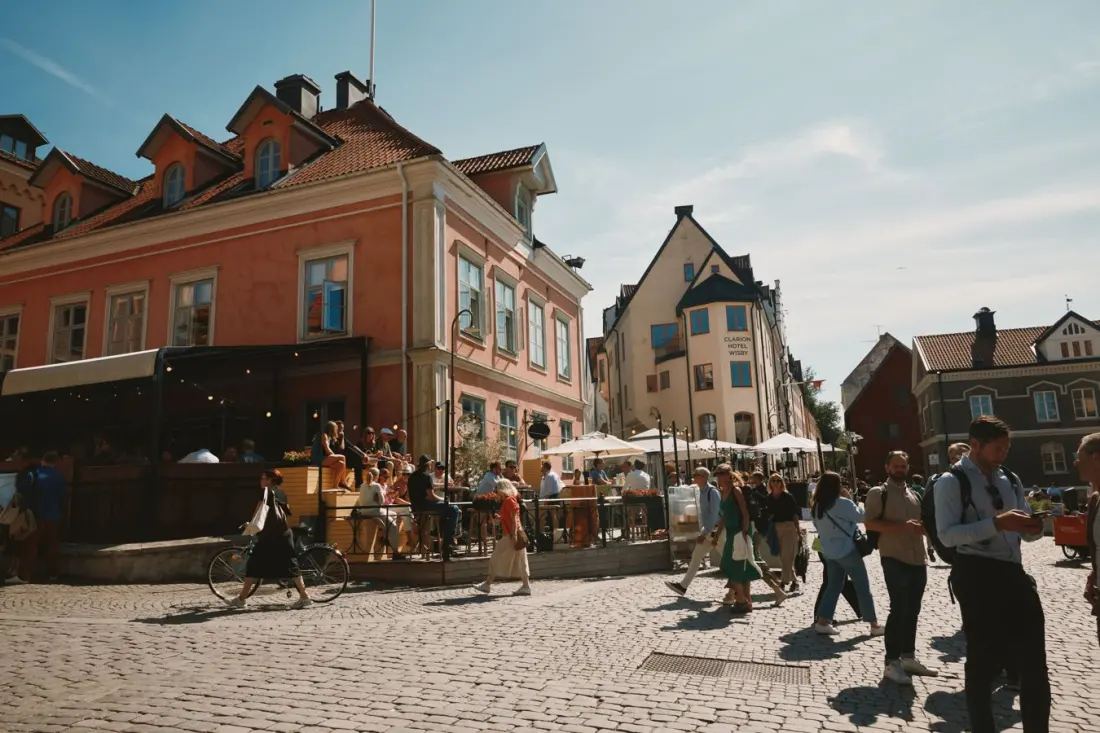
The appeal starts with the light. Grasslands glow gold in the long summer evenings, and the sea reads improbably turquoise thanks to the limestone shelf beneath it — best appreciated from beneath the cliffs at Hallshuk on Gotland's north coast, one of Bäcklund's favourite swim spots. Add empty roads, pine-dotted nature reserves and medieval Visby's red-roofed, rose-clad houses, and it's easy to see the pull.
What's changed recently is the standard of what's on offer. A wave of stylish businesses has landed, often opened by Stockholm transplants chasing slower lives. Top of the list is Ek & Greens Trä Gård on Fårö, where Magnus Ek and Agneta Green — formerly of two-Michelin-starred Stockholm restaurant Oaxen Krog, which closed in 2022 — sell handcarved wooden homewares and homemade preserves from a restored 19th-century farmhouse above Mölnor Bay.
There are places to stay that match. Fabriken Furillen is a 19-room hotel converted from a former limestone refinery, retaining its industrial skeleton while adding Hästens beds, linen-clad staff and a restaurant cooking with foraged ingredients. Newer still is Sibbjäns, a 20-hectare working farm whose outbuildings have been refurbished by local craftspeople — wisteria on the walls, reclaimed oak beams and upcycled furniture inside, plus a genuine focus on water-saving sustainability.
The everyday pleasures are simpler. Bäcklund's summer day starts at Sylvis Döttrar, a second-generation Fårö bakery famous for its cinnamon buns, followed by a cycle around the Bungenäs peninsula, a nature reserve where wind-bent pines share space with abandoned Cold War buildings now colonised by birds. Lunch could be barbecued lamb in the garden at Fårögården, or locally smoked flounder on rye at the Sysne fishing village smokehouse; farm shops like TibblesGården sell biodynamic produce. Come evening, he heads to På Ängen Mat & Bar at Kappelshamn Bay — essentially a food truck serving birria tacos and frozen margaritas made with local meat and fish.
For travellers, Gotland and Fårö hit a rare sweet spot: genuine scenery, real food culture and a relaxed pace, without the crowds of better-known European island destinations. September is a smart time to go, when daylight settles back to a civilised 12 hours and the midsummer rush has drained away. It suits couples, design-minded foodies and anyone after a low-key week of cycling, swimming and long meals — plus photographers, who will struggle to put the camera down.
Original reporting by Suitcase Magazine.