
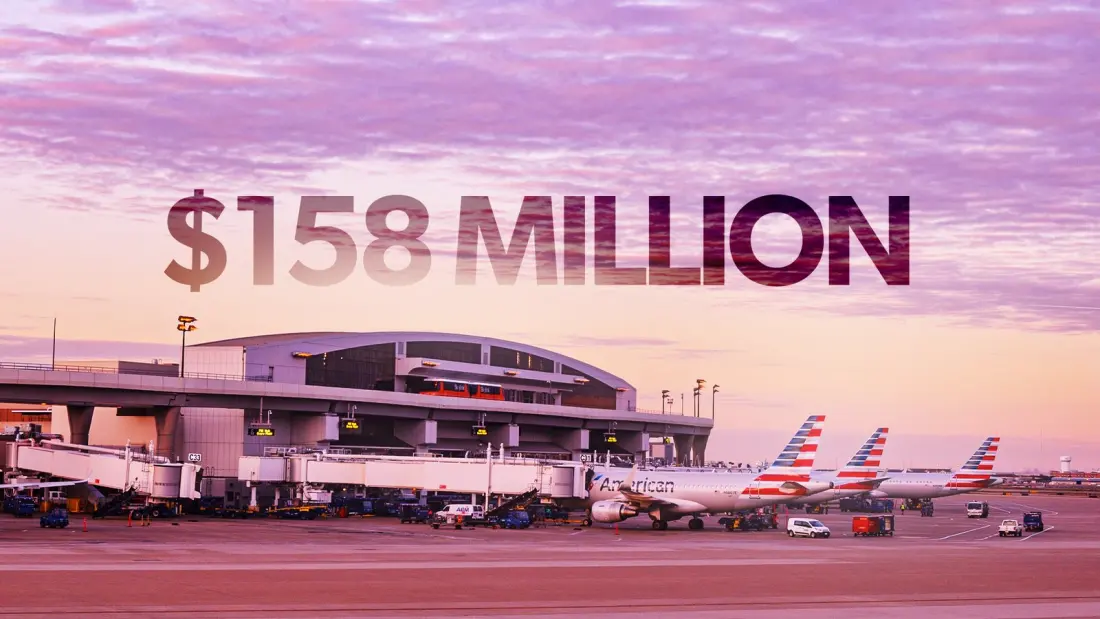
Headlines in May made it look like the US government had picked favourites: the FAA's fifth round of Airport Infrastructure Grants put $70 million toward Dallas/Fort Worth, $46.9 million toward Charlotte Douglas and $41.9 million toward Miami — three Sun Belt megahubs, three of the biggest cheques in the batch. But the framing falls apart when you look at the whole programme, which quietly wrapped up on August 4.
That final round was the largest of all: $870 million across 339 grants, closing out a five-year, $14.5 billion fund created under the 2021 Infrastructure Investment and Jobs Act. Its single biggest award — $289 million, more than four times DFW's — went to Los Angeles International for a new terminal access road. Denver picked up $69.1 million and Chicago O'Hare $47.9 million, both beating Charlotte's May figure, and neither is a Sun Belt airport. Smaller grants in the same round reached airports as far-flung as Ohio and Alaska.
Why does the money follow big hubs instead of any map? Because it isn't really discretionary. The grant programme runs through a formula inherited from the FAA's Airport Improvement Program: large hubs can claim up to 55% of a funding pool, medium hubs 15% and small hubs 20%, with guarantees for smaller airports. Award size tracks passenger volume and hub classification, not geography. DFW, Charlotte and Miami all handle tens of millions of enplanements a year, so they sit near the ceiling of what any airport can draw. Charlotte got a comparable $43 million grant back in 2024, under the previous administration — same formula, same result.
The genuinely interesting Sun Belt story is an airline one. American Airlines has spent roughly a decade concentrating its network on Dallas/Fort Worth, Charlotte, Miami and Phoenix while avoiding expensive fights in New York and Los Angeles. Pandemic-era widebody retirements left it short of long-haul aircraft at coastal gateways, and the 2026 summer schedule reflects that: new long-haul routes from DFW to Athens and Zurich, plus daily widebody service between Charlotte and Frankfurt and Munich. DFW also opened nine new gates ahead of a summer that includes the World Cup.
For travellers, the practical takeaway is about where capacity and shiny new terminals will land. Federal airport money has run out for now — any future funding needs a new appropriation — but the airports that keep growing passenger numbers will keep qualifying for the biggest slices of whatever comes next. Right now that means American's hub cities, especially Dallas/Fort Worth and Charlotte, where the route map and the construction cranes point the same way. If you're choosing between connecting hubs, expect smoother, newer facilities and more nonstop options at those two in particular.
Story reported by Simple Flying.