Two tourists recently arrived at a pub near Tower Bridge expecting a luxury apartment block. Another 'apartment' listing pointed, improbably, at Portcullis House — the actual offices of hundreds of MPs on the House of Commons estate. Both bookings came via Booking.com, and both were fake.
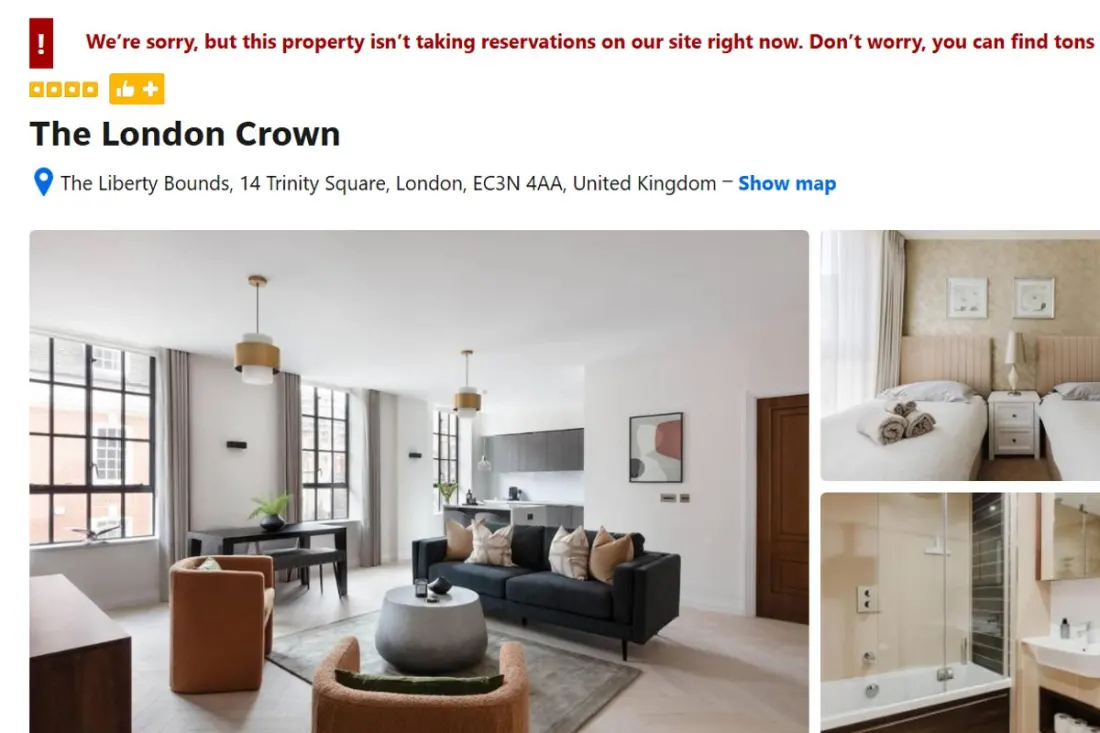
The listings surfaced in an investigation by consumer group Which?. One, called 'Apartments near Big Ben', charged £81 a night for an address that is in fact a parliamentary building. Another directed guests to The Liberty Bounds, a Wetherspoons near Tower Bridge, where staff say they turn away up to 20 confused tourists a day.
The human cost gets worse. In August, Paul Dawson, 55, from Loughborough, booked a £73 one-night family stay at 'The London Crown apartments' for a West End trip. Two days later he received a message with a link to a convincing fake Booking.com site asking for his bank details. When he flagged that the address was really a pub, the platform told him he still needed to go to the property in person and wait until after 7pm before it would help find alternative accommodation. Dawson has autistic children and says arriving at a non-existent address late at night would have been 'catastrophic' for them. He wasn't the only victim: the listing stayed live until at least September 23 with more than 250 negative reviews, including a Spanish traveller left stranded at 2am with nowhere to sleep, and guests who say they reported the scam days before check-in with no response.
Perhaps the strangest detail: when Which? asked Booking.com's AI trip planner, Dot, whether the London Crown was a scam, it replied confidently that the property was legitimate and 'conveniently located near Longleat Safari Park' — which is more than 100 miles from London.
Booking.com's defence is that both cases involved real properties whose own computer systems were compromised in a phishing attack, giving criminals temporary access to their platform accounts. It says it suspended bookings and supported affected customers. Which? travel editor Rory Boland disagrees with that framing, arguing the company refuses to take scams seriously and that demanding guests physically show up at properties they've been told don't exist is 'utterly reckless'. Regulator Ofcom says platforms have clear legal duties under the Online Safety Act to remove illegal content and has already investigated over 100 sites.
For travellers, the lesson is practical rather than alarming: book accommodation with a pinch of scepticism, no matter how polished the listing. Check the address independently on a map before paying — a Wetherspoons or a government office should give you pause. Treat any post-booking message asking for bank details as a red flag and contact the platform directly rather than clicking embedded links. And if a listing looks wrong, report it early and keep records of your correspondence in case you need a refund or a chargeback. Scams tend to cluster around high-demand, high-price cities like London, so it's worth a few extra minutes of checking before you hand over your card details.