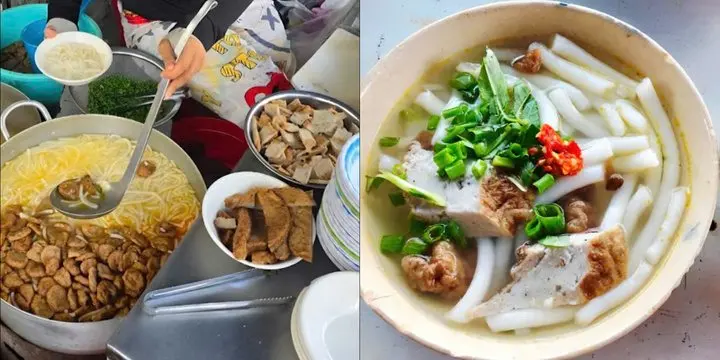
Two unassuming noodle stalls in Nha Trang, on Vietnam's south-central coast, are still serving steaming bowls of banh canh for just 8,000 VND — roughly 30 US cents — a price some of them have held since 2020 while everything else around them got pricier.
Locals call these places "hunger-saving eateries" (bánh canh cứu đói), a nickname earned decades ago by students and manual workers who could fill up on the cheap without sacrificing flavour. The best known sits at 90 Nguyen Huu Huan Street, run today by 44-year-old Tran Van Hien, who took over from his mother Nguyen Thi Dieu — better known as Co Hai — in 2020 after she spent 32 years at the pots. Back in the earliest days a bowl cost a mere 200-300 VND, creeping up through 500, 1,000, 2,000 and 5,000 VND before settling where it is now. Even at that price, Hien says the stall supports his household and three school-age children.
The menu is deliberately narrow: one dish, done well. Diners choose between chewy tapioca noodles and softer rice strands, topped with fish cakes Hien makes himself from fish he personally selects. A fresh baguette on the side adds just 3,000 VND. The shop opens around 11:00 AM, and the broth and noodles usually sell out well before the official 5:00-5:30 PM close, so latecomers miss out. Seating is a handful of plastic chairs, and the turnover is constant — students eat fast and free up seats for the queue behind them.
A short walk away, at the corner of Ngo Duc Ke and Nguyen Huu Huan, a second "hunger-saving" stall run by Co Son keeps the identical 8,000 VND price. She started decades ago at 200 VND a bowl and held at 5,000 VND for nearly ten years before inching up. Her broth simmers purely from fish bones, giving it a light, naturally sweet character, served with fried fish cakes, seasoned fish sauce, lime and chili. Regulars joke that she simply refuses to raise prices; many polish off two or three bowls per visit. Her pot is typically scraped clean by around 4:00 PM.
For travellers, this is the kind of eating experience money usually can't buy: a thirty-year-old food ritual where former students — now parents themselves — keep returning whenever they're back in town. It's a cheap, authentic counterpoint to Nha Trang's beach-resort side, and a lesson in how good broth, handmade fish cakes and fair pricing can outlast inflation. Just arrive early, bring small notes, and don't expect a menu in English — the dish is the menu.