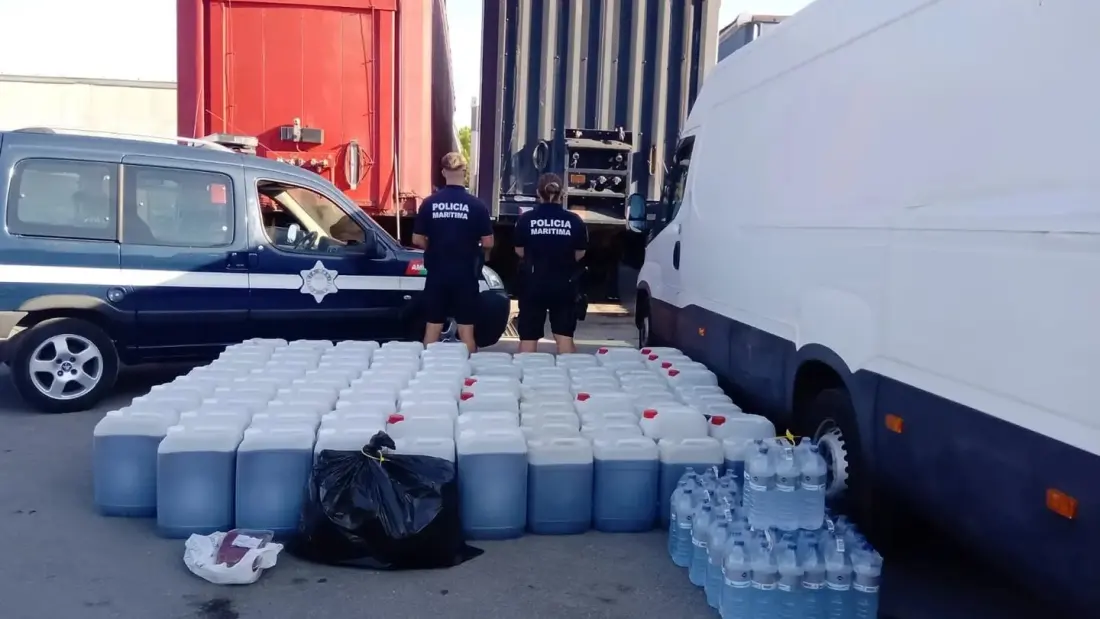
Portugal's Maritime Police have made back-to-back fuel seizures on the south bank of the Tejo, right across the water from Lisbon. The latest came in the early hours in the Olho de Boi area of Cacilhas, in the Almada municipality, where a patrol turned up a light vehicle loaded with 99 jerrycans holding roughly 2,000 litres of fuel. The vehicle itself was confiscated too.
According to the police statement, the size of the haul and the way it was stored match the logistics used to refuel High-Speed Vessels — fast boats commonly linked to drug trafficking by sea. The Central Criminal Investigation Unit has taken on the forensic work, and the investigation continues. Notably, no drugs were found and the boat the fuel was presumably meant for has not been located.
The timing is striking: just a day earlier, in nearby Porto Brandão, also in Almada, the same force seized a recreational boat and a van carrying around 5,900 litres of fuel. That's close to 8,000 litres pulled off the waterfront in under 48 hours, all within a couple of kilometres of central Lisbon.
For travellers, none of this touches the Lisbon–Cacilhas ferry route, which runs normally and remains one of the nicest cheap crossings in the region — minutes across the river with postcard views of the city skyline. But the story is a reminder that the quiet industrial waterfronts just south of Lisbon play a role in Europe's cocaine supply chain, and police activity along the riverbanks has been ramping up. If you're staying in Almada or Cacilhas, you might occasionally notice a heavier police presence near the water, especially at night.
Why care at all? Because the area on the wrong side of these headlines is the same one travellers are increasingly discovering: Cacilhas and Porto Brandão are popular with Lisboners for seafood restaurants, riverside walks and striking views back towards the capital, all a short ferry hop from Cais do Sodré. It's cheap, easy to reach, and gives you a local Lisbon experience without the crowds — just keep your sightseeing to the restaurants and viewpoints rather than the fuel depots.