When Melbourne writer Liv Arnold landed in Bangkok with her mother's third cancer diagnosis hanging over her, she didn't head straight for the temples or the street food. She booked a session in a coffin.
The Kid Mai Death Awareness Café sits in Bangkok next door to a horror escape room, which sets the tone nicely — every few minutes, a scream bleeds through the walls. Opened in 2018 by Buddhist philosopher Veeranut Rojanaprapa as part of his PhD fieldwork, the café is built on a simple premise: in a country that's around 90 percent Buddhist, regularly contemplating death might make people less greedy, less angry, kinder. When neighbours complained about the coffin deliveries, he was thrilled. Complaints, he figured, meant people were thinking about death.
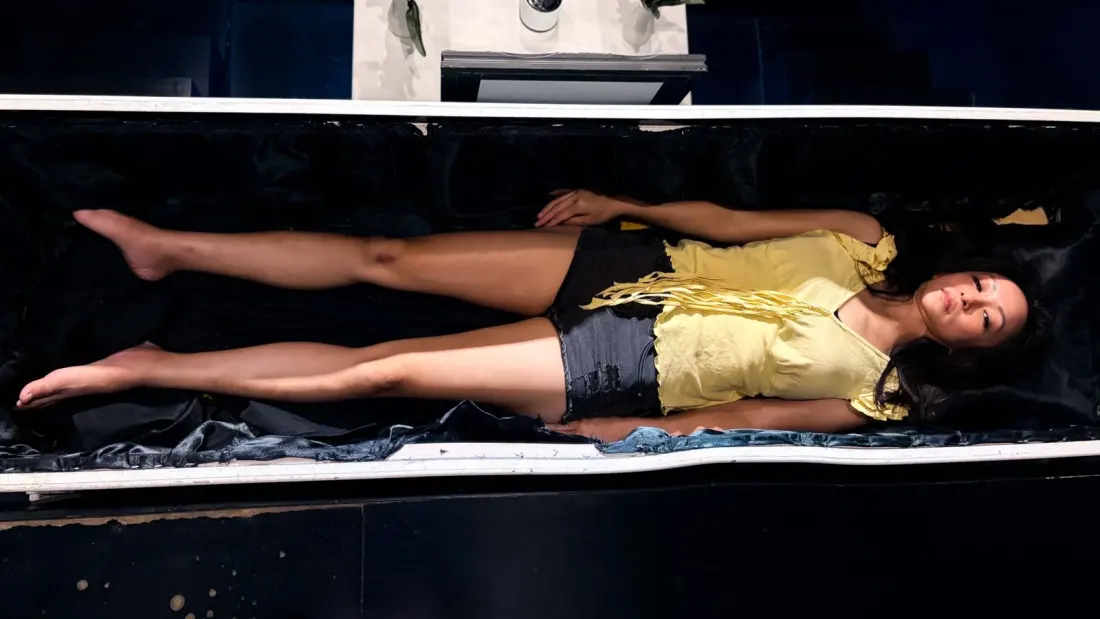
Visitors move through four rooms — Birth, Elder, Pain and Death. In Birth, red womb-like structures bulge from the walls; you crawl inside and curl up. Elder ages you with a grey wig, clouded glasses, a weighted vest and sandbags at the wrists and ankles, making every small task feel frustratingly slow. Pain is an ICU simulation: surgical gown, beeping monitors, a crackling plastic mattress, an empty IV bag taped shut. Finally comes Death, where a wooden coffin waits. You climb in, the lid closes, and you're left in the dark to consider what you'd want from your last day. A black book by the exit asks you to write the answer down.
For Arnold, the experience sat alongside other deliberately confronting Bangkok moments: sparring with legendary fighter Saenchai at a Muay Thai gym, eating at Cabbages & Condoms — the restaurant founded by activist Mechai Viravaidya, whose condom-promotion campaigns helped cut Thailand's new HIV cases by roughly 90 percent, an estimated 7.7 million infections prevented — and carrying jasmine garlands from the Pak Khlong Talat flower market, where white jasmine has been Thailand's Mother's Day flower since 1976. She also visited Wat Pho, home to the 151-foot gold-covered Reclining Buddha, which entered nirvana and has been depicted so since 1832.
The café didn't dissolve her anxiety, she admits. But it shifted something: scared and silent, she realised, aren't the same. She picked up the phone and finally asked her mother the question she'd avoided for decades — was it hard?
That's the real takeaway for travellers. Bangkok is full of places that distract you; this one does the opposite. If you're carrying grief, a frightening diagnosis in the family, or just the low hum of mortality that hits in your thirties and forties, a death café offers something unusual from a holiday: permission to stop performing wellness and sit with the hard thing. Entry is cheap, the staff are gentle and matter-of-fact, and you'll leave with a coffin selfie at minimum — and possibly a conversation you've been putting off for years.