The Ozette Triangle in Washington's Olympic National Park is a nine-mile loop of coast, rainforest and tide-dependent beach walking. For Brandy "Pumbaa" Sales, it's also the setting for an unusual piece of trail writing: a letter addressed to her past self, sent from the trail in 2026 back to the August day in 2013 when everything changed.
The backstory gives the hike its weight. The day before setting out (in the letter's timeline), Sales had an eye exam that revealed diabetic retinopathy; a doctor told her that a week's delay could have meant blindness. She had quit a corporate marketing job 18 days earlier to launch a video production company, with a one-year-old and a three-year-old at home. What she couldn't see then: the business would bring in $40,000 in its first month, she'd hire 14 people, endure 14 eye surgeries over 13 months, and eventually build a career as a four-time international award-winning producer who is visually impaired.
Day two of the triangle is the tough one — roughly three miles of coastline between camps that must be completed before the tide makes the route impassable. The terrain is a mosaic of slippery rocks, tide pools, deep sand and fallen trees, and Sales makes it harder on herself with 5 a.m. wake-ups and a mind running through every possible outcome. She leaves at 7:15 a.m., reaches the Wedding Rocks petroglyphs around 8:35, and arrives at Cape Alava around 10 with an hour to spare — nearly three hours for what looks like a short walk.
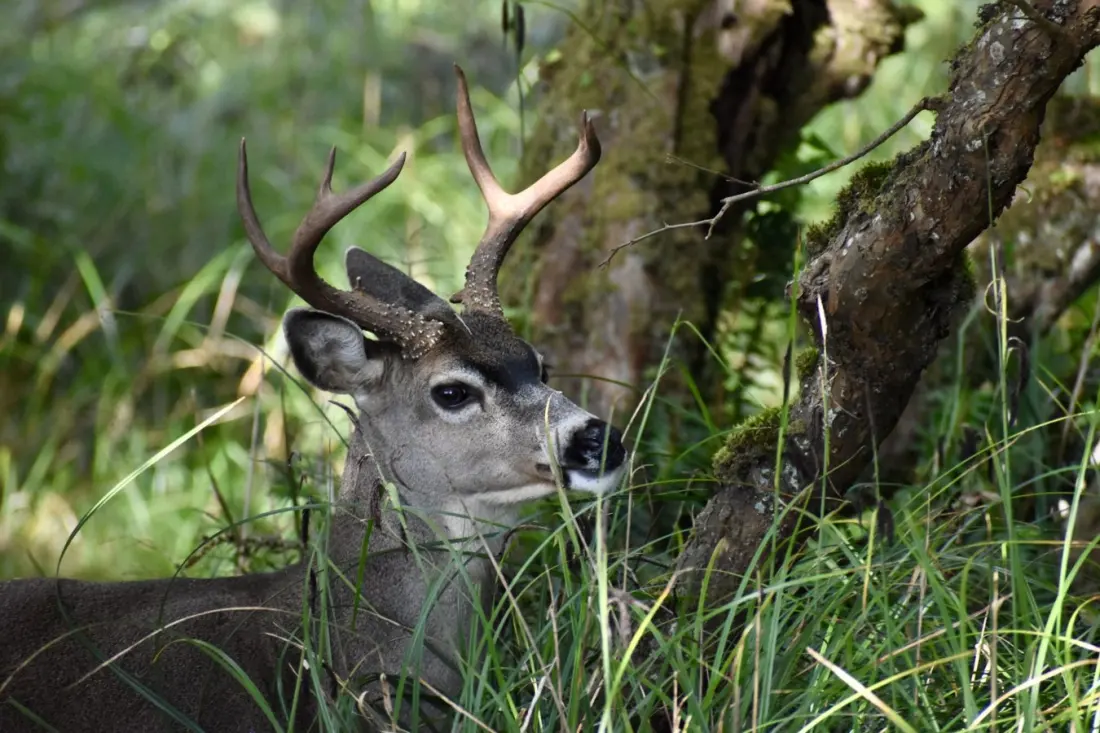
The payoff is what happens at camp. Humpback whales surface offshore, too distant for her to see clearly, so she watches the birds instead and sits still for three hours. A bear swims about 200 feet from shore (she spots it and warns fellow hikers, including two women whose campsite it later wanders into), a deer grazes nearby, and sea lions call from an island she decides is cheering her on.
Why does this matter to travellers? Because the piece is a genuinely useful argument about how to be outside. Sales hikes by sound, terrain and feel rather than distant landmarks, and treats her anxiety-driven tendency to game out scenarios as preparation rather than a flaw. The letter's core idea — you don't have to see the whole path, just take the next step — doubles as practical advice for anyone tackling tide-dependent coastal trails, where timing and attention matter more than speed.
For hikers, the Ozette Triangle itself is the draw: one of the most accessible wilderness beach routes in the Pacific Northwest, combining old-growth forest boardwalks with wild Pacific coastline, petroglyphs at Wedding Rocks, and reliable wildlife sightings. It's a three-day trip for most people, and the tides — not your fitness — set the schedule.