
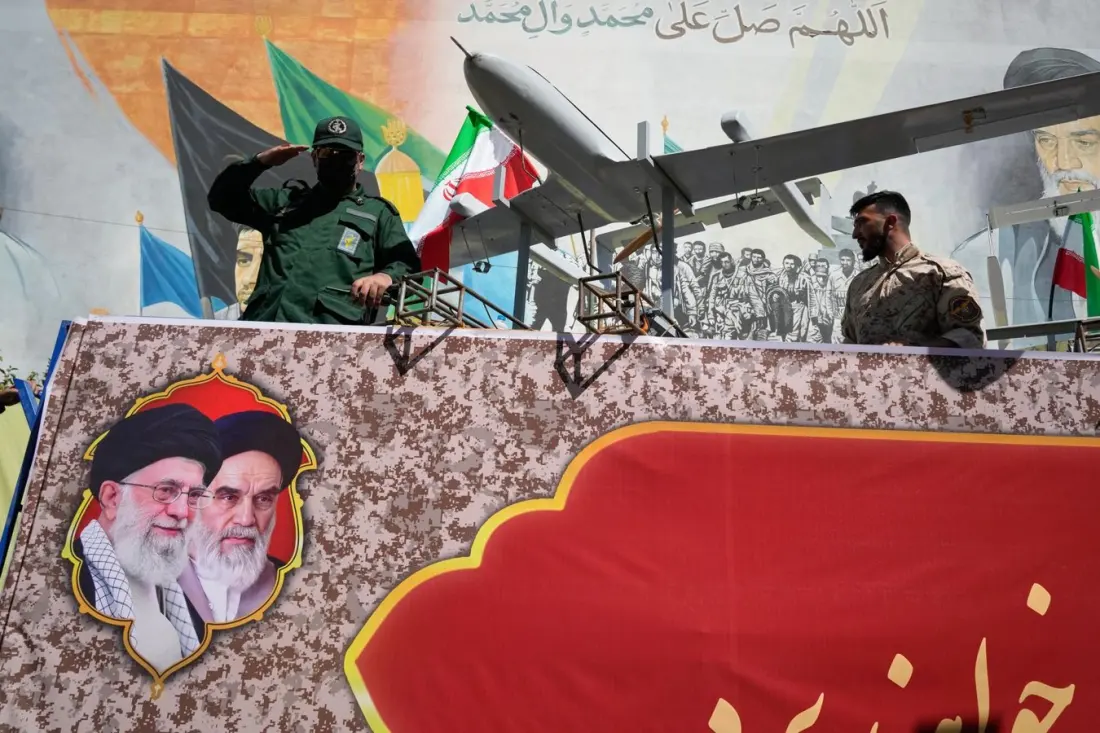
Tehran saw its largest show of mass mobilisation since war broke out in February, with hundreds of thousands of Iranians marching through the city centre on Friday in a government-organised demonstration of defiance. State broadcaster estimates put the morning crowd at over 300,000, while the Revolutionary Guard's Tehran chief, Gen. Hassan Hassanzadeh, claimed more than 600,000 people had registered for a volunteer defence programme — a figure expected to top one million once training begins.
The volunteers, described under the banner 'Janfaday-e Iran' — roughly, those who sacrifice their lives for Iran — marched in combat uniform behind flags, and will receive limited training with assault rifles as an added layer alongside the Revolutionary Guard and its volunteer wing, the Basij. Basij chief Hossein Taeb told the crowd the volunteers would be ready for 'full-fledged defence' and promised similar rallies in other cities. President Masoud Pezeshkian and senior military commanders watched from the sidelines as participants trampled US and Israeli flags and anti-aircraft batteries rolled past.
The hardware on display pointed to why this story matters well beyond Iran's borders. The Guard showed off the same drones it has used against shipping in the Strait of Hormuz, where Iran has asserted control since the war began — a move that has severely disrupted oil and gas shipments through one of the world's most critical waterways. For anyone with Gulf travel plans, that disruption ripples outward: regional flight routings, energy prices and insurance costs are all affected, and most foreign governments already advise against all travel to Iran.
There is also a domestic undercurrent worth understanding. The rally comes after some of the largest nationwide protests in Iran's history in January, sparked by economic hardship before the war, which activists say ended in a crackdown killing more than 7,000 people with tens of thousands detained. Iran's government claims over 30 million of the country's roughly 90 million people have volunteered to defend the theocracy since May — a figure the Associated Press could not verify. Friday's tone suggested hardliners like Taeb are positioned to suppress any renewed unrest, and the economy continues to deteriorate under a US naval blockade of Iranian ports and fresh sanctions.
For travellers, the takeaway is straightforward: Iran remains firmly off the itinerary for the foreseeable future, and the conflict's effects — particularly around the Strait of Hormuz — touch the wider Gulf region, including nearby hubs like Dubai and Doha. Anyone with trips booked to the region should monitor their foreign ministry's travel advisories and check whether routes or excursions pass through the strait. This is a story to watch, not a destination to visit.
Japan Today / Associated Press