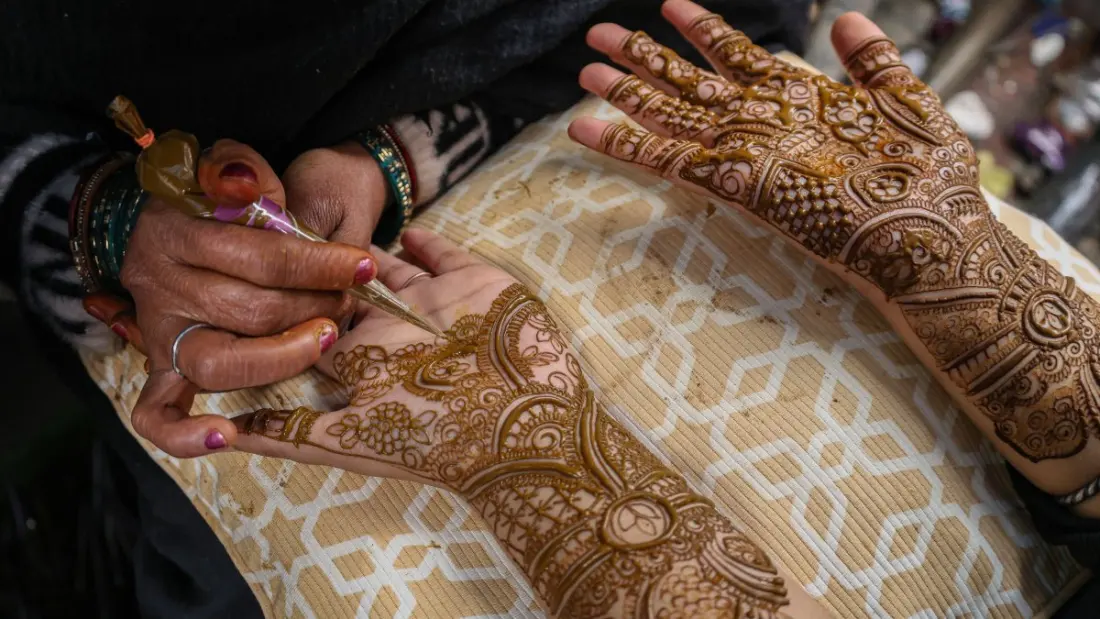
In a beauty salon in Al-Damer, capital of Sudan's River Nile state, artist Najwa Mubarak traces crimson floral patterns across a client's hands — a ritual Sudanese brides have known for centuries. But the plant that makes it possible is in trouble, and its decline tells a bigger story about a country under strain.
Henna is woven into Sudanese life: weddings, family gatherings, religious celebrations. It is also an economy. Sudan was once among Africa's leading producers, exporting its distinctive dye to the Gulf, Europe and North America. Around Al-Damer, the crop remains one of the region's most valuable, sustaining everyone from farmers and factory workers to salon owners like Omnia El-Sayed, who calls it "a cultural staple."
That supply chain is fraying. Farmer Abdallah Mohammed, 57, has grown henna near Al-Damer for decades, and now watches his shrubs sag in the heat as Nile-fed irrigation canals deliver water late and sparingly. Clogged channels, idle pumps and neglected water management — much of it damage from three years of war — have cut both the size and quality of harvests. El Nino has compounded the problem, delaying rains and lowering Nile levels. The UN's FAO reports rainfall in key agricultural regions was up to 30% below the long-term average between June and mid-August, and agriculture supports roughly 65% of Sudan's population.
The trade routes have suffered too. Before the war, factory owner Mohamed Ramadan shipped henna worldwide via Omdurman, Khartoum's twin city. Now exporters reroute through Egypt as corridors through Chad have become difficult.
Yet River Nile state has largely been spared the fighting, and its emerald henna fields still stand out against the ochre earth. Farmers cut leaves with sickles passed down generations; in Al-Damer factories, workers dry, grind and bag the powder for markets at home and abroad. For travellers with an interest in living traditions — and in how communities keep them alive through crisis — this corner of northern Sudan offers a rare, resilient story. Henna itself remains a memorable, hands-on cultural experience for any visitor to Sudan or the wider region, and the people who practise it, like Mubarak, see it enduring: "a hobby and a heritage."