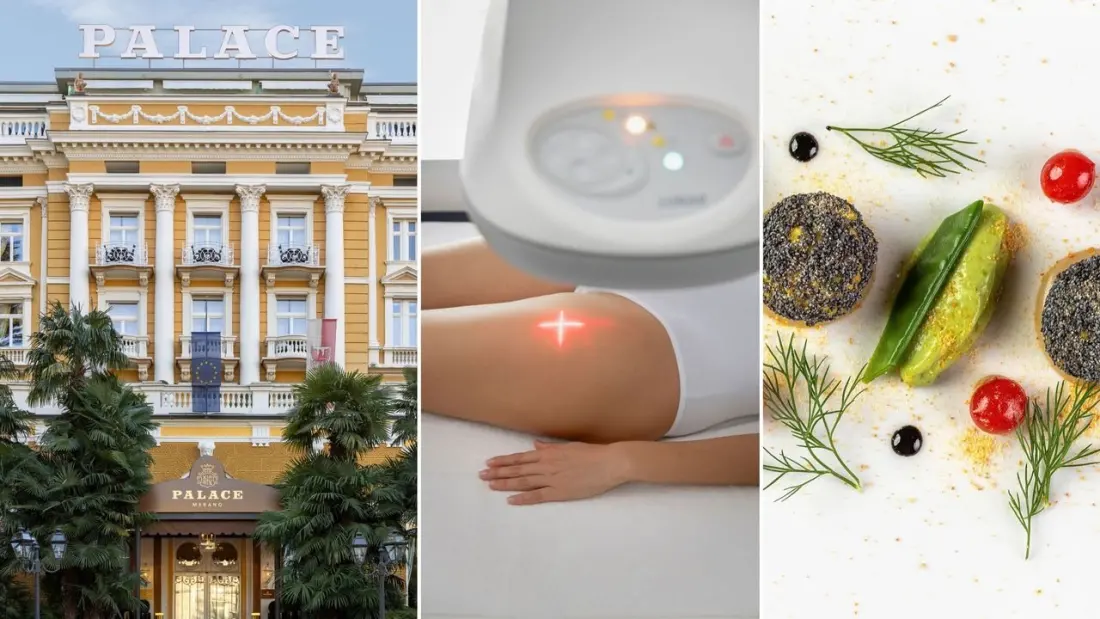
No fruit basket, no mini bar, no coffee machine. That's the first thing guests notice when they check into Palace Merano, a long-established wellness retreat in South Tyrol, northern Italy, near the Dolomites. It sets the tone for what's coming: a medically supervised detox programme, four days from $3,900 before accommodation, that's booked out each winter by returning regulars.
The house protocol, the Revital Method, is run under scientific director Dr. Massimiliano Mayrhofer, a physician of regenerative medicine. Every guest starts with a medical consultation to map out the week, then settles into a rhythm of morning acupuncture, hydrotherapy and massage, with specialist appointments in the afternoons. There's no forced sunrise breath work or group intention circles, and no phone surrender at check-in, a deliberate contrast to the spiritual programming spreading through the wellness hotel world.
What makes this retreat notable is its neuro-wellness angle: cognitive testing built into a detox stay. At the sports and recovery lab, guests run through memory, attention and reactivity drills on a rig of six blue LED pods that flash numbers and symbols. The tests adapt to your performance, pushing until they find your edge. One reviewer's attention came back at 251 milliseconds — rated good — landing her in the higher range of the average population. The pitch is that these active-state tests reveal more about how your brain actually works than the static scalp-electrode brain mapping common at more spiritual retreats. Guests also get remote access to the exercises to continue at home.
The rest of the week follows the classic detox script, done unusually well. After a gentle laxative cleanse and an overnight fast, the low-calorie menu is genuinely praised, think tapioca pudding shaped like a kiwi and sumac couscous with broccoli, raisins and almonds, though the reviewer notes she was still hungry after nearly every meal. A restaurant manager's reassurance, that asking for more food is allowed because "this is not a prison," captures the tone. Between meals there's hydro-mud therapy with local practitioners and magnesium-potassium drinks jokingly served as "champagne," plus optional pilates, yoga and meditation.
The most useful takeaway might be the least quantifiable. When the reviewer, who has a family history of Alzheimer's, questioned the body-composition numbers, the house nutritionist's verdict was that healthy weight isn't a number at all, it's balance and a good relationship with food. For a retreat built on diagnostics, that's a refreshingly grounded note.
Who's it for? Travellers who want medical rigour and measurable data, not wellness theatre, and who can stomach both the price tag and the calorie deficit. Longevity-focused guests, solo travellers, and anyone curious about their own cognitive baseline will find it unusually approachable; those seeking luxury indulgence or a spiritual reset should look elsewhere. Brain health is becoming the next frontier of longevity travel, and Palace Merano shows what it looks like when it's done with a light touch — even if the first thing you'll miss is the coffee.