If you've been holding off on digging out the winter coat, Environment and Climate Change Canada has some good news. The federal agency's latest three-month outlook points strongly toward above-normal temperatures across Ontario from October through December 2026.
The probabilities are striking. Northern Ontario has a 90 to 100 per cent chance of warmer-than-usual conditions over the period. Most of southern Ontario, including the Greater Toronto Area, sits at 70 to 80 per cent, while southwestern Ontario comes in at 60 to 70 per cent. Below-normal temperatures? Almost nowhere in the province has better than a 10 per cent chance, apart from a small pocket above Lake Erie.
The driver is a "supersized" El Niño. The World Meteorological Organization expects the pattern — unusually warm ocean surface water in the central and eastern Pacific — to intensify over the coming months, and puts a 100 per cent likelihood on it persisting through February 2027. Because El Niño reshuffles temperature and precipitation patterns worldwide, its fingerprints show up in Canadian forecasts too.
There's a wrinkle worth knowing, though. Historical data from The Weather Network shows strong El Niño falls haven't actually been uniformly warm. In the GTA, fall temperatures during past strong events averaged slightly below normal, with October running about 1.3 C cooler than average. The warmth arrives later: December temperatures in Toronto during strong El Niño years have averaged 2.6 C above normal. In other words, expect a cooler October followed by a delayed onset of real winter.
One caveat: ECCC's probabilistic forecasts describe broad seasonal trends, not day-to-day weather, so they can't tell you whether a specific storm or cold snap will hit. But as a guide to how the season will feel overall, the signal is heavily tilted one way.
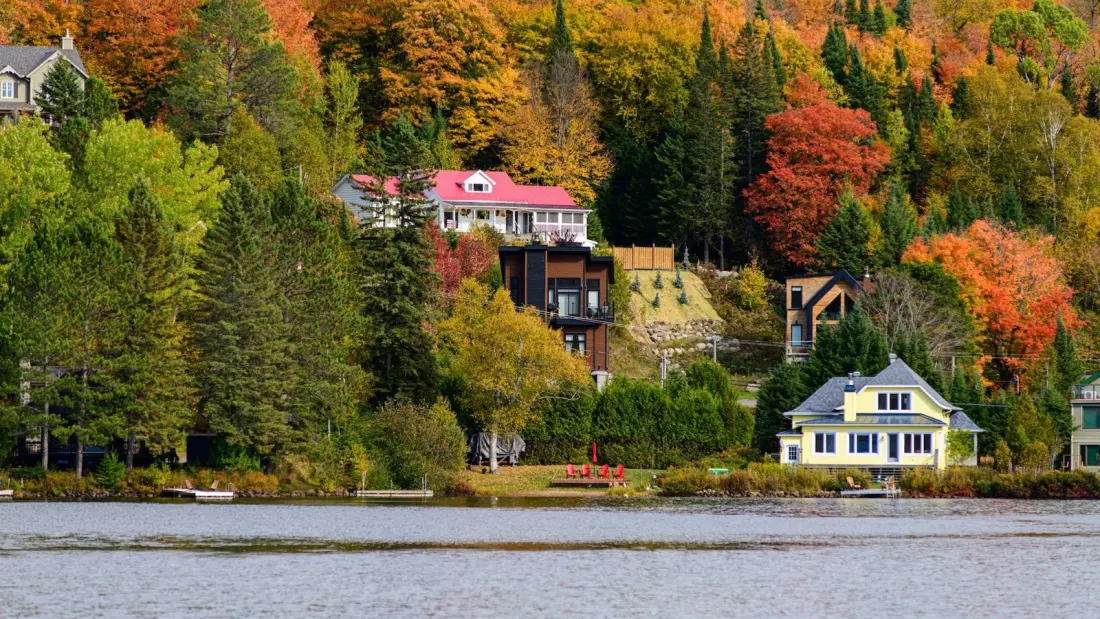
For travellers, this matters in practical ways. Fall colour season in Ontario — peak typically late September to mid-October depending on latitude — should still arrive on schedule, but the milder shoulder season is a window for camping, cottage weekends, hiking in Algonquin or the Bruce Trail, and patios in Toronto stretching further into November than usual. It also means a longer window before snow closes some northern roads and attractions. Just don't bank on that warmth for holiday-season trips; even a strong El Niño winter eventually gets going.
Anyone planning a late-fall city break to Toronto or Ottawa should pack for fluctuating conditions rather than full winter gear, and book autumn accommodation knowing the season may draw bigger crowds if the weather keeps cooperating.