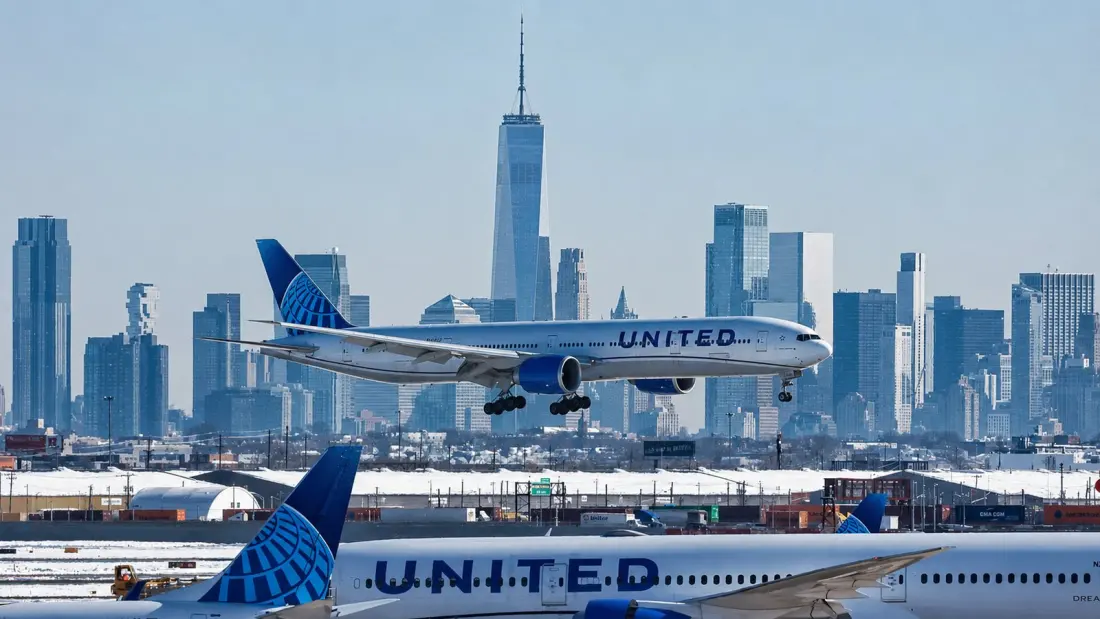
Newark Liberty International Airport is gearing up for another major facelift on its most problematic strip of tarmac. The Port Authority of New York and New Jersey has pencilled in $85 million for Runway 11/29 and its connecting taxiways in its 2026-2035 Capital Plan, and commissioners have just authorised $4.5 million for the first round of planning and design work. The runway was last rehabilitated in 2020 with a roughly ten-year life expectancy, so planners are moving early to keep the next rebuild on schedule.
The runway has form. On May 3, United Airlines Flight 169, a Boeing 767-400ER arriving from Venice, clipped a light pole near the New Jersey Turnpike while approaching Runway 29. Debris hit a tractor-trailer below. The aircraft landed safely and all 231 people aboard were unharmed, though the truck driver suffered minor injuries. The NTSB is still investigating; United has since warned pilots about "ducking under" the glidepath during short-runway landings, a technique it says can result in lower-than-ideal approach altitudes. The Port Authority insists the rehabilitation funding is unrelated to the incident.
Why is this particular approach so tricky? Runway 11/29 is Newark's shortest by a wide margin - 6,725 feet, with about 6,501 feet usable for landings in the 29 direction, versus 10,000-11,000 feet on the airport's other two runways. It also lacks an instrument landing system, so crews fly a GPS-based procedure that ends in a visual segment. That's no small thing when the approach path crosses a highway and power lines, winds bring gusts and turbulence, and at night the dense lights of the nearby port make the runway hard to distinguish.
There's history here, too. In 2006, a Continental Airlines flight touched down on Taxiway Z after mistaking it for Runway 29 in the dark, prompting the FAA and Port Authority to boost the runway's lighting and dim the taxiway's. The upcoming planning work will assess pavement, lighting, signage, and mechanical, electrical and communications infrastructure against current FAA standards - possibly addressing some of those long-standing visibility quirks.
For travellers, this is mostly reassurance rather than disruption: a runway in better condition means fewer maintenance closures and a safer airport, especially in the crosswind conditions that push arrivals onto Runway 29 in the first place. Anyone flying through Newark - one of the busiest US gateways - has a stake in it getting this right.