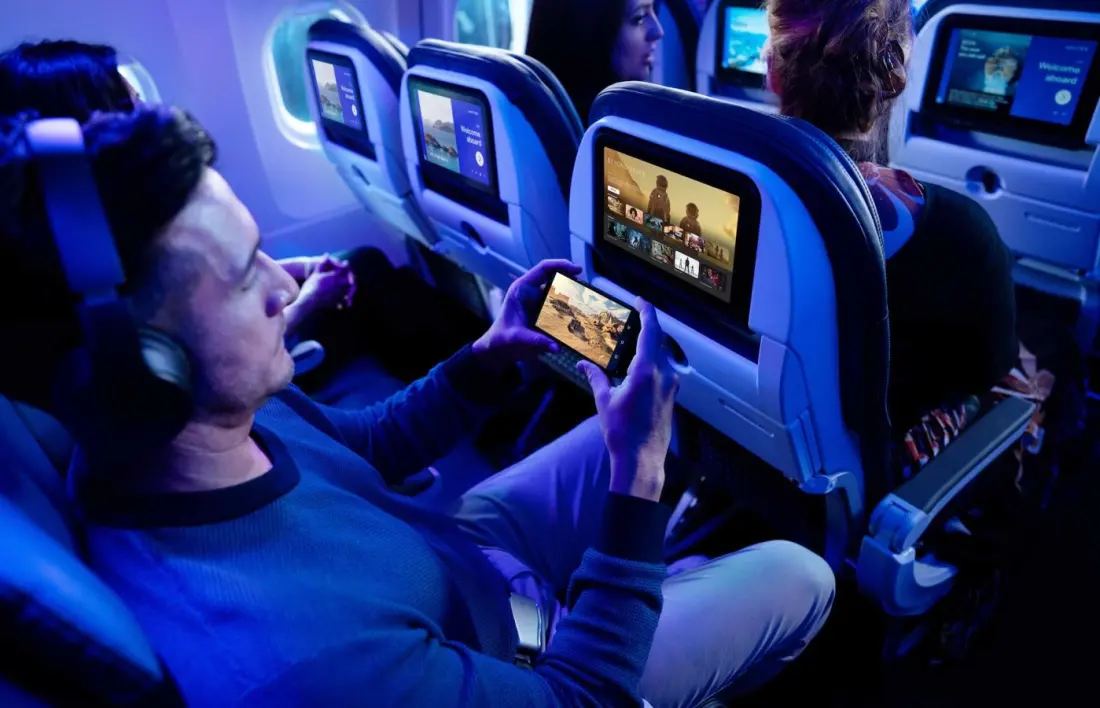
United has found a cheeky way to turn a rival's PR headache into bookings. Its new "Switch To Better Wi-Fi" campaign targets elite members of Delta SkyMiles and American AAdvantage with a status match, wrapping the offer in a not-so-subtle dig at Delta's decision to pass on Starlink internet. The pitch line: don't keep buffering, switch to the fastest Wi-Fi in the sky.
The mechanics are straightforward. Applications are open through October 15, 2026, to eligible U.S. residents. Once approved — United says it responds within three business days — you get your matched United Premier status for 90 days. To keep it through January 31, 2028, you need to spend on United flights during those 90 days: $1,500 for Premier Silver, $3,000 for Gold, $4,500 for Platinum and $7,000 for Premier 1K, matching Delta Medallion and AAdvantage tiers one-for-one. Delta 360 and American ConciergeKey members are covered too.
Read the fine print before dreaming of easy top-tier status. Only base fares and carrier-imposed surcharges count, so taxes, upgrades and Economy Plus purchases are excluded, and tickets bought for family members don't help. You must actually fly within the 90-day window — booking a far-off trip won't cut it. You also can't game the match by overspending your way to a higher tier than you qualified for. Completing the challenge earns Platinum members 20 PlusPoints and 1K members 100 PlusPoints, well short of a full allotment, and partner perks like Star Alliance lounge access may be patchy during the trial.
The Wi-Fi angle is real, though. United reports customer satisfaction scores up more than 40 points on average on Starlink-equipped aircraft, and the service has genuinely changed what you can do at 35,000 feet — fast, free streaming and working video calls on A321neos and many United Express jets. But coverage is not universal: older aircraft in United's fleet still run slow legacy systems that cost $8 per flight, so a Starlink convert could easily end up on one of them.
Who should actually bite? Frequent flyers with real, upcoming United travel that fits the spending thresholds. If you'd be manufacturing trips or paying inflated fares just to hit $7,000, the maths rarely works — the status is only worth what your flying patterns make of it. The bigger story is competitive pressure: Delta already offers free (slower) Wi-Fi and has a planned Amazon Leo service in the pipeline, and passengers win when airlines race to upgrade the cabin experience rather than trade insults about CEOs.