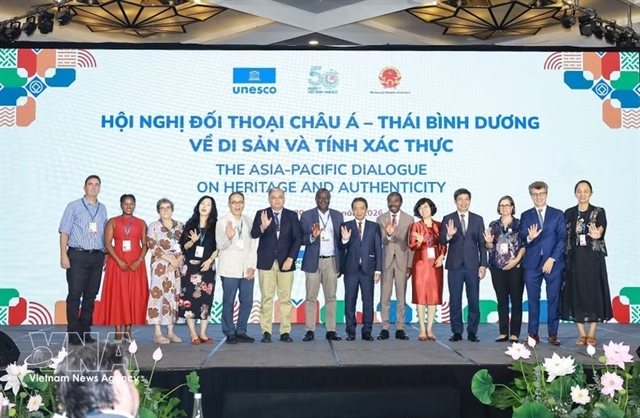
Hà Nội just hosted a three-day policy summit that could shape how Asia-Pacific heritage sites are protected for decades. The 2026 Asia-Pacific Regional Dialogue on Heritage and Authenticity wrapped up on Wednesday, with heritage experts, site managers and UNESCO officials agreeing on a new regional framework: the Hà Nội Document on Heritage and Authenticity.
The event was co-hosted by Việt Nam's National Commission for UNESCO, the Ministry of Culture, Sports and Tourism, the Hà Nội and Ninh Bình authorities, and UNESCO's World Heritage Centre. It builds on earlier milestones in heritage doctrine — the 1964 Venice Charter, the 1994 Nara Document and 2025's Nairobi Outcome Document — and is meant to make the World Heritage List more representative, balanced and credible.
The most interesting takeaway for travellers is the document's stance on change. Rather than treating modern development as the enemy of authenticity, it argues that adaptation can actually help heritage survive across generations. It also puts local people at the centre: artisans, community members and cultural practitioners are recognised as holders of key knowledge and should be directly involved in identifying and safeguarding authenticity. UNESCO's representative to Việt Nam, Jonathan Baker, singled out the roundtable with artisans, practitioners and young people as a vital part of the process.
Deputy Minister Hoàng Đạo Cương set out three priorities for Việt Nam going forward: keeping the authenticity dialogue alive as new challenges emerge, expanding training and comparative research, and turning outcomes into practical protection policies under the 1972 World Heritage Convention. Lazare Eloundou Assomo, who directs the World Heritage Centre, praised the document's distinctly Asia-Pacific perspective and called Việt Nam a "particularly meaningful destination" for the gathering, given how central culture is to the country's development strategy. The outcomes will be carried forward at the 49th World Heritage Committee session in Istanbul in 2027.
After the formal sessions, delegates headed to Ninh Bình for field visits to Tam Chúc Pagoda and the Tràng An Landscape Complex, where discussions turned to balancing natural and cultural values with tourism development — a debate that directly affects how visitors will experience these places.
Why does this matter to holidaymakers? Việt Nam has two UNESCO-listed heavyweights in the news here. Tràng An, a dramatic maze of limestone karsts, rivers and ancient temples often called 'Ha Long Bay on land', and the surrounding Ninh Bình region are already among the country's most rewarding trips. The document's emphasis on community-led heritage suggests the experiences being developed there — boat rowing by local villagers, temple festivals, craft villages — will stay rooted in the people who actually live the culture. For anyone planning a 2026-27 trip to northern Việt Nam, Ninh Bình deserves more than a day trip from Hà Nội.