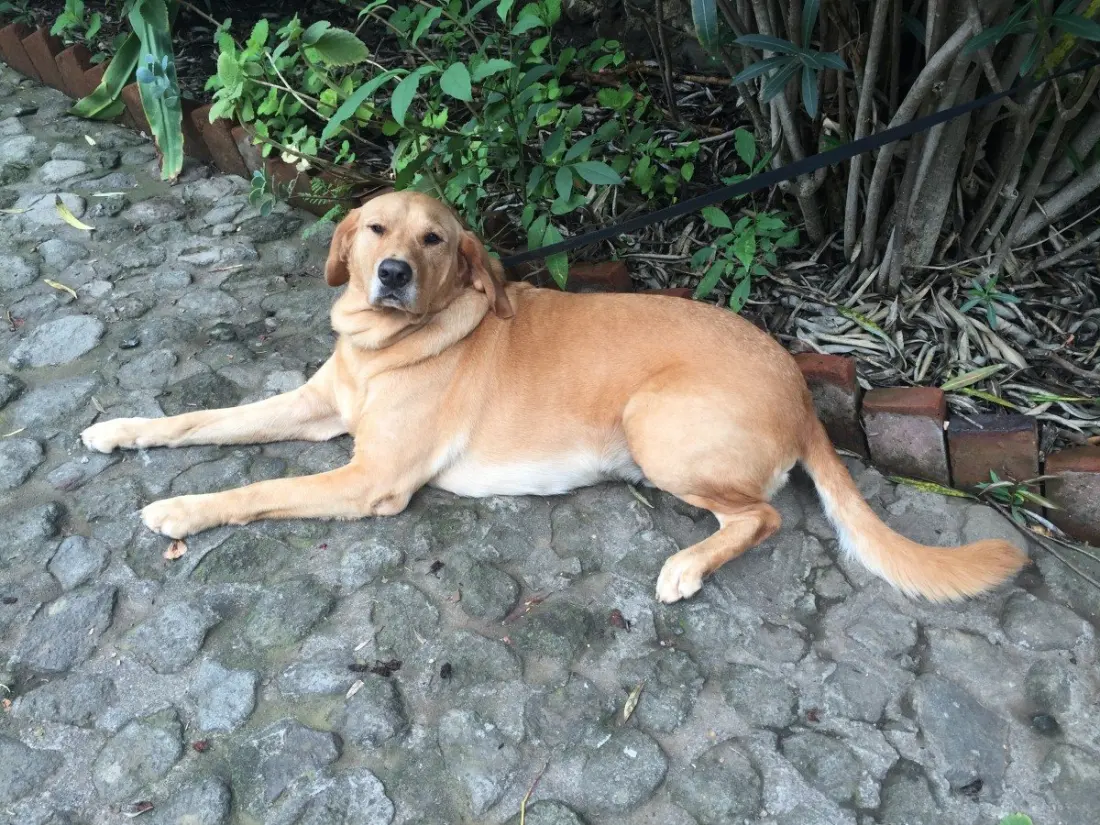
Owning a dog might be the most effective social tool you can carry around Mexico City. Walking alone, you can pass dozens of people without a word — the same anonymity you get on the Metro or in traffic, where communication between drivers rarely rises above a horn blast. Add a leash and a dog to the equation, and conversation becomes almost unavoidable.
The catalyst is the moment two leashed dogs meet, with intentions ranging from friendly sniffing to full-scale showdown. Suddenly the owners have to talk: do the dogs get along, is either one aggressive, should they be allowed to greet? It's the perfect opening to establish your credentials as a dog expert, and Mexico offers some charmingly local vocabulary to do it with.
Breed names are a good start. Many are identical in English and Spanish — Rottweiler, Doberman, Schnauzer, Boxer. Others are literal translations: a German Shepherd is a pastor alemán, an English Sheepdog a pastor inglés, a Great Dane a gran danés. Then there are the colloquial inventions, where an English adjective gets promoted to a Spanish noun: a French Poodle is "un french," a Golden Retriever "un golden," a Cocker Spaniel "un cocker." Mongrels, meanwhile, come with a whole lexicon of their own — corriente, callejero (street dog), criollo, or the politely vague cruzado con corriente.
Conversation starters are similarly codified. ¿Qué raza es? works well, unless the answer is a Labrador. ¿Es macho o hembra? signals you know the basics, though it won't fool anyone into thinking you're an expert. And ¿muerde? — does it bite? — is sensible but not much help, since the growling on display may be aimed purely at the other dog, or at the indignity of being restrained.
Once the canine preliminaries are settled, the humans can get properly acquainted. What's striking is the direction these chats take: instead of asking about food, sleeping arrangements or neutering, owners offer psychological profiles. She's normally sociable. He only fights when he's afraid. He thinks he's bigger than he is. Whether or not dogs deserve these character assessments, the projections say plenty about the owners — and they work. People who would never exchange a "good day" end up talking, sometimes saying things they later can't quite believe they said.
For travellers settling into Mexico City for any length of time, this is a genuinely useful insight into local social life. Neighbourhood parks are the heart of daily routine here, and chilangos who drive everywhere otherwise have few natural chances to meet the people on their street. A dog — borrowed, perhaps, or simply a willingness to chat with those who have them — turns a public park into a social club. Even if your Spanish stops at ¿muerde?, the effort will be appreciated, and you'll come away knowing your neighbours in a way no amount of commuting will ever manage.
Story reported by Mexperience.