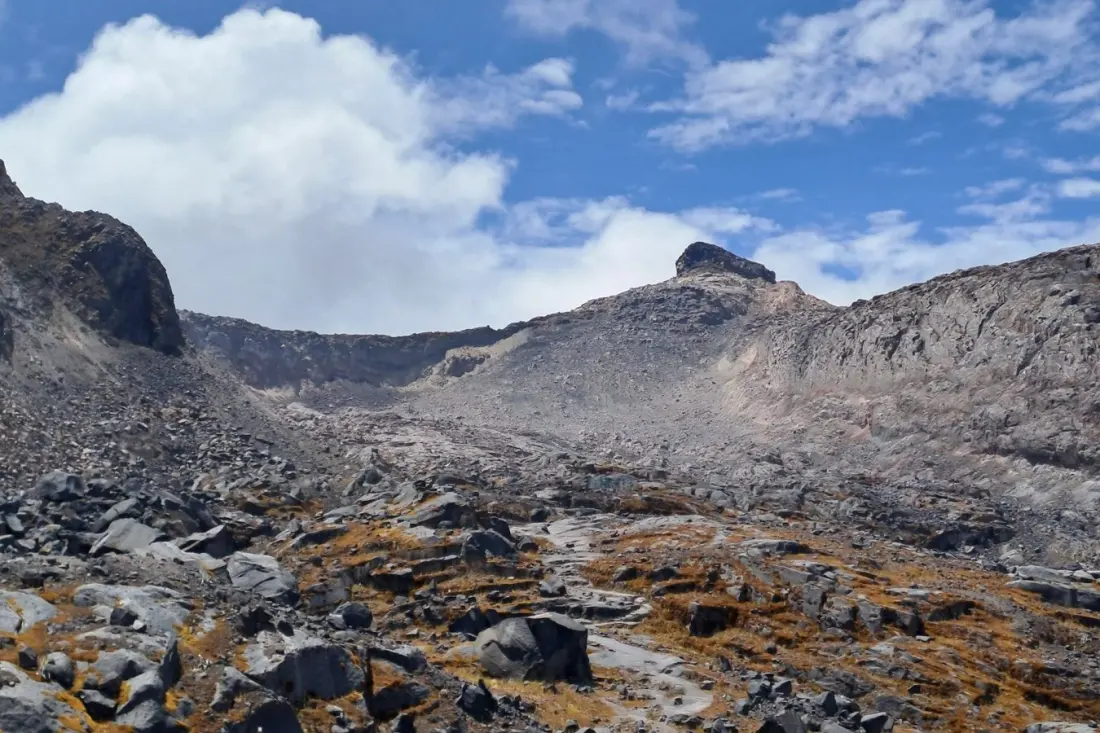
One of Colombia's most accessible snow-capped peaks is losing its ice at a startling pace. Santa Isabel, a mountain in Los Nevados National Natural Park in the country's Central Andes, has lost 36% of its glacier area in just over a year, according to the national monitoring agency IDEAM.
The numbers tell the story. In January 2025, scientists measured about 11 hectares of ice; by May 2026, only around 7 hectares remained. The summit itself, which still carried ice in February 2025 at roughly 4,903 metres above sea level, is now bare rock after losing nearly three metres of ice. Only fragments are left: the El Hongo remnant thinned by up to three metres in six months, and the El Escondido patch has shrunk to about 1,000 square metres — half its 2022 size. One remnant, the Conejeras Glacier, already disappeared entirely between December 2023 and February 2024.
Santa Isabel is especially vulnerable because it sits at a lower altitude than any other glacier in Colombia, gets less snowfall, and endures increasingly extreme conditions. Volcanic ash trapped in the ice darkens its surface, absorbing more sun and speeding the melt. IDEAM says its losses run 2.7 times above the global average, and warns that a strong El Niño expected in late 2026 and early 2027 could push the remaining ice past the point of no return. Nationally, Colombia has lost about 91% of the glacier area it held in the 19th century.
The stakes go beyond scenery. Los Nevados' high-alt ecosystems feed the Otun, Quindio, Chinchina and Combeima rivers, which supply water to more than three million people. Santa Isabel's meltwater drains toward the Azul, Claro and Otun systems, eventually reaching both the Cauca and Magdalena basins. The rivers won't stop flowing when the ice goes — rainfall, wetlands and paramo ecosystems carry much of the load — but a permanent frozen reserve will be gone.
For travellers, this is a rare chance to see a living piece of geography before it disappears. Santa Isabel has long been a popular trekking and mountaineering objective, considered one of the more achievable glaciated summits in the Colombian Andes. The park itself rewards hikers with paramo landscapes, frailejones, condors and volcanic terrain, and sits within easy reach of Manizales, Pereira and Armenia in the coffee region. Even without summiting, trails around the park offer close-up views of the shrinking ice. Anyone planning a visit should go with a licensed guide through the park's official entry system, and be prepared for rapid weather changes at altitude.
Whether the glacier survives into 2028 is now largely out of human hands; IDEAM expects imminent extinction and will keep measuring what's left. For trekkers who have Santa Isabel on their list, the advice is simple: don't put it off too long.