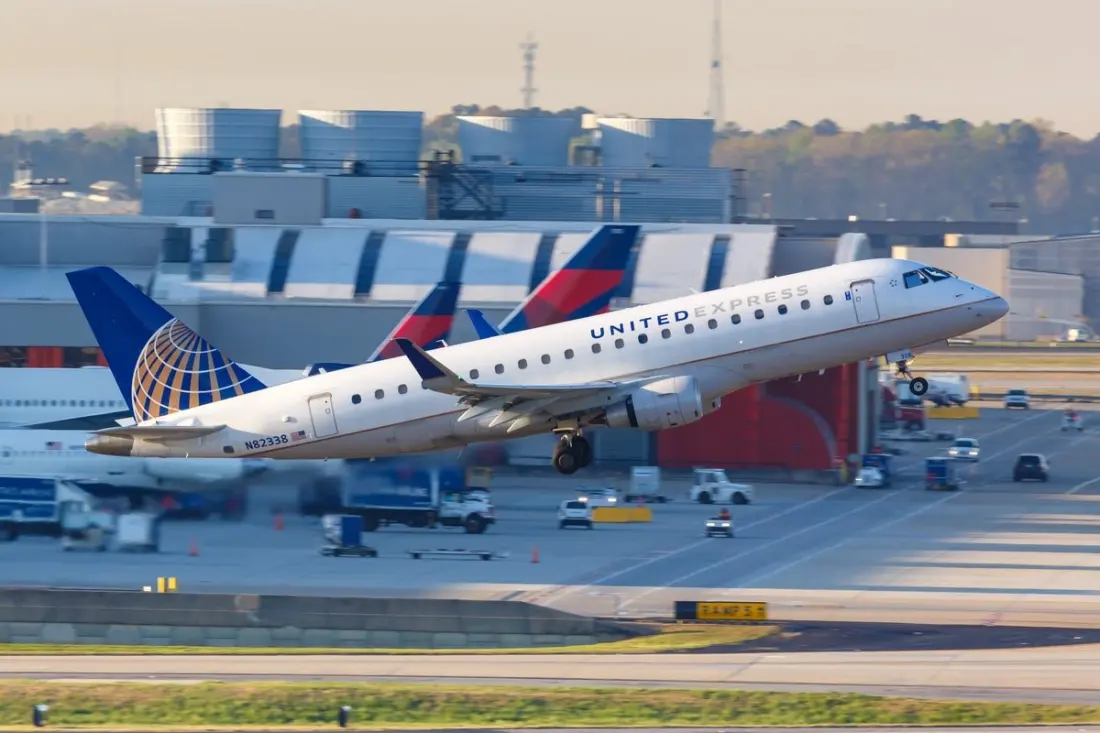
A routine hop across Texas turned into a quick turn back on Sunday, when a Mesa Airlines flight operating as United Express Flight 6309 lost part of its cockpit windshield shortly after leaving Houston. The Embraer E175 had departed George Bush Intercontinental Airport around 12.20 p.m., bound for El Paso, when the glass on the first officer's side shattered. The pilots turned around and the aircraft landed back in Houston at 1 p.m., taxiing to the gate under its own power.
Everyone came out fine, which is the headline that matters. Passengers were rebooked onto a replacement aircraft and reached El Paso International at 3.14 p.m., according to flight tracking data cited by CNN. The Houston Fire Department attended the plane, and once the damaged glass was swapped out, it was declared fit to fly again.
The detail that has drawn attention is how badly the windshield was damaged. Modern cockpit windows are built from multiple layers of tempered glass, so a crack in one layer is usually manageable and doesn't force an emergency. But air traffic control recordings obtained by ABC News capture the pilots reporting shards of glass falling into the cockpit, which points to several layers failing at once — a far more serious situation than a routine crack. Reassuringly, the audio also confirms cabin pressurization held throughout, meaning the aircraft was never at risk of rapid decompression.
Mesa Airlines told CNN that returning to the field is standard procedure in these cases, cracked windshield or not, which tracks with industry practice: crews treat any cockpit glass damage as grounds for a precautionary return rather than pressing on with a full flight ahead of them. The cause of the failure isn't known yet. The Federal Aviation Administration has said it will investigate, and The Independent has also approached Mesa and the National Transportation Safety Board.
Windshield strikes are not rare, though events this severe are. A comparable scare happened last October, when a weather balloon hit a United flight heading to Los Angeles and forced an emergency landing at Salt Lake City International. In Sunday's case, no collision was reported before the glass failed.
For travellers, the practical takeaway is modest but useful: pilots and airlines treat windshield issues with an abundance of caution, planes are engineered with redundant layers precisely so a single failure doesn't become a catastrophe, and a safe return within 40 minutes of takeoff — followed by a same-day rebooking — is the system working as intended. If you're flying regionally in the US, there's a decent chance your United Express, American Eagle or Delta Connection flight is operated by Mesa or one of its peers, so incidents like this occasionally involve familiar routes even when the ticket says United.