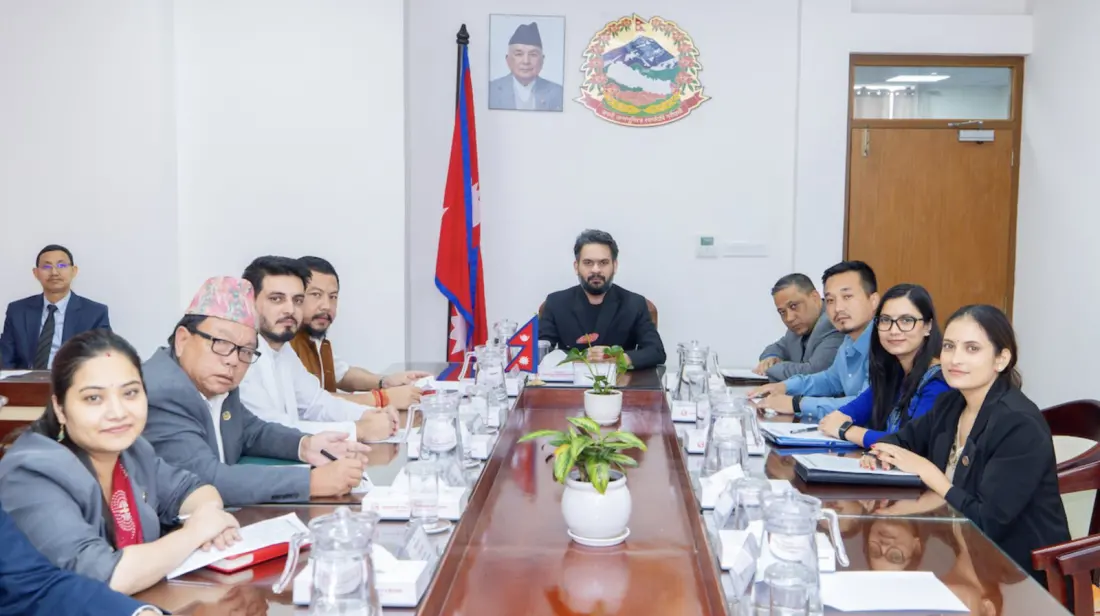
Nepal has finally named 13 new ambassadors after a year in which more than half of its foreign missions sat headless. The appointments, announced just before Prime Minister Balendra Shah flew to New York for the UN General Assembly, matter beyond diplomatic circles: Nepal's missions were badly needed at a moment when the country is lobbying hard for international help after August's devastating Bhote Kosi-Trisuli flood.
What makes this round unusual is who got the jobs. For the first time in Nepal's history, ambassadors were chosen through an open application process rather than handed to political loyalists. Around 4,500 people applied; that pool was cut to roughly 2,700, then down to the final 13. Most are academics, professionals and country specialists rather than career diplomats, and four of the 13 are women. The picks have gone down reasonably well across Nepal's political spectrum, though insiders say the delay came from wrangling between the Prime Minister's Office and the Foreign Ministry over competing shortlists.
The names are telling. The new envoy to India, Nischal Nath Pandey, is a foreign policy think-tanker and son of a former Nepali foreign minister. The China nominee, Kalyan Raj Sharma, holds a PhD from Fudan University and speaks Mandarin. The US pick, Chiran Jung Thapa, studied at Columbia and Harvard's Kennedy School, while the UK appointee, Gaurav SJB Rana, is a former army chief who trained at Sandhurst and served in UN peacekeeping in Lebanon. Other postings span Japan, Israel, Sri Lanka, Spain, Oman, Saudi Arabia, South Korea and Malaysia.
The backdrop is messy. After last year's GenZ protests toppled the old government, 12 ambassadors were recalled; six more were pulled when Shah took office after the March election. At one point 17 missions had no ambassador. Nepal is also shutting embassies in Denmark, Brazil and South Africa, plus consulates in San Francisco and Chengdu, leaving 34 embassies and 10 consulates in operation. Eight further nominations are expected once Foreign Minister Shishir Khanal returns from New York, and none of the current batch are career foreign ministry staff.
The timing ties directly to the flood. Nearly 1,400 bodies have been recovered and over 6,100 people remain missing; Nepal puts the economic damage at $4.8 billion, much of it the destruction of 13 hydroelectric plants on the Trisuli basin, with around 30,000 people directly affected. Shah's General Assembly speech is expected to press for emergency aid plus long-term reconstruction funding — and the appointees still face a parliamentary hearing before taking up their posts.
For travellers, the practical takeaway is modest but real: Nepal's consular network is being rebuilt, and visa and citizen services that stalled during the year-long gap should gradually stabilise. The bigger story for visitors is the flood itself — popular rafting and trekking corridors along the Trisuli have taken a serious hit, so anyone planning trips into those valleys should check current conditions and recovery updates before booking.