A late-season storm surging in from the Bay of Bengal is hammering Nepal, with heavy rain already falling in Kathmandu and snow piling up in the high Himalaya. Forecasts say the system will keep battering the country for another four or five days, and the entire mountain region is under red alert. Yet a stubborn handful of climbers at Manaslu and Dhaulagiri base camps are refusing to write off the autumn climbing season.
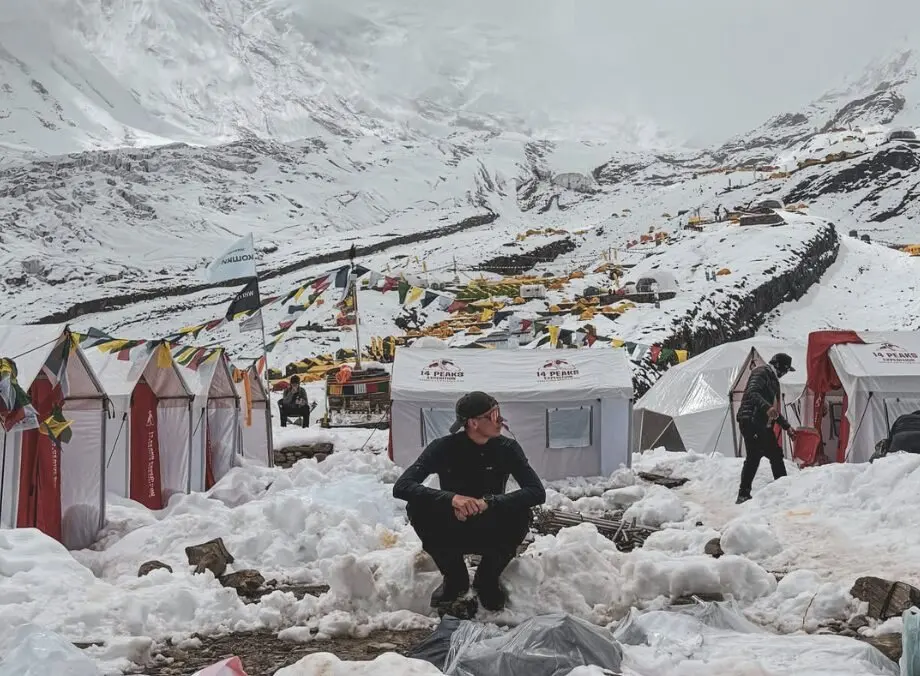
At Manaslu, most teams have thrown in the towel. The Russian duo Denis Aleksenko and Artem Tsensevitsky are a notable exception. They report that nearly every team has pulled down its high camps and that base camp itself is 90% dismantled, with only a few staff tents and diehard climbers left. They're staying put, calling the commercial season 99% over — but holding out for that last 1%.
Other operators have hedged. Climbing the 7 Summits moved its whole team down to safety in Samagaon or Kathmandu but hasn't cancelled, stressing that safety comes first while keeping a summit window open if one appears. Founder Mike Hamill, with three decades and 30-plus expeditions on 8,000m peaks behind him, argues that teams sometimes cancel too early, and that storms occasionally track away — though this one's size makes that less likely.
Elite Exped, the last Nepal-based outfitter still waiting it out at base camp, has now pulled the plug. Their reasoning is practical: deep fresh snow means brutal trail-breaking, a serious avalanche risk, and buried fixed ropes. Even once skies clear, rebuilding camps and re-fixing routes before clients could go for the summit may simply not be worth it. Smaller teams climbing light with skilled guides might still find a way up.
Over on Dhaulagiri, Australian Paul Clarke and Hungary's Xenia Santha, plus two other climbers, remain at 8K Expeditions' base camp with a skeleton crew. Around 20cm of snow fell overnight and it was still snowing; they'll assess the mountain once the weather breaks.
The wider backdrop is grim. Nepal is on high alert after catastrophic floods that have killed well over 1,400 people, and officials fear further floods and landslides from the intense rainfall. The Expedition Operators' Association Nepal has urged climbers, guides and mountain workers to take precautions, warning of heavy rain at lower elevations and snow with strong winds in the Himalaya.
For travellers, the takeaway is timing. Late September and early October sit in a risky transition zone when the monsoon's exit can bring exactly this kind of severe weather to Nepal's trekking and climbing regions. Anyone with flights, treks or expeditions booked in the Nepal Himalaya right now should expect disruption, monitor operator updates, and build buffer days into itineraries. The red alert covers all mountain areas, and landslides can close roads on popular trekking approaches. Flexibility — as the patient climbers at base camp understand better than anyone — is the whole game this season.