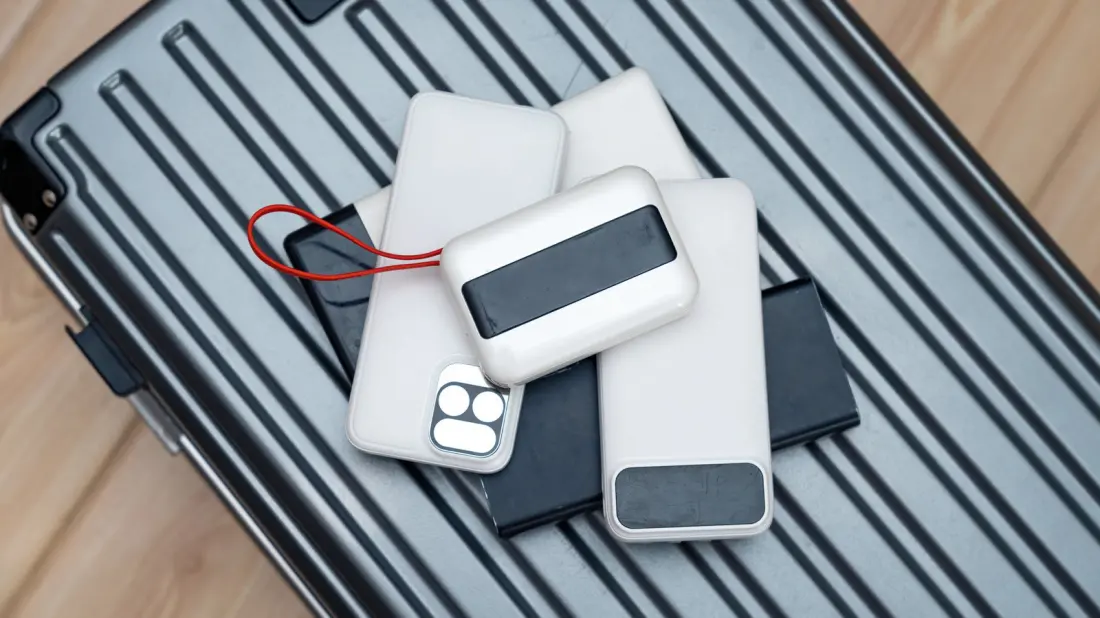
From 1 January 2027, expect stricter rules around portable chargers on flights. The International Air Transport Association (IATA) has updated its Dangerous Goods Regulations, recommending that passengers and crew carry no more than two power banks each, that power banks never be recharged in flight, and - the big one - that passengers stop using power banks to charge their phones, laptops and other devices while onboard.
Airlines aren't legally bound by IATA guidance, but most follow its lead when writing their own policies, so this will likely trickle into cabin rules over the coming years. Delta already asks passengers not to use power banks during taxi, takeoff and landing, but a full in-flight charging ban would be a step further than anything currently enforced by major carriers.
The reason is fire risk. Lithium-ion batteries can enter what's called thermal runaway - an uncontrollable overheating event triggered by manufacturing faults, damage, extreme temperatures or overcharging - and once it starts, a fire can break out within seconds. According to a UL Standards & Engagement report cited in the source, there were on average more than two thermal runaway incidents per week on planes in 2025.
Even before the new guidance kicks in, plenty of existing rules are catching travellers out. IATA's 2025 data found that 45% of passengers didn't know power banks are banned from checked baggage - they must travel in your carry-on. Just 33% knew there's a capacity limit of 100 watt-hours per power bank, with all your chargers combined also needing to stay under that cap. In practice, US carriers like American, Delta and United allow two power banks per passenger, while Southwest only permits one. Most also want power banks kept at your seat or in your personal item rather than stowed in the overhead bin, and stored separately - ideally in individual cases - so they can't short-circuit against each other.
For anyone who relies on a portable charger to keep their phone alive on a long-haul, this could be a genuine inconvenience. If airlines adopt the recommendation, you'll be banking on built-in seat power or landing with a drained battery. Worth checking before you fly whether your aircraft has in-seat outlets, and fully charging your devices before boarding.