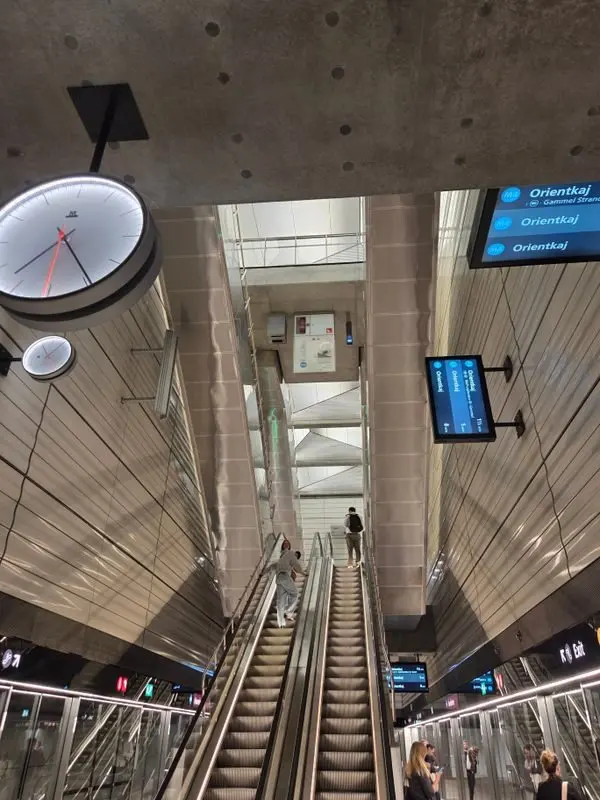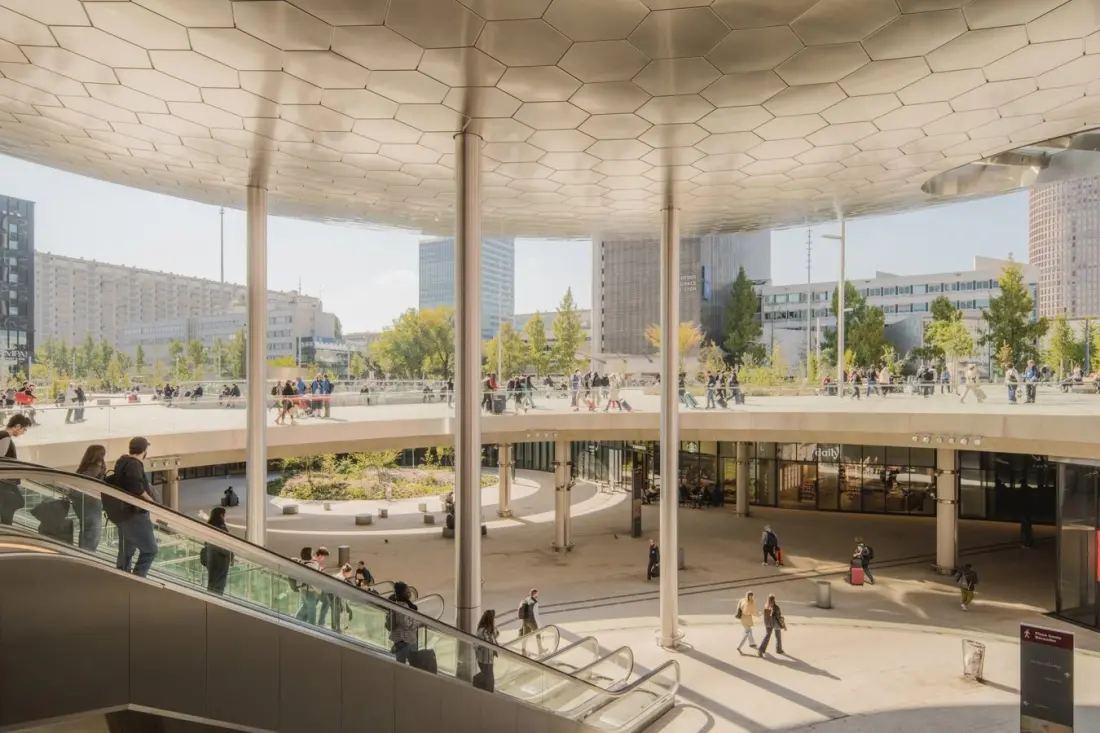
Seven passenger stations across four continents have made the Prix Versailles' World's Most Beautiful Stations List for 2026, announced on 28 September at UNESCO's Paris headquarters. The prize, running since 2015, rewards architecture that balances beauty with sustainability and local character — and this year's transport picks show how much ambition is now going underground.
Italy does unusually well, with two winners in Rome and Naples. Rome's Colosseo–Fori Imperiali station drops passengers more than 30 metres below street level across four levels, and construction turned into an accidental excavation: artefacts unearthed during the dig now line the route, with ancient wells woven into a design that plays on light and shadow to reveal the layers of the city's bedrock. In Naples, Monte Sant'Angelo is essentially a walk-in sculpture by Anish Kapoor, built with Future Systems and AL_A after more than twenty years of planning. Two monumental corten steel and aluminium openings lead down into a space that nods to Mount Vesuvius, caves and the legend of the Cumaean Sibyl.
Australia's entry is Melbourne's Town Hall Station, right under the historic centre's City Square. Designed by Hassell, RSHP and WW+P, its concourse is held up by eight tree-like columns and crowned with coppery vaulted ceilings ten metres above unusually wide platforms — the judges likened it to a cathedral. France's Lyon Part-Dieu, one of Europe's busiest interchange stations, doubled in size under AREP and L'AUC, with new pass-throughs inspired by the city's famous hidden traboule alleyways.
Saudi Arabia takes two spots, both in Riyadh. The National Museum station, by Arup, uses a lattice façade modelled on the topography of Tuwaiq Mountain, with Najdi-style triangular openings framing a glowing blue interior that judges compared to stepping inside a geode. Western Station, by Omrania, sits on a former open-air market and rebuilds that civic role, adding shops, a mosque and shaded pedestrian zones around dune-inspired undulating roofs.
The final pick is Los Angeles, where the LAX/Metro Transit Center by Grimshaw and Gruen Associates links Metro's C and K lines, 16 bus routes, a bike hub and future automated people movers — a big deal in a famously car-centric city. It's designed for the local climate too, leaning on natural ventilation and awnings instead of heavy air conditioning, with solar panels covering roughly half its interior energy needs.
Why it matters for travellers: stations increasingly double as the first and last impression of a city, and these are worth budgeting time for rather than rushing through. Rome's new metro stop means you can literally arrive among ancient ruins; Melbourne's and Riyadh's additions are genuinely striking public spaces. Three of the seven will go further on 10 December, when Prix Versailles, Interior and Exterior World Titles are handed out at UNESCO — worth a look if you're plotting a rail-heavy city break for 2027.