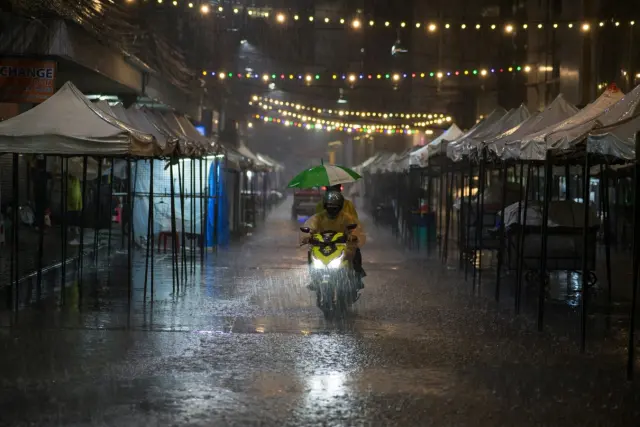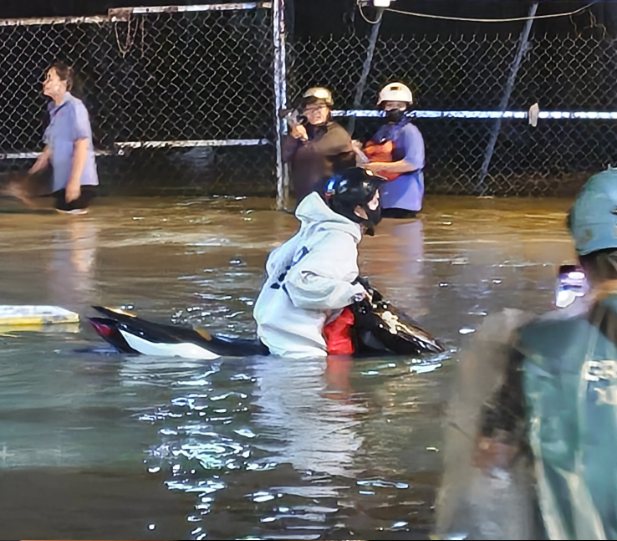
On the evening of September 30, a rainstorm hit Ho Chi Minh City right at rush hour, and the result was gridlock on a scale that flooded Vietnamese social media for hours. Office workers who left at 6 PM were still stuck on flooded streets by 9 PM, posting live updates from stalled motorbikes on Threads, TikTok and Facebook while waiting for knee-deep water to drain.
The stories were remarkably similar across the city. One commuter named Long clocked out at 6 PM and by 9 PM had given up on Phan Huy Ich Street in An Hoi Tay Ward, pulling over to wait out floodwaters rather than risk his bike in the deep current. Huynh Mai, whose usual 9-kilometre ride home takes about 30 minutes, watched her engine drown halfway home and needed a full 90 minutes of pushing and restarts to reach her door. Near Tan Son Nhat International Airport, a rider named Quang crawled along Truong Chinh Street for an hour before his bike cut out entirely, surrounded by dozens of other stranded motorists.
What stood out amid the chaos was the solidarity. One rider whose engine sputtered out in the flood was pushed through the water by a complete stranger. Another woman, caught mid-ride home from the gym, abandoned her dead scooter in a supermarket car park until her father arrived to help wheel it clear. Locals joked online that anyone who made it home on time deserved an 'Employee of the Year' trophy — gallows humour for a city where the morning rush had already been snarled by earlier downpours, with major bottlenecks on Nguyen Huu Tho Street near Kenh Te Bridge and at the Le Loi–Pasteur intersection downtown.
Why does this matter to travellers? Ho Chi Minh City's rainy season runs roughly from May to November, and September is peak flooding month. Most visitors stick to ride-hailing apps like Grab rather than renting motorbikes, which helps — cars handle flooded streets better than scooters. But the practical lessons from nights like this apply to everyone: avoid travelling at 5–7 PM during heavy rain, expect your hotel or dinner plans to shift, and build slack into any airport transfer, especially to and from Tan Son Nhat, which sits right in the flood-prone thick of it. If you do get caught, the local playbook is patience — wait out the water rather than pushing through it.
The city's flood problems are well-known and infrastructure projects are slowly addressing them, but on a given stormy evening, even a short hop across town can stretch into a three-hour ordeal. Visit in the December-to-April dry season and you'll sidestep the drama entirely; come between June and September, pack a flexible schedule and a rain jacket, and keep your evenings loose.