In most of the world, grief is quiet. In Bhaktapur, it arrives with drums, bells and dancing in the streets. Sa: Paru — also known as Gai Jatra — is the Newar festival honouring everyone who died in the past year, and it turns mourning into something closer to a carnival.
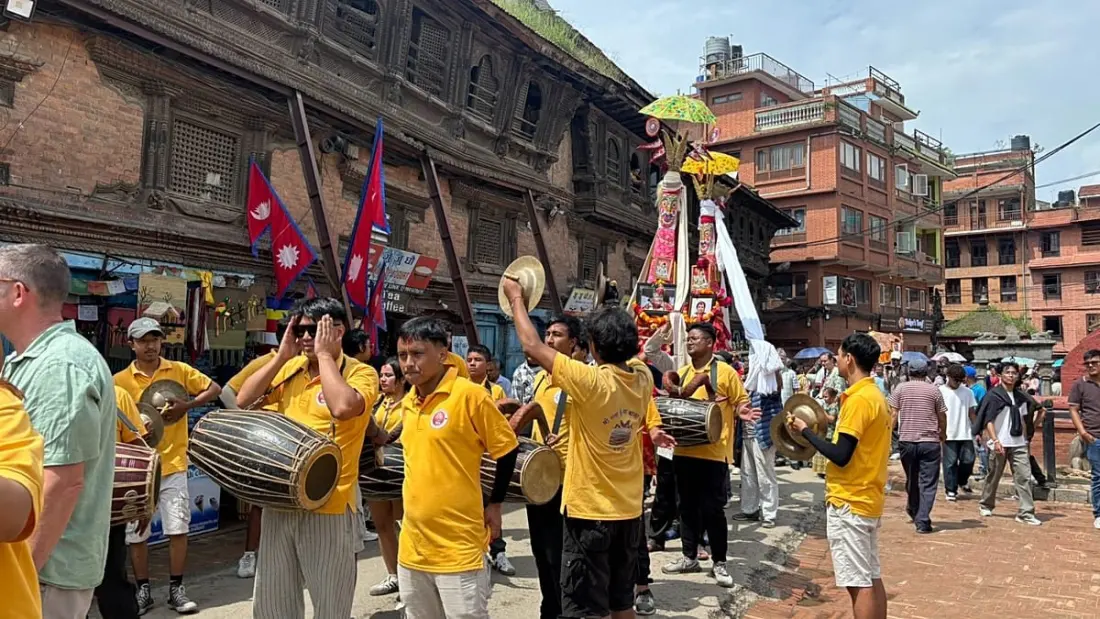
The festival is celebrated across the Kathmandu Valley, but Bhaktapur's version stands out. Before the main day — held after the full moon in August or September, following Nepal's lunisolar calendar — neighbours build tall bamboo structures called taha: sa. These replaced the cows once used in the procession; each is wrapped in cloth (red for women, white for men), topped with a painting of a sacred cow, and decorated with a photo of the deceased, images of Shiva and an umbrella as a mark of respect. Building one takes real skill and plenty of hands, which is the point: the whole community pitches in, whether or not they've lost someone.
On festival morning, the taha: sa stream through the streets to drumbeats and the clashing sticks of the Ghintang Ghisi dance. Each troupe starts at its own pace — some practically jog, making the structures sway like a tipsy cow — until the crowded streets force everyone into a single, slow rhythm. Dress code is loose: you'll spot traditional wear alongside football shirts and Hawaiian prints, and visitors are welcome to join in. Local priest and PhD student Peepul Subedi explains the spirit of it: dancing and singing aren't celebrating death, but sending the departed soul towards salvation, and reminding everyone that sorrow is something we all share. In Bhaktapur the festivities run for eight days, not one, with dance performances across the city.
The festival's satirical edge reportedly dates to the 14th century, when King Pratap Malla expanded it to cheer his wife after their son's death. Today that includes satirical masks of political figures — Trump and Putin among them.
The bigger takeaway from Euronews' visit is that Bhaktapur deserves more than the usual hour-long detour from Kathmandu. Beyond Durbar Square and the 55 Window Palace, there's Pottery Square with ceramics drying in the sun and hands-on workshops, and the Peacock Shop, where the owner demonstrates traditional Lokta paper making. The boutique hotel The Nanee was founded specifically to encourage visitors to stay longer, with experiences run in partnership with locals — a morning walk with a housewife, dinner with an artisan. Come for Sa: Paru, or time a trip around Bisket Jatra, an eight-night festival each April.
One practical note: flash floods near the Tibetan border recently killed at least 1,369 people, prompting some travellers to cancel. The Kathmandu Valley, Everest and the main trekking trails were unaffected, and the tourism industry — already hit by rerouted flights — needs visitors more than ever.
If you've ever found Western grieving rituals a bit hollow, Sa: Paru offers a different model: loud, communal and, oddly, life-affirming. Bring earplugs if you must, but bring an open mind too.
Credit: Euronews Travel