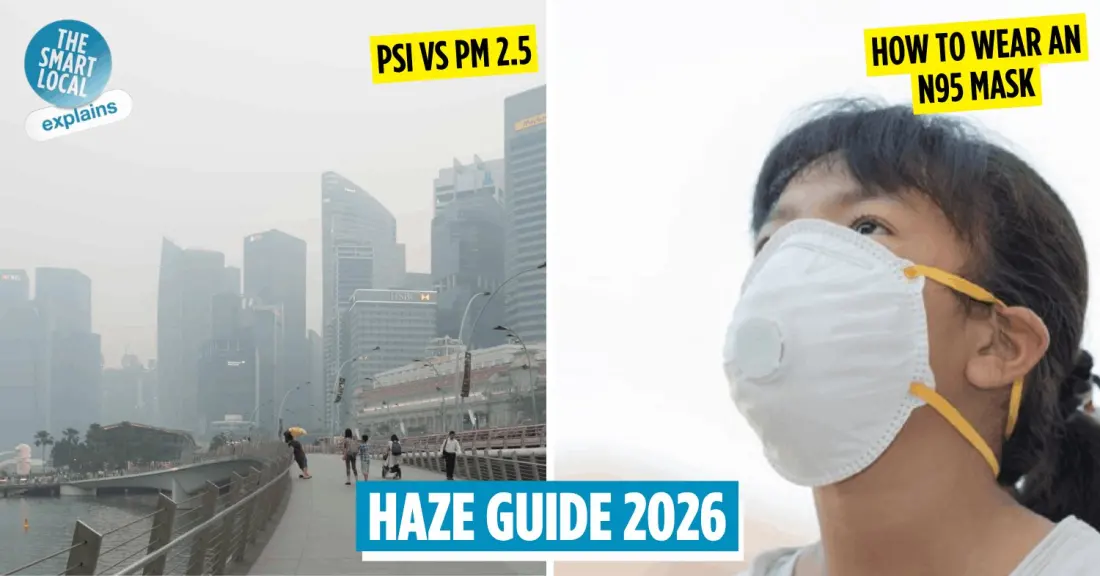
Singapore's skies have gone smoky again. On 4 September 2026, the city's 24-hour Pollutant Standards Index (PSI) crossed into Unhealthy territory for the first time since October 2023, and the outlook for the rest of the season is not reassuring. The Singapore Institute of International Affairs (SIIA) has given 2026 a rare "Red" rating in its Haze Outlook — only the second since the annual report began in 2019 — flagging August to September as the peak danger window. Smoke from fires in Kalimantan has already been observed drifting towards the island, and drier conditions linked to El Niño and a possible positive Indian Ocean Dipole could make things worse.
If you're visiting or living in Singapore over the coming months, the first skill worth learning is decoding the numbers on the myENV app or haze.gov.sg. The two key readings do different jobs. The 1-hour PM2.5 figure tells you what the air is like right now — useful before a morning run or a day at Gardens by the Bay. Anything from 56µg/m³ is Elevated, 151+ is High, and 251+ is Very High. The 24-hour PSI, meanwhile, is for planning ahead: 101-200 is Unhealthy, 201-300 Very Unhealthy, and 300+ Hazardous. One tip from health authorities: don't judge the air by how the skyline looks from your window — check the actual readings.
At home, a few simple moves make a real difference. Seal obvious gaps around doors and windows with draught stoppers (no need to go full bunker), run the air-con or fans, and skip candles, incense and indoor smoking. Wet-mop rather than dry-dust so settled particles don't get re-launched into the air, and reopen the windows once the outdoor air improves. If you're buying an air purifier, look for a HEPA filter, match the smoke CADR (Clean Air Delivery Rate) to your room size, and keep a spare filter on hand — one small unit won't clean an entire flat, so park it in the room you use most.
On masks: those surgical masks left over from the pandemic won't cut it against fine PM2.5 particles. An N95 respirator does, but only when it fits properly — straps positioned high on the head and below the ears, the nosepiece moulded firmly, and a leak check by breathing out with your hands cupped over the mask. Beards and poor sizing create gaps. No need to wear one indoors.
Worth stocking up: any prescribed medication (especially for asthma, COPD or heart conditions), lubricating eye drops, saline nasal spray, throat lozenges and extra water or electrolytes. Mild symptoms like irritated eyes or a scratchy throat are common and can appear one to three days after exposure; a pharmacist, GP or polyclinic is the right port of call. Breathing difficulty or chest pain means emergency care. Children, the elderly and anyone with chronic heart or lung conditions should take extra care.
For travellers, the practical takeaway is simple: download myENV before you arrive, check the 1-hour PM2.5 before outdoor plans, and have a lineup of indoor options — museums, hawker centres, malls — ready for the smokier days.