Officials in Thanh Hóa Province, in northern Vietnam, have hit on a distinctly modern way to sell very traditional things: they are livestreaming them. Provincial authorities are using online broadcasts to promote OCOP products — the national 'One Commune, One Product' programme that certifies local specialties — alongside agricultural goods and cultural attractions, in line with Vietnam's wider digital transformation agenda under Resolution 57-NQ/TW.
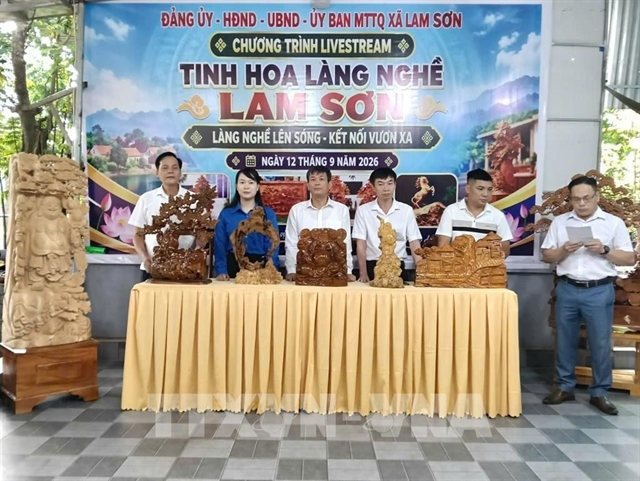
The most recent example came from Lam Sơn Commune, home to the Lam Kinh historical site, which counts three three-star OCOP products among its output. In September, the commune staged a livestream titled 'Craft Villages Go Online: Connecting for Greater Reach', broadcast from a local wood art workshop. Party Committee Secretary Nguyễn Ngọc Thức appeared on camera alongside artisans, introducing handicrafts and telling the stories behind the village's woodworking tradition. He framed the exercise as more than commerce: the point is to make digital tools feel practical for small producers who have little experience in branding or online marketing.
Lam Sơn has plenty to work with. The area is known for gai cake, fermented pork rolls, peanut candy and Luận Văn pomelos, and several other agricultural and food products are candidates for future OCOP certification. What most producers lack is scale and marketing know-how — which is exactly the gap the livestreaming push is meant to close.
Neighbouring Sao Vàng Commune is going further, planning at least one livestream per month through November, each featuring not just OCOP goods and farm specialties but also cultural sights and tourism destinations. The model is spreading to other districts too, including Yên Định, Tây Đô, Xuân Hòa and Đông Quang Ward.
Why should a traveller care? For anyone heading to northern Vietnam, this is a signal that Thanh Hóa is actively trying to connect visitors and outside buyers with its village-level food and craft culture — and with places like Lam Kinh that rarely feature on standard itineraries. Even if you never watch a Vietnamese-language livestream, the programme points you toward the specialties worth seeking out on the ground: pomelos from Luận Văn, peanut candy, gai cake and woodwork from Lam Sơn's craft workshops. Buying directly from these small producers, or timing a visit around one of the monthly online events, puts money where the region's character actually lives. It's also a reminder that Vietnam's most interesting food and craft experiences are increasingly being marketed from the village up, not the capital down — so it pays to look past Hanoi and Hoi An when planning a trip through the country's northern provinces.
For now, the livestreams are mostly a domestic sales channel, but they double as a window into places international visitors would otherwise never hear about — and a preview of the snacks and souvenirs to hunt down if you find yourself in Thanh Hóa.