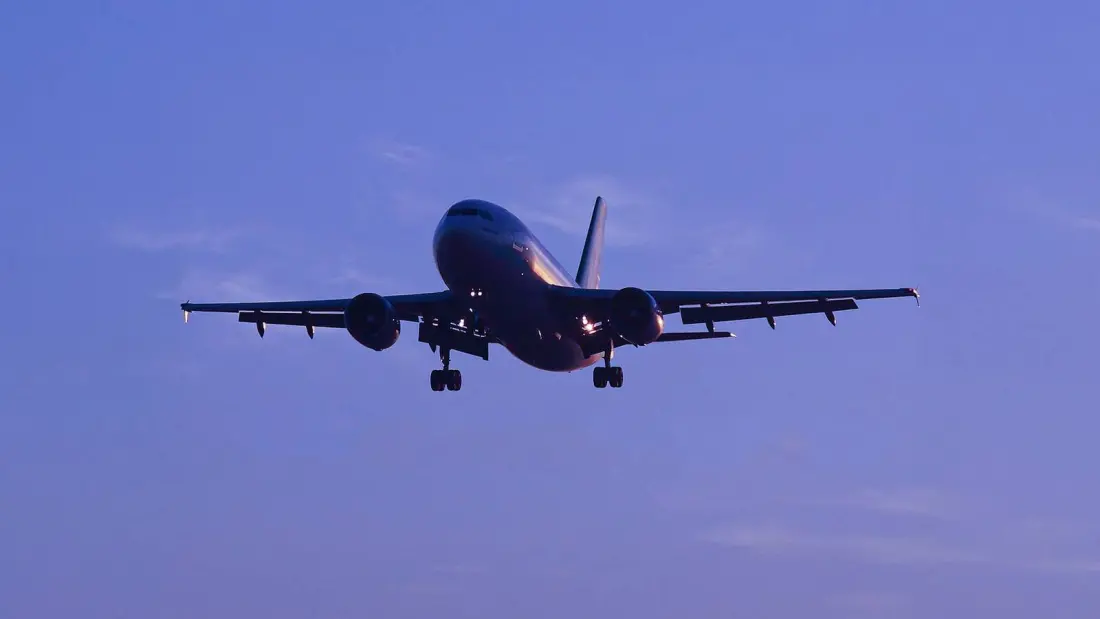
Only 255 were ever built, but the Airbus A310-300 changed how the world crosses oceans. Before it, a rule dating back to 1936 kept twin-engine airliners within 60 minutes of a diversion airport — which meant every North Atlantic flight needed a three- or four-engine aircraft like the 747, DC-10 or L-1011. The A310-300, alongside the Boeing 767, helped tear that rule down.
Airbus launched the A310 in 1978 as a shortened A300, seating 200-280 passengers in the same wide twin-aisle cabin. Swissair and Lufthansa ordered first; the type entered service in April 1983. The A310-300 version, arriving in 1985, was the game-changer: extra fuel and a trim tank in the tail pushed range to roughly 5,150 nautical miles — enough to hop the Atlantic nonstop between the big European and North American city pairs.
The real breakthrough came with ETOPS certification. In 1985, TWA's 767 earned the first 120-minute approval, opening a narrow Atlantic corridor. By 1988 the FAA allowed 180 minutes, and the A310-300 — powered by GE CF6-80C2 or Pratt & Whitney PW4000 engines — was among the first widebody twins to qualify. Airlines moved fast: Pan Am flew it across the Atlantic, Delta inherited the fleet in 1991 and ran up to 30 of them, Air France linked Paris to Philadelphia, TAP connected Lisbon and Newark, and Canadian operators Wardair, Canadian Airlines and Air Transat put it to work on Canada-Europe leisure routes.
Why does this matter to anyone booking a long-haul flight today? Because the A310's safety record gave regulators the confidence to keep extending twin-engine limits — ETOPS-240 for the A330, ETOPS-330 for the 777 and 787, and ETOPS-370 for the A350. That's why a 787 now flies Los Angeles to Sydney, and why efficient two-engine jets replaced the fuel-hungry quads on nearly every oceanic route. Even Airbus's own four-engine A340 was killed off by the twins its earlier caution helped create.
The A310 itself is nearly gone. Around 33 airframes remained in service in early 2025: a handful of passenger examples with Ariana Afghan Airlines, Iran Air and Iran Airtour, three UPS freighters, and military versions like Canada's CC-150 Polaris and the French and German air forces' MRTT tankers, which will likely be the last ones flying.
For aviation-minded travellers, the takeaway is simple: the affordable, frequent transatlantic widebody flights we take for granted trace straight back to this modest Airbus. It didn't beat the 747 at capacity — it proved a 220-seat twin could profitably serve routes the giants couldn't, and in doing so rewrote the rules of ocean crossing.