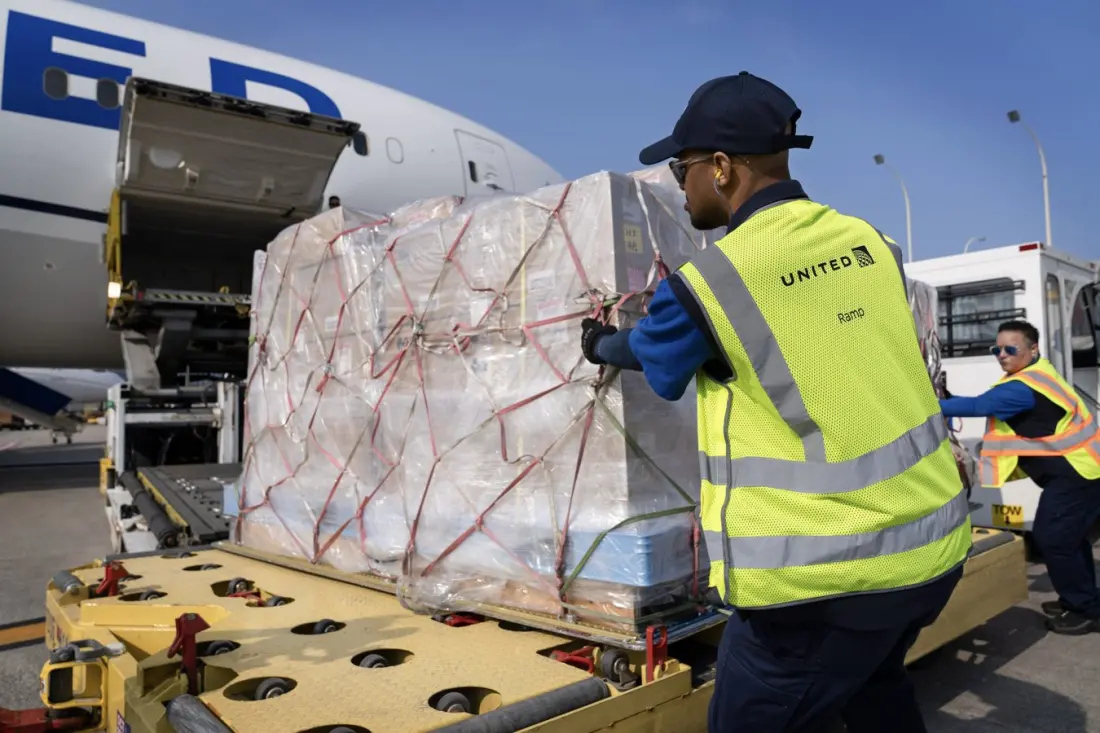
A report published by The Intercept on September 9 alleges that United Airlines has been using a regular passenger service to carry military hardware into Israel. The flight in question, UA 90, runs from Newark Liberty International Airport to Tel Aviv, and the report claims five shipments of military cargo were booked aboard it shortly after the route resumed — with at least one shipment marked under the U.S. Foreign Military Sales program.
According to the reporting, the shipments were addressed to facilities operated by Elbit Systems, Israel's largest defence contractor: its electro-optics division in Rehovot, Elbit Systems Land in Ramat Hasharon, and a site in Karmiel. Frommer's contacted United for comment and received only a non-committal "We don't have anything to share" from a representative who declined to be named.
Why should an ordinary holidaymaker care about freight manifests? Because history is blunt on this point. In 1915 the Lusitania was sailing from New York to Liverpool carrying civilians — and also, famously, tons of war supplies. Germany used that as justification to torpedo her off the Irish coast, killing 1,197 of the 1,960 people aboard, and helping pull the United States into World War I. More recent examples abound: the SS Athenia, sunk in 1939, and Iran Air Flight 655, shot down by the United States in 1988, were both civilian targets destroyed in circumstances where their actual innocence mattered little to the attacker.
The pattern extends beyond airlines and ships. Ukraine has spent this summer targeting the warehouses of Wildberries, a huge Russian online retailer, arguing that its supply chains serve Russian troops and drone makers. A company may be a civilian business on paper; if a warring party believes it moves weapons, it becomes a target regardless of what lawyers or conventions say.
That's the core of the concern here. It isn't about where you stand on any particular conflict — it's that once a passenger route becomes associated with arms shipments, a rival military can point to that association and claim its strike was justified. The Intercept's reporting, even if disputed, puts United's Tel Aviv service in that category in the eyes of anyone looking for a rationale. And travellers were given no say in the matter.
The argument made by Frommer's is simple: passengers have a right to know if the plane they're boarding also carries combat materiel, so they can take their business elsewhere if they're uncomfortable with the risk. Whether or not the allegations are fully accurate, the perception alone creates exposure — for the airline, for the route, and for the people in the cabin who never signed up to be anywhere near a supply chain.
If you're flying to Israel in the current climate, it's worth paying attention to how carriers handle this. Some travellers will shrug; others will want to pick an airline whose cargo holds hold nothing controversial. Either way, transparency would let people make that choice themselves — which, for now, is exactly what's missing. — Frommer's