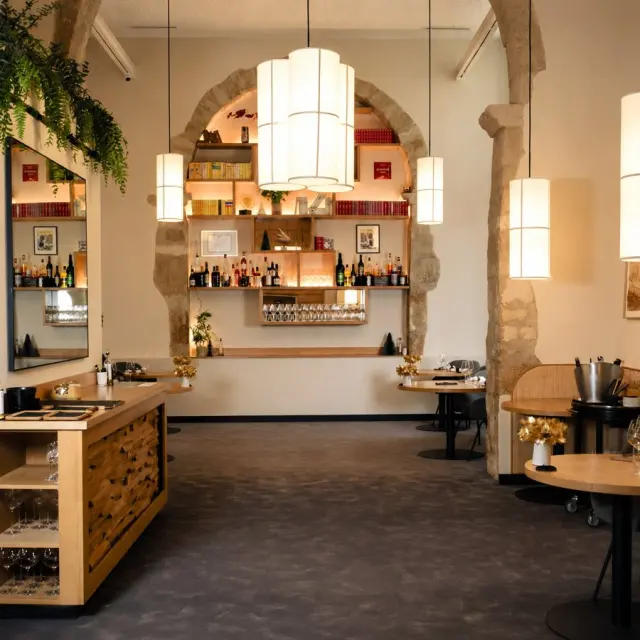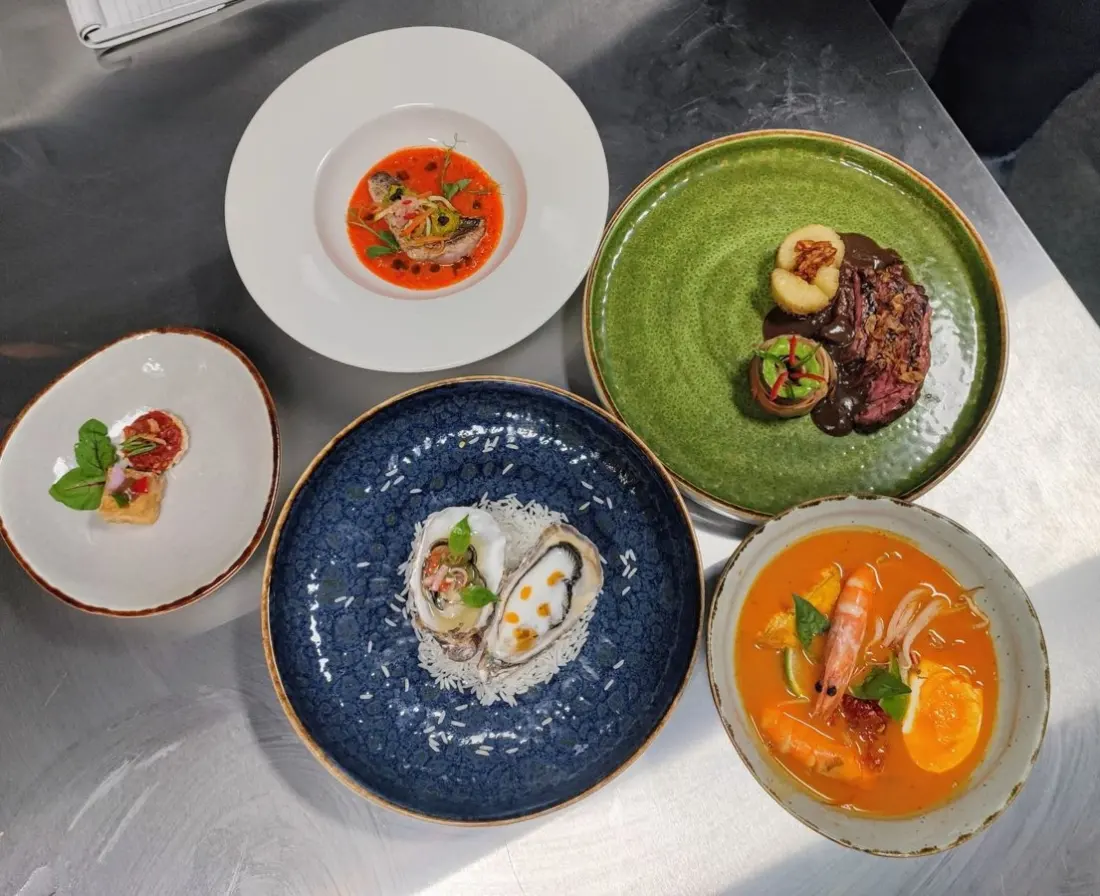
A quiet revolution is happening in Dutch dining rooms. In Oegstgeest, just outside Leiden, chef Eduard Roesdi and his wife Renu Lubis serve a tasting menu at Nona Manis that moves region by region across Indonesia: banana-leaf-wrapped fish cakes from Palembang, raw oysters with Balinese sambal matah, lemon basil-scented fish from North Sulawesi, eggplant stuffed with tempeh in coconut lodeh. What's missing is the rijsttafel — the sprawling rice table of shareable dishes that most Dutch diners associate with Indonesian food. That absence is deliberate.
The rijsttafel was never Indonesian. It was a colonial-era spectacle created in the Dutch East Indies, where servants presented dozens of dishes to showcase the empire's wealth. After Indonesian independence in 1945, the format fell out of favour in Indonesia itself, but it survived in the Netherlands, brought over by hundreds of thousands of repatriated Dutch and Indo-Dutch families who opened restaurants and adapted flavours to local tastes. It became so embedded in Dutch culture that it was added to the country's National Inventory of Intangible Cultural Heritage in 2022 — a fact some chefs find ironic, given it reflects only a narrow slice of Indonesia's vastly diverse regional cooking.
That's the gap the new generation is filling. Roesdi and Lubis ran a Leiden toko for over two decades before opening Nona Manis in 2023, betting that diners would accept Indonesian food presented on its own terms. They did. In Haarlem, Ipul Hadi and Raymond Draijer run Kokkie Londo, started as a warung in 2018 and now a small restaurant serving daily-changing nasi campur — eleven components balanced on a single plate, drawn from Hadi's family village in Malang, East Java, plus Bali and Lombok. It's zero-waste, home-style Javanese comfort food rather than colonial abundance.
In Amsterdam, third-generation Indo-Dutch chef Servé Dierdorp launched Koki Putih pop-ups in November 2025, pairing Indonesian technique with Dutch seasonal produce. Banana leaves are pricey imports, so he wraps lemper in fig leaves instead. His menu bends both ways: atjar tjampoer sorbet, rendang pie, spice pastes still ground by hand in a mortar for hours.
For travellers, this is one of the more interesting reasons to eat your way through the Netherlands right now. Amsterdam, Leiden and Haarlem all sit within an hour of each other by train, and together they offer a rare chance to taste Indonesian cuisine as its own chefs want it told — regional, personal, and free of colonial framing. Leiden itself is worth the trip: a canal-laced university city close to the beach at Katwijk, with a long history of Indonesian community life.