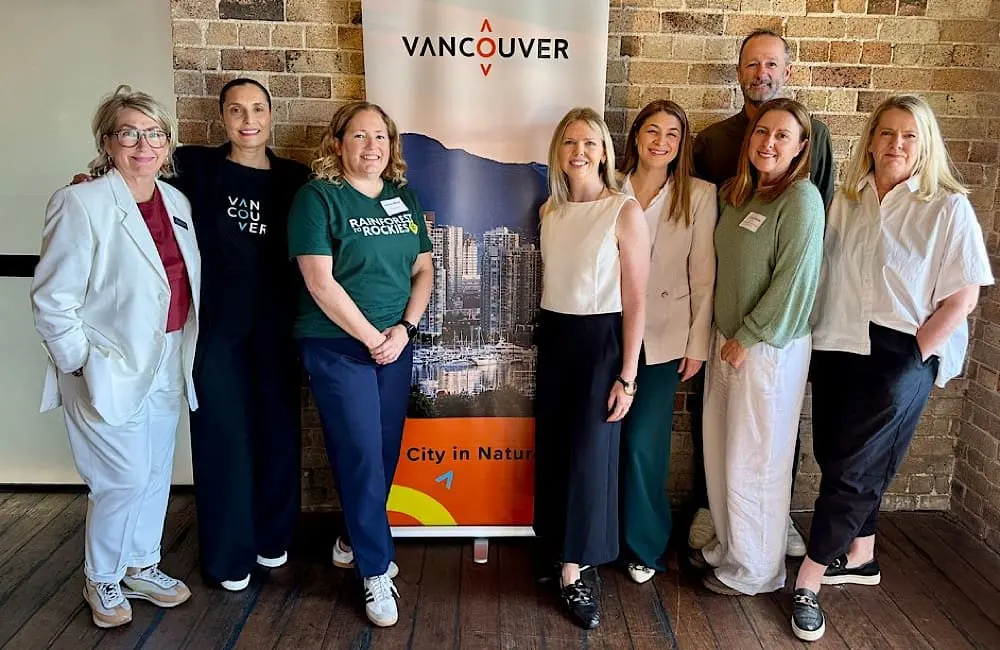
Australians have fallen hard for Vancouver. Visitor numbers from Down Under are up 17% year over year through June 2026, growing every single month and jumping 35% during the FIFA World Cup. Now Destination Vancouver is using that momentum to make a pitch: come outside peak summer, and stay longer than a night or two.
The financial argument is straightforward. Hotel occupancy in the city hits 90-95% at the height of summer, but rates in spring, autumn and winter run about 30% cheaper. For travellers watching their budget after a long-haul flight, that's a real saving — and it comes with quieter attractions and locals who are happy to see you.
Destination Vancouver's trade marketing manager Victoria Leader, a half-Canadian Briton who moved to the city 12 years ago, says the goal is getting visitors to treat Vancouver as a destination in its own right rather than a gateway stop. The average Australian stay is creeping up to three or four nights, but many itineraries still slot in just one or two before sending travellers on to the Rockies or elsewhere in Canada. Her advice: after a direct flight from Sydney or Brisbane on Air Canada, or Sydney on Qantas, give yourself a few days to decompress and explore before moving on.
What fills those extra days? Vancouver's selling point is how completely the city and its outdoors are intertwined — Grouse Mountain is only 20 minutes from downtown, with beaches and forest close behind. Leader also flags the neighbourhoods, independent coffee shops and bars, Michelin-recognised dining, and the Museum of Anthropology, which she recommends to first-timers as an accessible introduction to the Indigenous cultures of the land, viewable at your own pace. There's a noticeable shift among Australian visitors toward immersive experiences too — Indigenous-led tours and guided food walks rather than box-ticking sightseeing.
Beyond the city itself, Vancouver is a launchpad for ski trips, Alaska cruises and Rocky Mountaineer rail journeys, which is exactly why tourism officials want it built into more itineraries as more than a layover. They're also lobbying hard for the return of a direct Melbourne service, arguing that capacity is fundamental to continued growth.
For travellers, the takeaway is simple: shifting a Canada trip to the shoulder seasons can cut a third off accommodation costs while giving you the same city-meets-mountains experience. For Aussie travel advisors, there's an extra incentive — completing the Vancouver Specialist Program and Air Canada University training by 15 October 2026 puts you in a draw for a six-night trip for two to Vancouver, flights, hotel and attractions included.