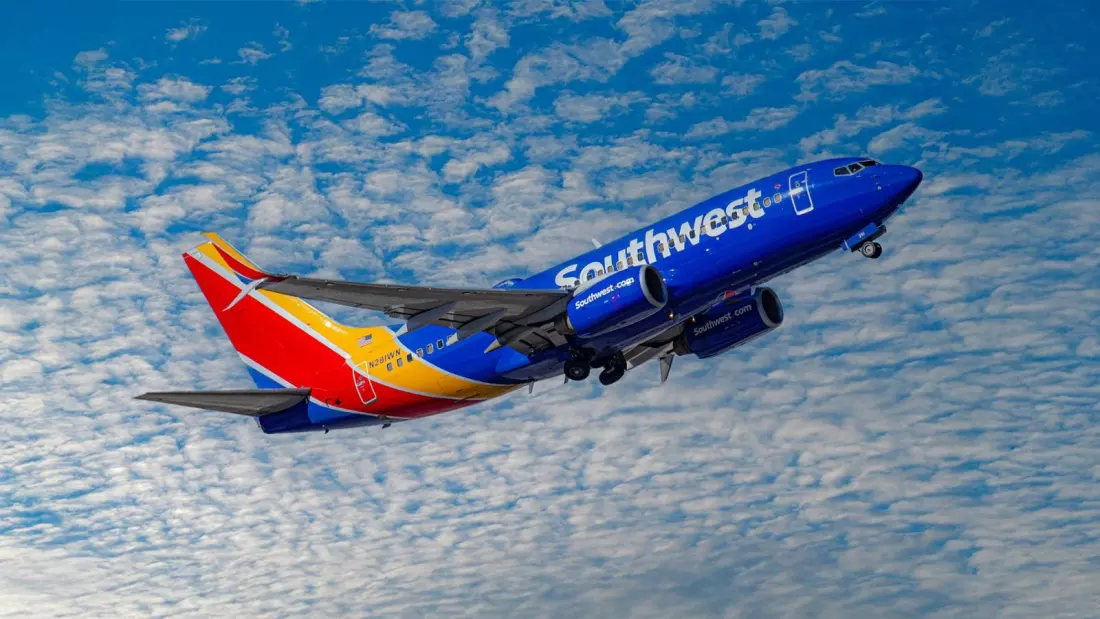
Southwest Airlines is in no rush to part with its oldest jets. Despite plans to replace them with the fuel-sipping 737 MAX 7, the carrier still operates more than 450 Boeing 737 Next-Generation aircraft, including -700s that first flew in the late 1990s. Some will remain in service deep into the 2030s.
The hold-up comes down to certification delays. The MAX 7, the smallest variant of Boeing's newer family, spent nearly a decade stuck in regulatory limbo as the FAA scrutinised its engine anti-ice system. That changed on 3 August 2026, when the type finally received certification. Even so, Southwest won't start taking commercial deliveries until early 2027, and each batch needs six to nine months of work before passengers see it: cabin interiors, in-seat power, expanded bins and the new assigned-seating layout all need installing, while 11,000-plus pilots cycle through differences training.
Why not just order more of the larger 175-seat MAX 8 instead? Because the little 143-seat 737-700 does jobs the bigger jet can't. It's better on short runways and weight-restricted airports like Hollywood Burbank, John Wayne Orange County and Chicago Midway, where a MAX 8 would face payload penalties. It's also the right size for thinner regional routes, where a half-empty MAX 8 would wreck the economics.
Keeping quarter-century-old jets flying isn't cheap. A pair of overhauled CFM56 engines can run to $6 million, often close to the value of the airframe itself. Southwest's workaround is pragmatic: it budgets each aircraft's remaining engine cycles, fully overhauls only the jets that justify it, and strips retired airframes for parts — landing gear, actuators and other components that keep the survivors airworthy. The trade-off is fuel burn: the old CFM56 engines use roughly 15% more fuel per flight than the MAX's LEAP-1B engines, adding tens of millions of dollars a year in avoidable costs across such a large fleet.
The current plan targets 50 to 60 retirements a year through 2031, when Southwest wants an all-MAX fleet — a cornerstone of its broader revamp covering assigned seating, extra-legroom seats and premium boarding. Whether that deadline holds depends largely on Boeing, which needs to sustain a production rate of 42 aircraft a month despite a looming engineer strike. Southwest has more than 400 MAX jets on order, so any stumble ripples straight back to Dallas.
For travellers, the practical takeaway: on shorter routes and slot-constrained airports especially, you may well board a 737-700 for years to come. The upside is that cabin standardisation — power outlets, bigger bins and the new seating map — is being rolled out across older and newer aircraft alike, so the experience should feel consistent either way. Watch Southwest's quarterly filings and Boeing's delivery logs if you want a preview of how quickly the old jets disappear from your itinerary.