If you've been caught in a US flight delay recently, the problem may not be weather or your airline — it could be a 40-year-old telecom switch, a backhoed fiber cable, or a control tower computer from a brand that stopped making hardware over a decade ago.
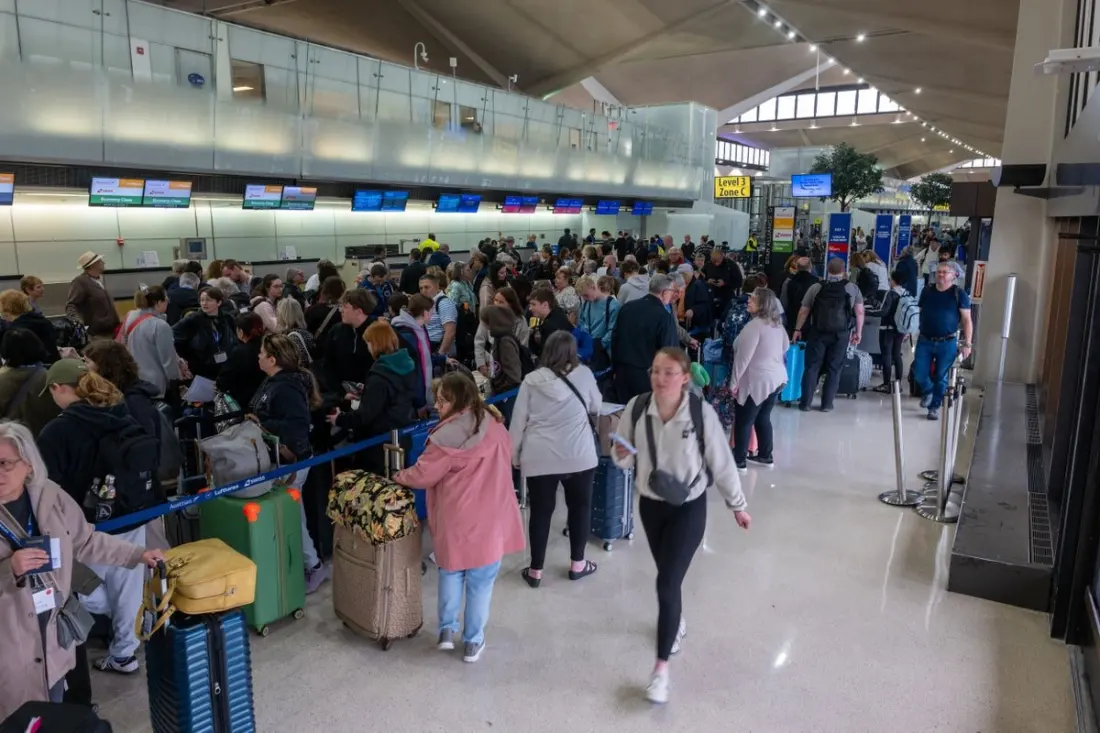
The latest wake-up call came when a circuit failure at a Philadelphia air traffic facility combined with a construction crew cutting a fiber-optic line near New Brunswick, New Jersey. The dual failure delayed or cancelled thousands of flights across the densely trafficked Northeast corridor. US Transportation Secretary Sean Duffy didn't mince words afterwards: the telecom architecture is still four decades old, meaning one broken switch or one severed line can take down the entire Northeast.
This isn't a one-off. In January 2023, a contractor accidentally deleted files from a critical pilot messaging database and every departing flight in the country was grounded — the first full national ground stop since 9/11 — disrupting 11,000 flights. In September 2025, a cut fiber line knocked out communications at two Dallas-area airports, delaying more than 2,000 flights and stranding around 100,000 American Airlines passengers.
The scale of the creakiness is striking. FAA Administrator Bryan Bedford says control towers effectively run on individual Compaq computers — a brand HP retired from hardware in 2013. The agency's 300-plus facilities can't even talk directly to each other, relying on three incompatible telecom systems and, in places, analog equipment. When spare parts run out, the FAA has reportedly resorted to 3D printing replacements or hunting for them on eBay. A 2024 Government Accountability Office report called for "urgent action," warning that a third of current systems are unsustainable — all while the US manages the world's most complex airspace with a shortage of several thousand controllers.
Money is finally flowing: Congress approved $12.5 billion for modernisation last year, and Duffy is now asking for another $30 billion to finish the job. History suggests caution — a 1982 overhaul plan budgeted at $10 billion had ballooned past $36 billion by 1995, and the 2004 NextGen programme, pitched at $15 billion, has delivered delays, overruns and less ambition than promised, according to the Transportation Department's own inspector general. Even the humble paper flight strip controllers still use to track planes won't be fully digital at major airports until at least 2028. The real digital transition — cloud-based systems replacing isolated computers — isn't expected until late 2027.
For travellers, the practical takeaway is to build slack into any US itinerary with tight connections, especially through congested Northeast hubs like Philadelphia, Newark and the New York airports, where a single infrastructure fault can ripple nationwide. Book morning flights when possible (delays compound through the day), know your rebooking rights, and consider travel insurance for non-refundable trips. Until the modernisation money actually turns into new systems, expect more of these incidents — and not just in America, with UK air traffic control outages this month prompting airlines to question resilience there too.