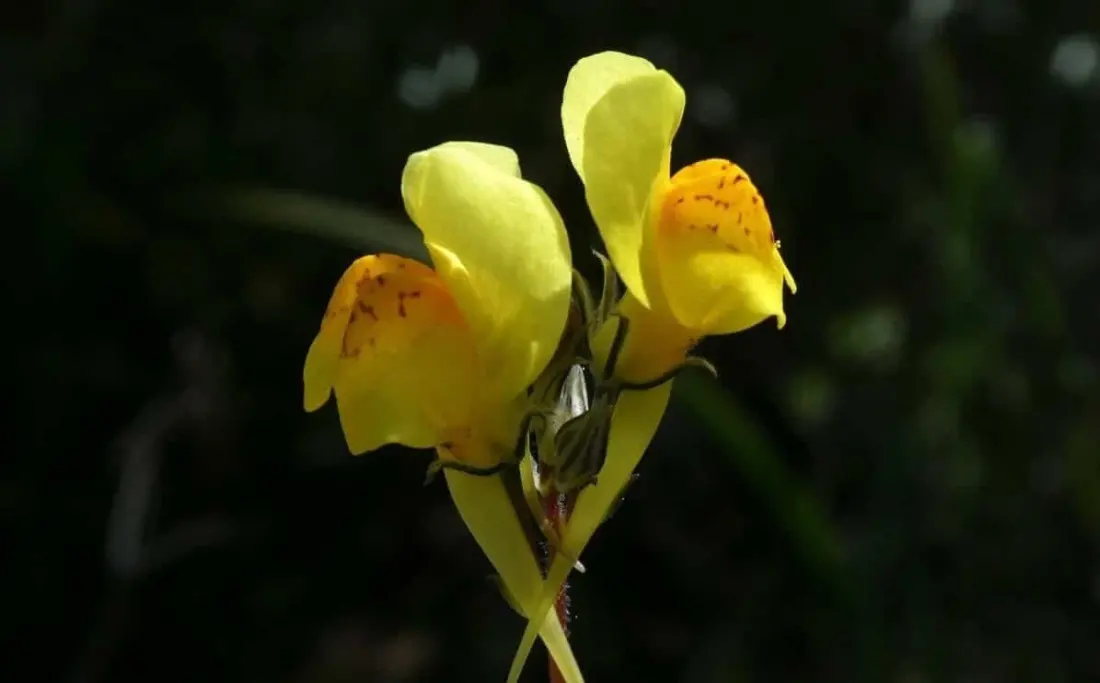
A snapshot taken on a phone in the hills of Monchique has turned out to be science gold: a plant entirely new to botany, found nowhere else on Earth but a few slopes of the Serra da Picota in the western Algarve.
The story starts with a German tourist who photographed a small yellow-flowered plant and uploaded it to iNaturalist, the citizen science app where anyone can log wildlife sightings. The image caught the eye of researchers, prompting João Farminhão of the University of Coimbra to assemble a team from Portuguese and Spanish institutions — including the universities of Lisbon and Barcelona and Madrid's Royal Botanical Garden. Their conclusion, published in Plant Ecology and Evolution, is that the plant is a distinct species, now named Linaria alfercensis after the village of Alferce, where it was first flagged near the Cerro do Castelo de Alferce.
The proposed Portuguese name is ansarina-de-alferce. It's an annual toadflax with yellow blooms marked in orange to reddish-brown, flowering from March to May. What makes it special is where it grows: thin soils over nepheline syenite, a rock so rare that patches of it act like "soil islands", isolating plant populations and letting unique species evolve. The study also confirmed a second Algarve endemic, Linaria bimaculata, as a valid species.
There's a bittersweet edge. The plant appears in small numbers across a tiny range, and researchers want it listed as Endangered under IUCN criteria. Threats include forestry, invasive mimosa (Acacia dealbata), habitat degradation — and, notably, tourism development on parts of the Serra da Picota itself.
For travellers, this is a good excuse to see the Monchique massif differently. The region's ridges, cork woods and spring wildflowers are a rewarding change of pace from the coast, and this discovery shows the flora here is still being mapped in real time. If you're walking the trails around Picota or Foia between March and May, an app like iNaturalist genuinely matters — one holiday photo has already added a species to the scientific record. Farminhão's team calls Portugal a botanical "darkspot", with species at risk of vanishing before anyone formally describes them. Watching where you walk (and staying on paths) helps protect something that may exist on a single hillside.
Who's it for? Wildflower enthusiasts, slow-travel hikers and anyone who likes the idea that their Algarve trip could contribute to real science rather than just a suntan.