
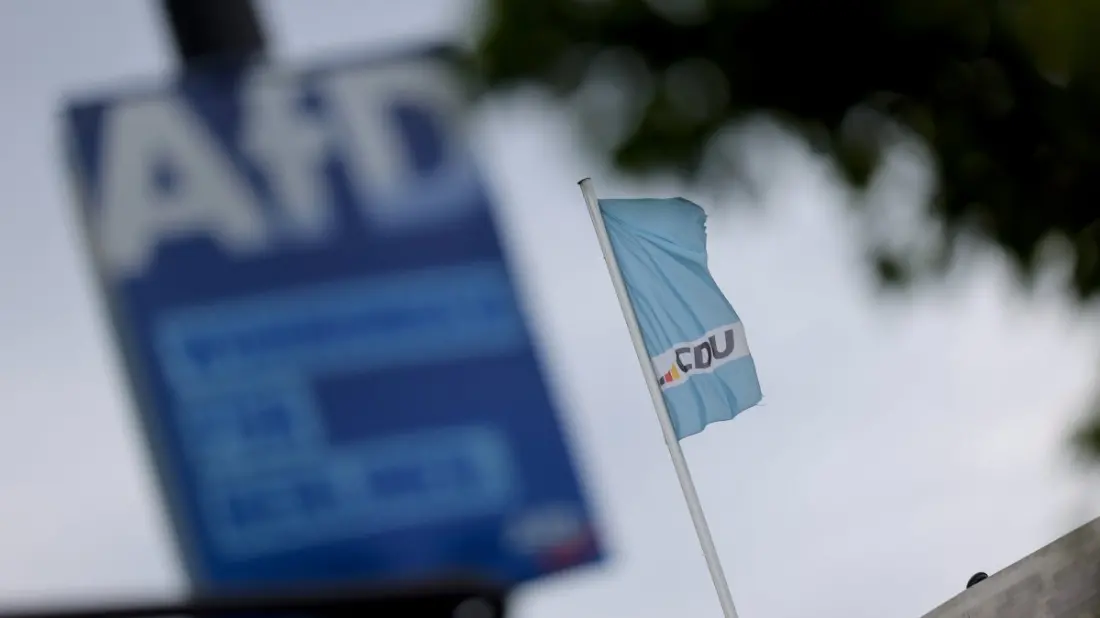
A fresh YouGov survey has put Germany's far-right Alternative for Germany (AfD) at the top of national polling, and the numbers are worth knowing if you're heading to the country any time soon. Published on 15 September 2026, the poll puts the AfD at 29% — up one point on August and buoyed by its strong result in the state election in Saxony-Anhalt earlier that month.
The party's mainstream rivals are struggling to keep up. The Christian Democrats (CDU) and their Bavarian sister party the CSU, led by Chancellor Friedrich Merz, have slid to 18%, their lowest-ever reading in the survey. The Greens are on 16%, the Social Democrats — the junior coalition partner — on 13%, and the Left party has dropped two points to 10%. The Free Democrats sit at 5%, while the Sahra Wagenknecht Alliance (BSW) is at 4%.
Two other findings stand out. A majority of Germans — 59% — still consider the AfD a far-right party, a figure that has barely moved since May 2025. More striking is the shift on the so-called firewall, the informal rule that mainstream parties refuse to work with the AfD. Support for keeping that absolute exclusion has fallen from 46% to 40% in a single month, while 51% now say other parties should not rule out cooperation outright — up from 44% in August.
What does this mean for travellers? Germany remains a safe, well-organised and welcoming destination, and none of this changes the practical experience of visiting Berlin, Munich or the Rhine. But the political mood is clearly shifting, and that has visible side effects: demonstrations for and against the AfD are a regular feature in cities and towns, especially around parliament and party events, and can temporarily close streets or transit routes. Regional elections in states like Saxony-Anhalt and elsewhere tend to bring heavier campaigning and occasional protests, so it's worth checking local news during your trip.
For anyone travelling with an interest in contemporary Europe, though, Germany in 2026 is a fascinating place to observe a political realignment in real time. Museums and memorials dealing with the country's 20th-century history — from Berlin's Topography of Terror to local documentation centres — have added context and resonance when the news is dominated by debates about the far right. Conversations with locals, if you strike them up, are likely to reflect a genuinely divided electorate.
The bottom line: this is a story about German politics rather than a reason to change travel plans. Book the trip, enjoy the Christmas markets and beer gardens, and just keep an eye on local event listings if large demonstrations are scheduled in the cities you're visiting.