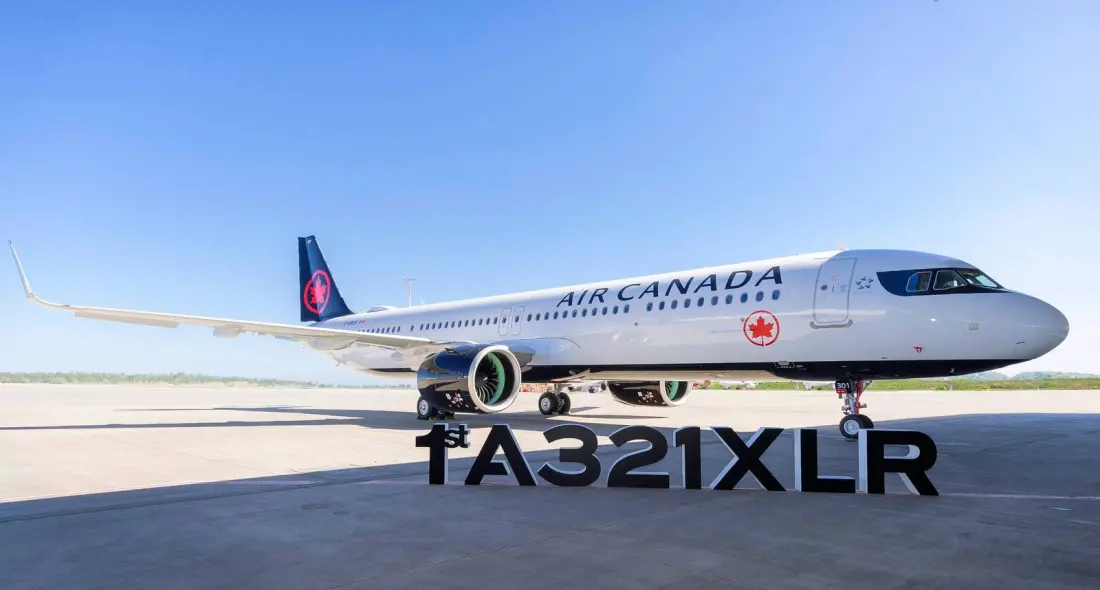
Air Canada has started taking delivery of 30 Airbus A321XLRs, with the first arriving into service in April and two more following by August. Deliveries run through 2029, and while the aircraft itself is interesting — a narrowbody that can fly up to 4,700 nautical miles — the real story is what's under the wing: Pratt & Whitney's new GTF Advantage turbofan, an engine family with a rocky recent past.
The original PW1100G geared turbofan was hit by a durability crisis traced to powdered metal contamination, forcing accelerated inspections and groundings across the A320neo and A220 fleets. At its worst, more than a quarter of the world's GTF-powered aircraft were out of service — and Air Canada, which also runs 48 GTF-powered A220s, was among the airlines hit hardest. That makes its decision to stick with Pratt for its new long-haul narrowbodies a notable vote of confidence.
The GTF Advantage is the upgraded production standard, certified by EASA in February 2025. Pratt claims 4% more takeoff thrust at sea level (8% more at hot-and-high airports), 1% better fuel burn, and roughly double the time-on-wing, thanks to improvements in the hot section. Some fixes can even be retrofitted to existing engines. But claims are one thing; the XLR's long routes with heavy fuel loads will stress the engine harder than a typical short-haul A320neo ever would. If the durability gains hold up in Air Canada service, other airlines weighing GTF versus the rival CFM LEAP-1A will take notice.
For travellers, the aircraft is genuinely good news. Air Canada is configuring its XLRs with 14 full-flat Signature Class seats in a 1-1 layout plus 168 economy seats, and is using the range to fly thinner long-haul routes from Toronto and Montreal to cities like Berlin, Toulouse and Edinburgh — routes that previously needed a widebody or didn't exist at all. Airbus says the type burns 30% less fuel per seat than previous-generation aircraft, and the new cabin design adds 60% more storage.
It's also worth noting what this isn't: the Rolls-Royce Trent 1000 fiasco on the Boeing 787, which effectively shut Rolls out of new Dreamliner orders for years. Pratt kept winning A320neo business throughout its crisis — over 11,000 GTF orders to date — so its recovery path is far stronger. Airbus has booked more than 500 A321XLR orders, a type filling the gap left by the retired Boeing 757 and the never-built 797.
Who should care? Anyone booking a transatlantic hop on a narrowbody in the next few years — this aircraft, and whether its engines stay reliable, will shape which routes exist and how comfortable they are. Air Canada's fleet is effectively the industry's live experiment.