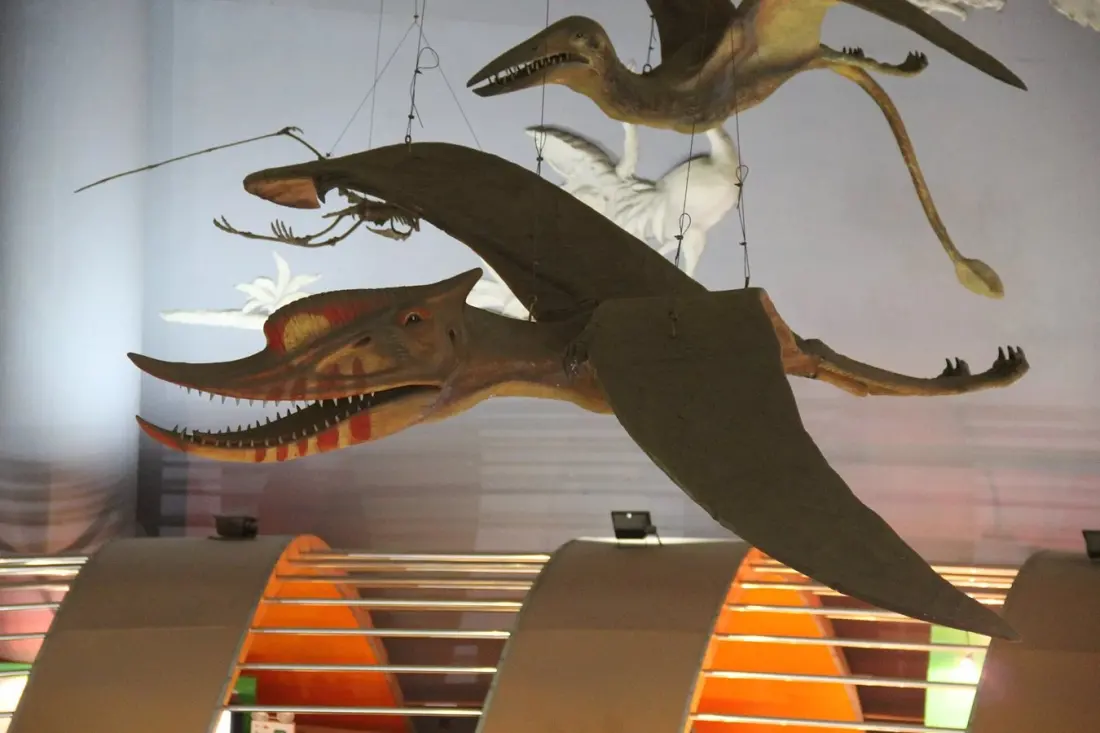
Dinosaurs have had the limelight for decades. Now the flying reptiles that shared their world are getting a museum of their own. The Hami Pterosaur Museum has opened in north-west China's Xinjiang Uygur Autonomous Region, and it's billed as the first museum anywhere dedicated solely to pterosaurs.
The building itself is a talking point. Set inside a national geopark in Hami, it covers roughly 4,600 square metres across six oval-shaped halls that, seen from above, mimic a cluster of pterosaur eggs. Inside, fossils, replicas and reconstructions trace the story of these animals, from their evolutionary origins to their sudden disappearance at the end of the Cretaceous period.
A quick science refresher: pterosaurs weren't dinosaurs, though they were close relatives. They were the first vertebrates known to achieve powered flight, and they ruled the skies for more than 150 million years. Hami matters to palaeontologists because its rocks have yielded some of the best pterosaur fossils ever found, including remarkably preserved eggs and embryos. The specimens on display come from more than 20 years of excavation by researchers at the Institute of Vertebrate Paleontology and Paleoanthropology, part of the Chinese Academy of Sciences. Several large specimens are going on show to the public for the first time.
These fossils aren't just crowd-pleasers. Because Hami preserves eggs and embryos alongside adult skeletons, researchers have been able to study how pterosaurs reproduced, grew and adapted to life in the air — questions that remained open for most of the history of palaeontology.
Part of the appeal for travellers is the setting. Instead of housing the collection in a city museum, the displays sit in the same geopark landscape where many of the discoveries were made. You can pair the exhibits with the wider desert scenery of Xinjiang, a part of China most international visitors still skip.
For anyone who has exhausted natural history museums full of familiar dinosaur names, Hami offers something genuinely new: a single museum built around the animals that filled prehistoric skies while dinosaurs walked below. It's a niche draw, yes — but for fossil fans, families with dinosaur-obsessed kids, or travellers making the long journey across Xinjiang anyway, it's a one-of-a-kind stop and a reason to put Hami on the map.