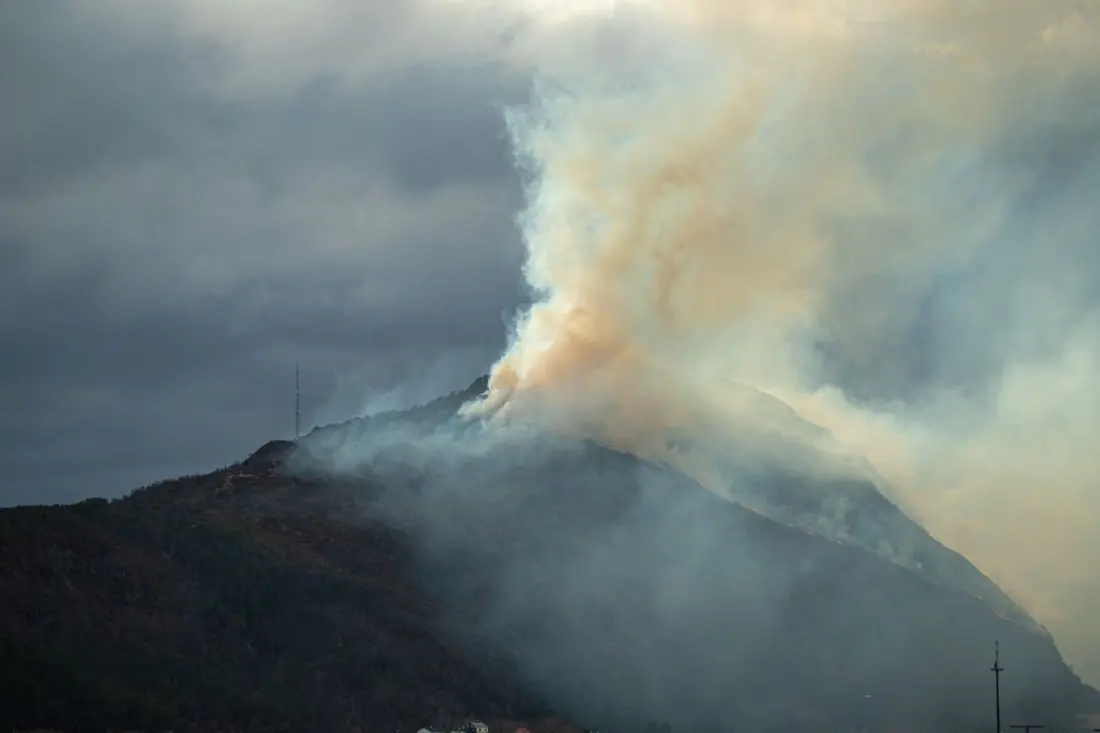
The Omiš fire this September forced around a thousand people from their homes and scorched more than 1,000 hectares of Dalmatian hillside. It was a stark headline, but the numbers behind Croatia's 2026 fire season tell a more worrying story: individual events are becoming far more destructive, even where their frequency isn't.
Between January and 10 August, Croatian firefighters recorded 29,358 interventions, including 8,832 fires — 5,575 open-space and 3,897 vegetation fires — with 9,646 hectares burned. Compared with the same stretch of 2025, the total number of fires rose just 7.62 percent, yet the burned area jumped 75 percent. In other words, each fire now does far more damage than it used to. Recent blazes near Omiš, Pelješac and Brač underline the point, and fires are no longer a purely coastal, summer-holiday problem.
The insurance picture is where Croatia really stands out — for the wrong reasons. Across the EU, weather and climate disasters cost roughly €822 billion between 1980 and 2024, and a quarter of that landed in just the last four years. Yet less than 20 percent of those losses were privately insured. In Croatia, the figure drops below three percent of total economic losses from climate extremes, placing it among the worst-covered countries in the Union. By comparison, Spain's 2024 floods will cost around €11 billion in reconstruction, and Germany's 2021 floods about €30 billion, with insurance picking up only a slice of either.
Change is coming elsewhere. Greece now makes fire, flood and earthquake insurance compulsory for companies turning over more than €500,000, with at least 70 percent asset coverage. Portugal announced a natural disaster fund and mandatory property insurance after its early-2026 floods. And on 16 September, European Commission President Ursula von der Leyen launched a Climate Insurance Alliance, aiming to close the gap through tools like parametric policies that pay out automatically when rainfall or wind thresholds are hit.
For travellers, the practical takeaway is simple: Croatia's Dalmatian coast and islands now carry a year-round fire risk, not just a July-August one. Anyone booking villas, apartments or sailing trips along the Adriatic should check cancellation terms, keep an eye on local alerts in peak season, and understand that evacuation disruption — as Omiš showed — can affect popular tourist zones. Expect this to shape accommodation prices and insurance requirements in the years ahead, as the country scrambles to close a coverage gap that currently leaves almost all climate damage on the public tab.