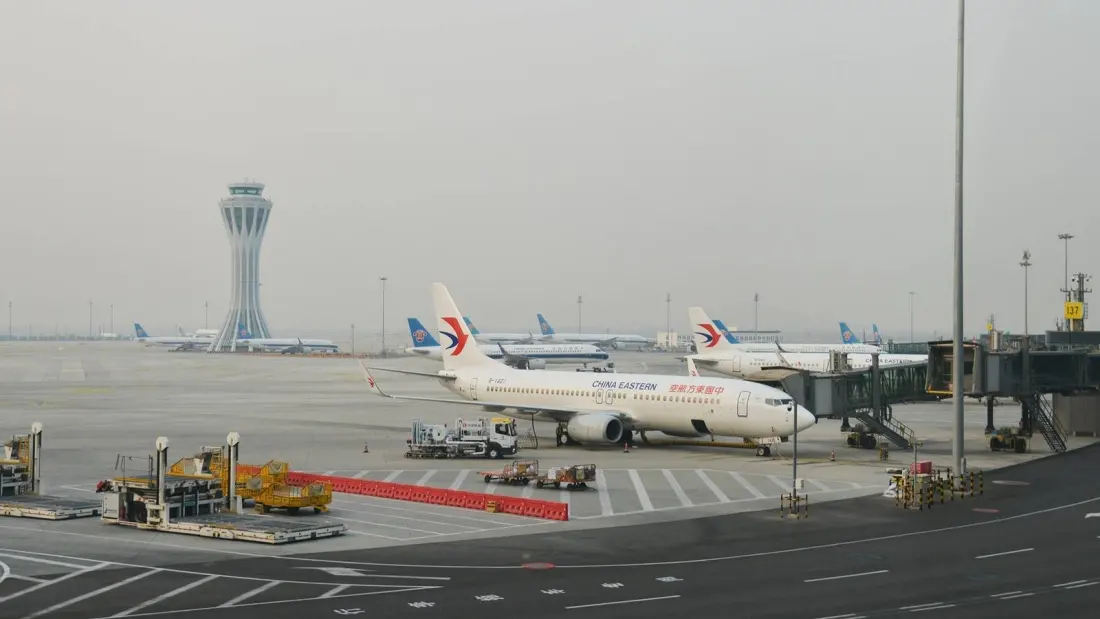
A single small plane and one terrible flight have changed the rules of the sky over Beijing in a big way. China has permanently expanded its airspace restriction over the capital to roughly 108,000 square miles — an area about the size of Italy — making it the largest permanent no-fly zone over any city on earth.
The trigger came on June 26, when a Sunward SA 60L Aurora light-sport aircraft slammed into CITIC Tower, the city's tallest skyscraper. The 109-storey, 528-metre building — also known as China Zun — took the hit around the 65th floor. The single-engine plane tore a hole in its facade and rained debris onto streets in Beijing's CBD, in the Chaoyang District. The 66-year-old pilot, Liu Junhua, died in the crash and 13 people on the ground were injured. A disturbing detail: the pilot's own diary described the act as suicidal, and reports suggest he had once worked at a CITIC Bank subsidiary, the tower's namesake.
What alarmed authorities most was how the flight unfolded. Captain Liu skipped a required landing pattern at Beijing Shifosi Airport, switched off the aircraft's transponder, and flew undetected across the city's suburbs for close to half an hour before impact. That exposed a serious gap in Beijing's air defences, and the response was swift and sweeping.
Under the new Special Restricted Area, which covers Beijing, Tianjin and Hebei province, only commercial airliners and pre-approved business, military, police or emergency flights get through. Everything else in the zone must file strict pre-approved flight plans, maintain constant two-way radio contact with air traffic control, and carry surveillance and identification equipment for continuous tracking. Any deviation gets reported. On top of that, drones are banned citywide at any altitude.
For travellers, the practical impact is limited but real. If you're flying into Beijing on a commercial airline, nothing changes — those flights remain exempt. The restrictions target general aviation, so private charters, sightseeing flights and drone use around the capital are effectively off the table. Expect tighter procedures if you're arranging any approved business-aviation movement in the region, with paperwork and tracking requirements well beyond the norm elsewhere. Beijing airspace was already heavily controlled; this simply formalises one of the strictest regimes in the world. Similar zones exist over Washington DC, Paris, Moscow, New Delhi and Wellington, but none approach this scale.
The bigger takeaway for visitors is what it says about security in the Chinese capital. The city moved from a serious breach to the world's most extensive urban airspace lockdown in a matter of months, and there's no sign of it being relaxed. If your trip involves anything airborne over Beijing — photography drones included — assume it's not happening.