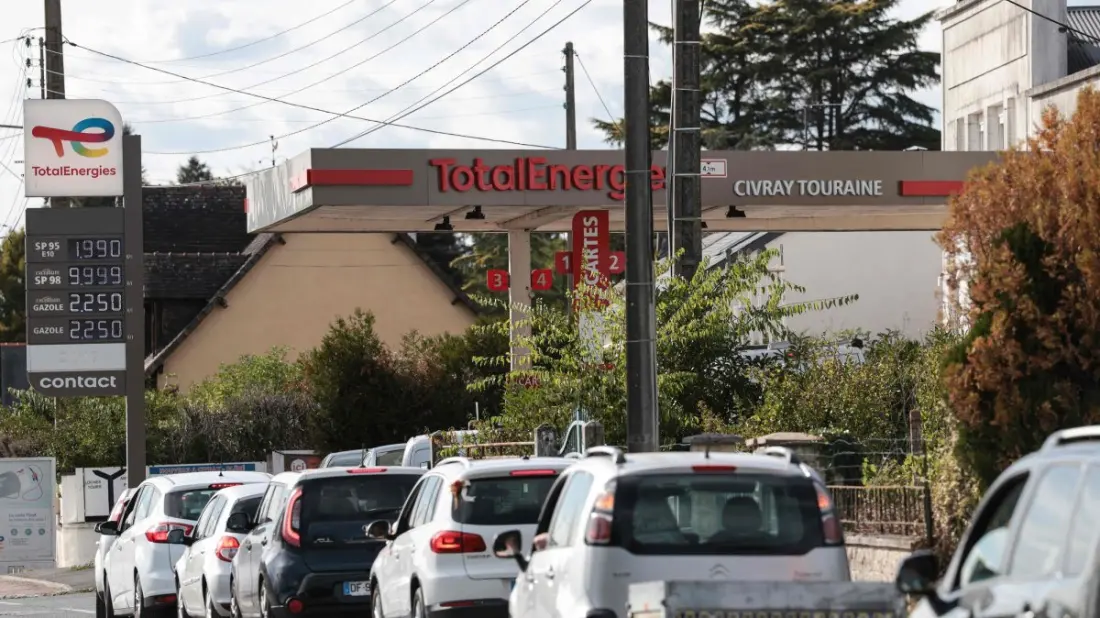
Filling up in France has never been more expensive. An AFP analysis of prices listed on the economy ministry's website — drawing on more than 8,700 petrol stations — put the average diesel price at €2.41 per litre (about $2.76) on Sunday morning, smashing the record set only the day before.
Petrol is climbing too. SP95-E10, the country's best-selling fuel, averaged over €2.17 a litre across more than 6,700 stations and has now sat above its 2022 peak for more than ten straight days. SP98 averaged above €2.28. For anyone who has budgeted a France road trip on older fuel-price assumptions, those numbers translate into a noticeably pricier tank: a 50-litre fill-up of diesel now costs north of €120.
The cause is the wider global supply shock. Crude prices have been surging since the US and Israel launched their war against Iran in February, and the spike intensified in recent days with renewed conflict in Yemen and attacks on Saudi Arabia's energy infrastructure. Brent crude jumped roughly a fifth in September and, even after three days of decline, remains above $100 a barrel.
There's a political edge to this in France specifically. Rising pump prices triggered the yellow vest protest movement in 2018, and the government is reportedly worried history could repeat itself. That unrest is worth keeping in mind if you're travelling: fuel protests in France have historically meant blocked motorway entrances, depot pickets and dry pumps in some areas, even where prices are officially stable.
If you're renting a car or driving across France in the coming weeks, a few practical moves help. Prices vary meaningfully between motorway services and supermarket forecourts — hypermarket stations are consistently the cheapest, while autoroute stops can cost 20-30 cents more per litre. Apps and the government price-comparison site let you check station-by-station prices before you roll in. Consider specifying a smaller-engine or hybrid rental to stretch each tank further, and if your route allows, fill up in neighbouring countries such as Spain or Belgium where prices may be lower on any given day. And keep an eye on the news: if tensions escalate further, both prices and the risk of disruption at the pumps could move quickly.
The story is a good reminder that fuel costs are now a real line item in European road trip budgets. A two-week loop that might have cost €150 in fuel a few years ago could easily run €250 or more at current prices — worth building into your planning rather than discovering at the pump. Full reporting via AFP.