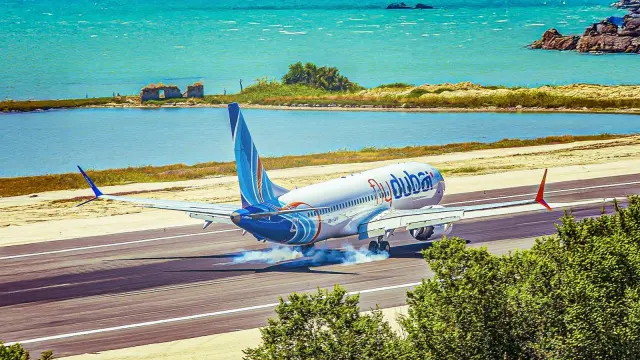
A flydubai Boeing 737 came within minutes of disaster on 30 September 2026, after a violent fight broke out in the cockpit of a flight from Dubai to Tel Aviv, sending the aircraft into a steep dive over northern Saudi Arabia.
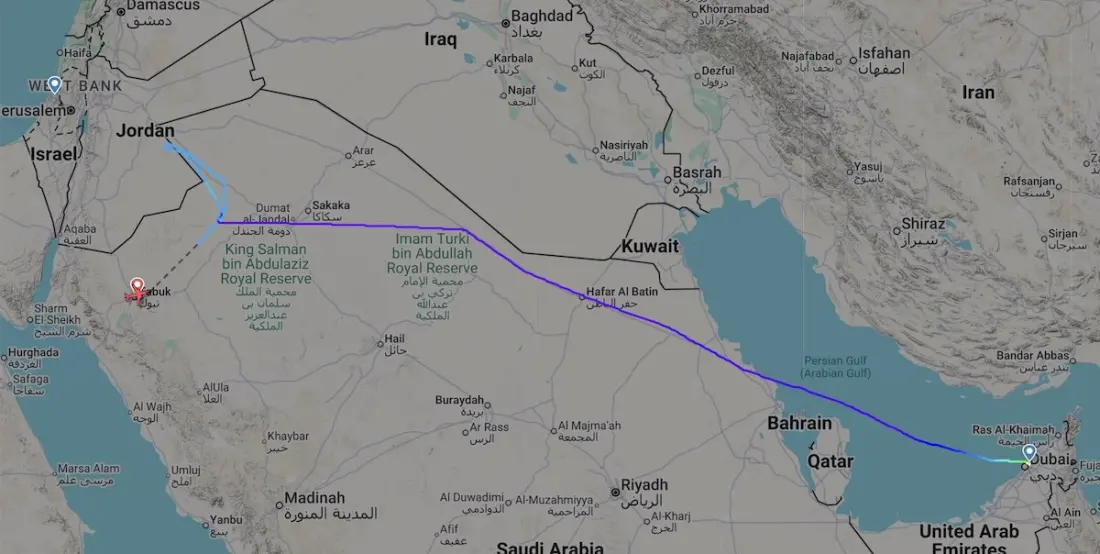
Flydubai flight FZ1073, a 737 MAX 8 with roughly 180 people aboard, departed Dubai at 7:05am. The first two-plus hours were routine. Then, at cruise altitude of 34,000 feet, the jet suddenly dropped to 19,000 feet in a little over a minute — a descent so steep it pushed the aircraft to speeds airframes aren't designed to handle. During the plunge, the plane transmitted squawk 7500, the transponder code for hijacking, prompting Israel to scramble fighter jets.
What happened next reads like a thriller script. According to passenger accounts, the first officer stabbed the captain with a knife — investigators believe he intended to seize the controls and crash the plane, and Israeli authorities have opened an investigation against him. The cockpit door was opened, and crew and passengers managed to pin the attacker down. In a stroke of enormous luck, two pilots were travelling on the flight as passengers. They took over the controls, the aircraft squawked 7700 (general emergency), and the jet diverted to Tabuk in Saudi Arabia, landing safely about an hour and 25 minutes after the incident began.
Flydubai has confirmed only that the flight "experienced an incident," that the aircraft landed safely in Tabuk and that all passengers are accounted for, with teams working alongside the authorities. The airline hasn't confirmed the stabbing or who was responsible — those details come from eyewitness reports and remain officially unverified.
The episode is unsettling for reasons beyond the immediate drama. Deliberate pilot action has been implicated in some of the deadliest crashes of recent decades, including the 2022 China Eastern 737 crash, where a plane simply entered an unrecoverable nosedive. And the route here — Dubai to Tel Aviv — raises obvious questions if this turns out to be an attempted attack rather than a medical or psychiatric emergency. Reinforced cockpit doors, designed to keep threats out, didn't prevent an incident from inside the flight deck; the one safeguard that worked was the presence of off-duty pilots in the cabin.
For anyone who flies the busy Gulf-to-Israel corridor, or any route operated by the region's fast-growing low-cost carriers, this is a stark reminder that aviation's safety record depends on redundancy — and on how a handful of people respond in the worst sixty seconds of their lives. In this case, passengers, cabin crew and two very lucky off-duty pilots prevented what could easily have been a mass-casualty event.
Expect the official investigation to focus on the first officer's background, cockpit access procedures, and whether two-person flight deck rules — already adopted by some airlines since the 2015 Germanwings crash — will now be applied more widely on Gulf carriers.