
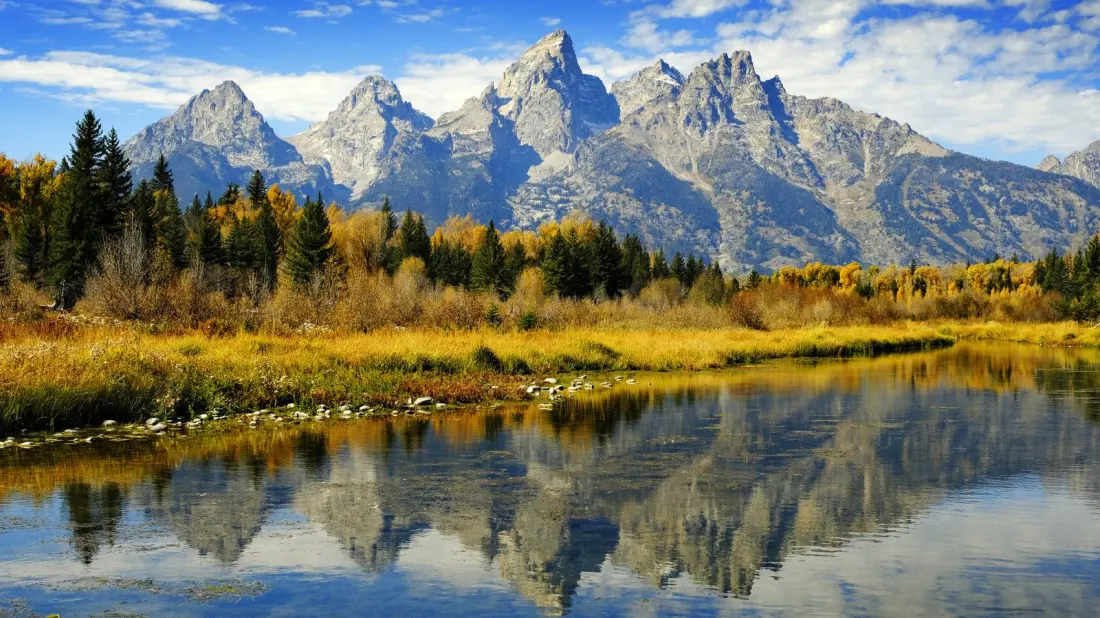
Grand Teton National Park in northwestern Wyoming packs 310,000 acres of jagged peaks, meadows and lakes into one of America's most photogenic corners — plus grizzlies, moose, bison and wolves. But a first visit can trip you up if you only know the official rulebook. Locals, rangers and seasoned visitors have a set of unwritten rules worth learning before you arrive.
Timing is everything for wildlife. The park sits inside the Greater Yellowstone Ecosystem, home to more than 60 mammal species and around 300 birds, and animals are most active in the cooler early morning and evening hours — which conveniently doubles as the best light for photos. For moose specifically, regulars swear by Gros Ventre Road between U.S. Highway 191 and the campground, with sightings commonly reported between 6:30 and 7:30am in summer. Bring binoculars and keep your distance; guided options like BrushBuck Wildlife Tours and Jackson Hole Wildlife Safaris run year-round.
On the subject of bears: attacks are exceedingly rare — there's never been a human fatality in the park's history — but you should still carry bear spray on any trail. New canisters run $40-60, so renting makes sense for a short trip. Bear Spray Shack rents from about $10 a day, while Bear Aware caps rentals at $28 (though spraying it triggers a surcharge roughly equal to buying one). For longer trips, bring your own.
Don't write off winter. Much of the park closes, but a stretch of Teton Park Road opens to snowshoers and cross-country skiers from November 1 to April 30, and the free "Snowshoe with a Ranger" program runs a couple of times a week from January to March. Winter tours use sleighs or snowcoaches to reach bighorn sheep, moose and wolves.
A few crowd-beating tricks: arrive at sunrise spots like Schwabacher Landing, Snake River Overlook or Oxbow Bend early, as parking is tight. On the popular Jenny Lake hike, don't stop at Inspiration Point like everyone else — the real payoff is continuing into Cascade Canyon, and most of the elevation gain is already behind you. And consider camping outside the park: surrounding national forest allows free dispersed camping if you arrive early and midweek.
Practicalities matter too. In-park shops like Dornans (a family business operating inside the park for over a century) and the Colter Bay General Store are handy but pricey with limited stock — stock up in Jackson instead, about 13 miles south, where you'll find Albertsons, Target and Whole Foods. Beyond the park, the John D. Rockefeller, Jr. Memorial Parkway links to Yellowstone, but don't underestimate the drive: speeds hover around 45mph and Yellowstone itself spans 2.2 million acres, so give it more than a day. If you'd rather skip the car entirely, you can rent a bike in Jackson and ride the 16-mile paved Grand Teton Pathway, part of a network approaching 70 miles.
One last heads-up: construction projects are ongoing in the park until 2029 and may affect access, so check NPS updates before you go. Plan it: Best visited June-September for full access, though winter brings its own rewards; fly into Jackson Hole Airport (JAC), which sits inside the park itself.