
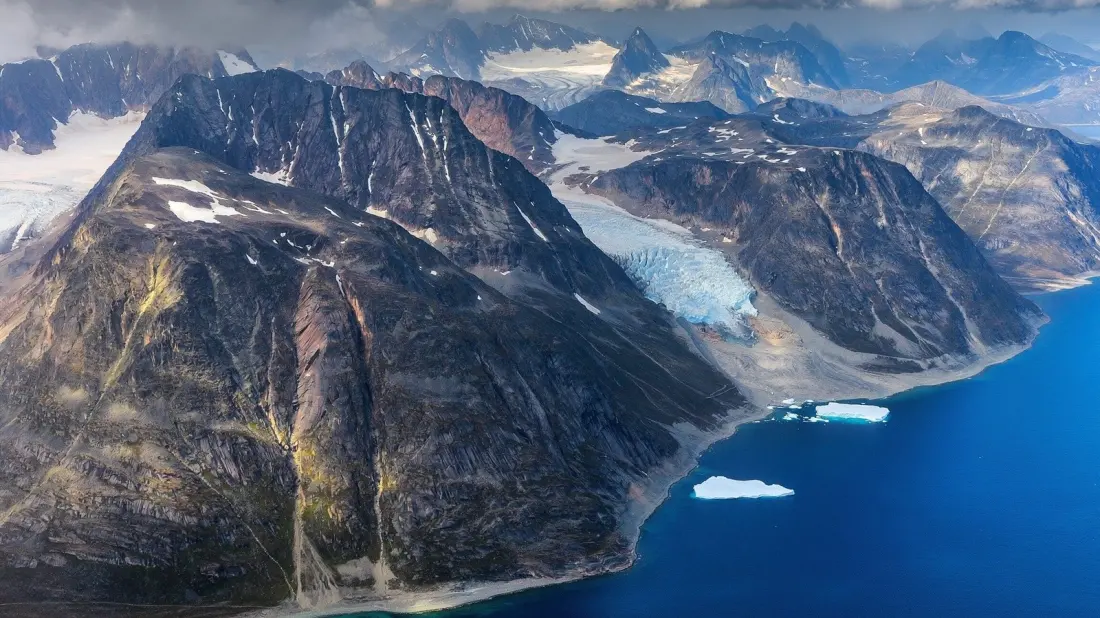
Roughly 600 people a year make it to Torngat Mountains National Park — one of North America's least-visited national parks, sitting at the northern tip of Labrador where snow-dusted peaks drop into fjords and the only neighbours are caribou, arctic hares, and the occasional polar bear. It covers around 3,745 square miles, bigger than Delaware, and contains not a single road, town, or marked trail.
That isolation is the point. If you want wild camping with actual solitude, this is where you get it. Hiking is free-form — no signs, no paths, just alpine lakes and ridgelines — and the wildlife list is serious: polar bears, black bears, and caribou roam the terrain. Polar bears are common enough that the main accommodation, the Inuit-owned Torngat Mountains Base Camp, is surrounded by an electric fence. You sleep in tented structures, with all meals, guided hikes, and excursions led by Inuit guides included in the package.
Getting there takes commitment. The standard route is a charter flight from Goose Bay to Saglek in northern Labrador, then a boat or helicopter transfer to base camp. Visits require registration and a permit arranged well in advance, and even though the park is technically open year-round, access is realistically limited to late winter, spring, and summer. spontaneity doesn't apply here.
The cultural side is just as compelling as the scenery. Inuit communities lived in this region for over 5,000 years before being forcibly relocated by the government in 1959. Today the park is run with an all-Inuit Cooperative Management Board advising Parks Canada, combining traditional knowledge of the land and wildlife with modern science. You can still visit the remains of former settlements at Sallikuluk and Hebron, which tell the story of those centuries of habitation.
If a small-ship approach appeals more than base camp, expedition cruise operator Adventure Canada runs roughly 15-day voyages that include time hiking in the park. Expect to pay anywhere from about $11,995 to $22,875 per person depending on cabin. It's a hefty sum, but you're paying to reach a landscape almost nobody sees — and to do it safely, in bear country, with people who know it intimately.
Who is this for? Travellers who've already ticked off the accessible parks and want genuine remoteness, cultural depth, and Arctic wildlife in one trip — and who are happy to plan six months ahead and pay expedition prices to get it. If you need infrastructure, marked trails, or a last-minute booking, look elsewhere. If you don't, Torngat might be the most memorable park you'll ever visit.