
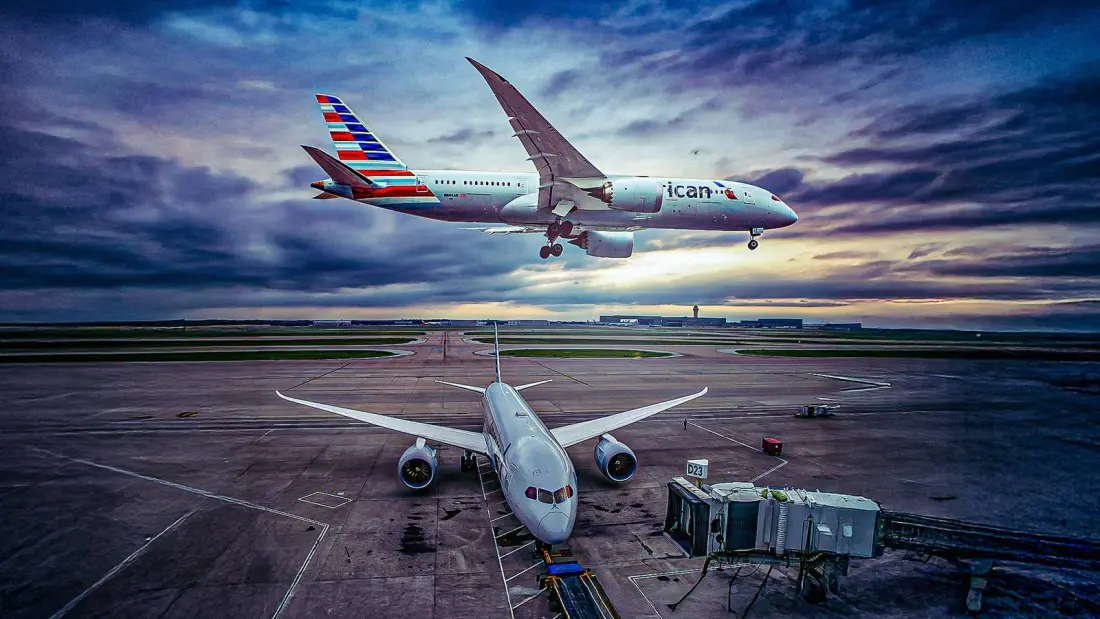
If you've ever hovered near a departure board watching your flight time slip back in ten-minute increments, you'll understand why American Airlines is finally changing how it communicates delays. The Fort Worth-based carrier is reportedly piloting a new system at Charlotte Douglas International Airport (CLT) that estimates boarding times based on when the inbound aircraft actually lands, rather than simply ticking the scheduled departure forward.
The trial was first flagged by aviation insider JonNYC, who reported that American plans to base its estimated boarding times on the arrival time of the inbound plane. In theory, that means the app's departure estimate will track reality far more closely. It should also help the many travellers who don't cross-reference third-party flight trackers themselves. Details like when the trial starts and how long it runs haven't been confirmed, and American hadn't responded to requests for comment.
Why now? American's reliability record has taken plenty of heat. It ranked sixth among North American carriers in Cirium's 2025 on-time performance report, with just 76.43% of flights arriving within 15 minutes of schedule, and still trails Delta and United despite some improvement in early 2026. Rolling delays are a particular sore point: instead of one honest long delay, passengers get a drip-feed of small updates, leaving them guessing whether to stay at the gate. Washington Post travel writer Andrea Sachs recently described missing an American flight at Ronald Reagan Washington National Airport after her 5:00 PM departure kept shifting; she stepped away for a coffee and returned to find boarding had closed with no notification.
The airline has been chipping away at the problem. Earlier this year it added more detail to app and website delay notices, including the cause (maintenance, weather and so on) plus push notifications, emails and texts. It has also expanded its 'Connect Assist' tool, which can hold flights briefly, usually ten minutes or less, for passengers at risk of missing tight connections, following a trial at Dallas/Fort Worth and Charlotte. Less popular: an AI rebooking system that reportedly moved customers onto later flights without their consent, even when they had time to make their original connection.
Charlotte is a sensible test bed. It's American's second-largest hub, handling around 1,400 daily arrivals and departures, with the airline controlling roughly 90% of the gates and funnelling huge numbers of connecting passengers through the airport. If the system works there, a network-wide rollout would follow.
For travellers, the practical takeaway is simple: if this trial succeeds, the era of chasing phantom gate changes at American hubs could be numbered. Until then, it's still worth keeping a flight tracker handy when connecting through Charlotte or Dallas, and staying within earshot of the gate if your delay is listed as short. If you're booking connections, a little buffer time remains your best insurance. Story reported by Simple Flying.