You've navigated the menu, ordered correctly and used the right fork. Congratulations — but in France, the test isn't over when the plates are cleared. The last stretch of the meal is where many American visitors give themselves away, and a little know-how goes a long way.
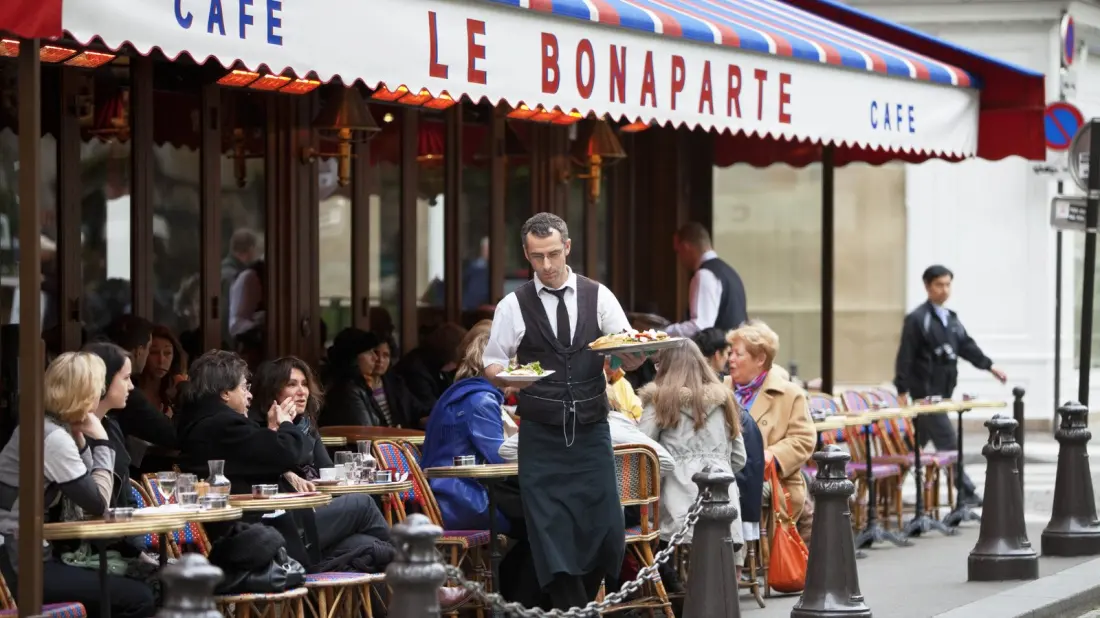
First, slow down. French servers won't drop the check the moment you finish eating — you'll usually need to ask for it with a simple "L'addition, s'il vous plaît." This isn't poor service; it's a different philosophy. Staff are salaried and don't depend on turning tables quickly, so meals stretch. Dinner is treated as a social event rather than a transaction, and nobody is going to hover, sigh or hurry you out. If you flag the bill too eagerly, you risk looking impatient — or unintentionally rushing your own companions.
Second, don't skip dessert. In France, a sweet course is part of the experience, not an indulgence to feel guilty about. Portions are modest and less sugary than typical American versions, so they're designed to round off the meal rather than overload it. Crème brûlée, éclairs, madeleines and macarons are the classics. No room? Share something with the table and add an espresso.
Paying is the next trap. Asking a French server to split one bill into individual checks — a routine request back home — can seriously annoy them. If you're in a group, have one person pay and sort it out with a payment app, or bring cash. If cards are unavoidable, request a single check and simply divide the total evenly; the server won't itemise it for you. And if you're treating everyone, keep quiet about the price — announcing what a meal cost is considered poor form. Among French friends, people tend to take turns picking up the tab, so it's worth tracking whose round it is.
Finally, put away the American tipping instincts. Restaurant staff in France earn a proper wage with benefits, so tips are neither required nor heavily expected — which is also part of why you won't feel rushed. Leaving 20% or more marks you out instantly as a tourist, and flashy displays of money don't go down well. A few euros at a café is perfectly fine; around 5-10% for genuinely excellent service at a finer restaurant is generous without being strange.
Why does this matter for your trip? Because the stereotype of the "rude French waiter" often dissolves once you play by local rules. Much of the friction between American visitors and Parisian bistro staff comes down to mismatched expectations — on pacing, money and tipping. Dine the French way and you'll get the experience you came for: long, relaxed meals in some of the world's best restaurants, where dessert is expected and lingering is encouraged. Adjust those last ten minutes, and the whole evening improves.